Headlines of The Day
CESTAT classifies glucometers as CA instruments, not medical instruments
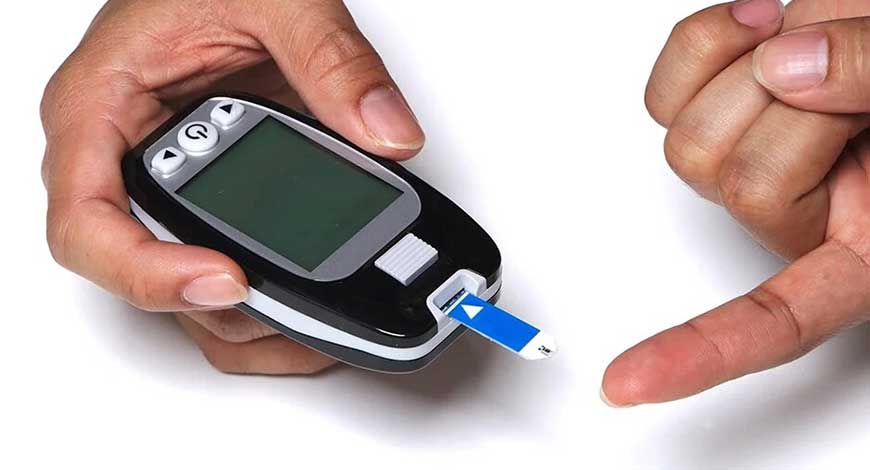
The Mumbai Bench of the Customs, Excise and Service Tax Appellate Tribunal (CESTAT) has held that glucometers are classifiable as instruments for chemical analysis under Customs Tariff Heading (CTH) 9027 and not as medical diagnostic instruments under CTH 9018 for customs purposes. Holding that the scientific and analytical function of the device determines its classification, the Tribunal dismissed the Customs Department’s appeal and upheld the order of the Commissioner (Appeals) in favour of Life Scan Medical Devices India Pvt. Ltd. A Bench comprising Judicial Member Ajay Sharma and Technical Member M.M. Parthiban observed that a glucometer performs chemical analysis of a blood sample by measuring glucose concentration through a chemical or enzymatic reaction. Merely because the instrument is used in the medical field does not alter its essential analytical character.

The dispute arose after Life Scan Medical Devices India Pvt. Ltd., a Special Economic Zone (SEZ) importer, imported “One Touch Select Simple Blood Glucose Monitoring System” and “One Touch Select Plus Simple Blood Glucose Monitoring System.” The importer classified the products under Customs Tariff Item (CTI) 90278090 as instruments for chemical analysis and claimed nil Basic Customs Duty in accordance with the Customs Tariff. The Customs Department, however, contended that the products were classifiable under CTI 90189099 as diagnostic instruments and appliances used in medical sciences, attracting Basic Customs Duty at the applicable rate.
The goods were provisionally assessed while the Special Valuation Branch investigated the declared value. After conclusion of the valuation proceedings, the assessing authority finalised the assessment by classifying the goods under CTI 90189099 and demanded differential customs duty along with applicable interest. The importer challenged the assessment before the Commissioner (Appeals), who allowed the appeal. Aggrieved by that decision, the Revenue approached the Tribunal.
Before the Tribunal, the Revenue argued that Heading 9018 constituted the more specific tariff entry because glucometers are diagnostic devices used in the medical field. It also contended that the Commissioner (Appeals) had incorrectly relied upon earlier judicial precedents while classifying the goods under Heading 9027.
The importer, on the other hand, relied upon the decisions in Bayer Pharmaceuticals Pvt. Ltd. v. Commissioner of Customs, the Bombay High Court’s judgment in Ascensia Diabetes Care India Pvt. Ltd. v. Union of India, and the subsequent decision of the Tribunal in Abbott Healthcare Pvt. Ltd., all of which held that glucometers are classifiable under Heading 9027. It was also pointed out that the Special Leave Petitions filed by the Revenue against those decisions had already been dismissed by the Supreme Court.
Examining the competing tariff entries, the Tribunal noted that Heading 9018 covers instruments and appliances used in medical, surgical, dental or veterinary sciences, whereas Heading 9027 specifically relates to instruments and apparatus for physical or chemical analysis. It observed that a glucometer functions by analysing a blood sample placed on a chemically treated test strip, detecting glucose through an electrochemical or enzymatic reaction and converting that reaction into a measurable blood glucose reading. The Tribunal observed: “Viewing scientifically, a Glucometer analyzes a biological sample (blood), detects glucose through a chemical/enzymatic reaction involving enzymes such as glucose oxidase or glucose dehydrogenase and quantifies the glucose concentration based on the reaction signal. Therefore, the device performs chemical analysis of blood glucose levels. The mere fact that an instrument is used in field of medicine does not, by itself, place it under CTH 9018 where a heading describing its analytical function is available.”
Rejecting the Revenue’s contention that a glucometer merely assists medical professionals and does not itself perform a diagnostic function, the Tribunal held that the measurement of blood glucose is itself the diagnostic step that enables appropriate medical treatment. The Bench observed: “The measurement of the blood-glucose level by a Glucometer is itself the diagnostic step as a reading outside the normal parameters, whether indicating hypoglycaemia or hyperglycaemia, is what enables the medical practitioner to commence appropriate treatment. The analytical function of the device is thus integral to, and not divorced from, its clinical use.”
The Tribunal further noted that the issue was no longer res integra. It referred to its earlier decision in Bayer Pharmaceuticals, which had classified glucometers under Heading 9027 after analysing the competing tariff entries and the Harmonised System of Nomenclature (HSN) Explanatory Notes. That decision was subsequently affirmed by the Bombay High Court in Ascensia Diabetes Care India Pvt. Ltd., and the Revenue’s Special Leave Petition was dismissed by the Supreme Court. The Tribunal also relied upon its more recent decision in Abbott Healthcare Pvt. Ltd., against which the Revenue’s civil appeal was likewise dismissed by the Supreme Court. Finding no reason to depart from the settled legal position, the Tribunal held that glucometers merit classification under Customs Tariff Heading 9027 as instruments for chemical analysis. It concluded that the Commissioner (Appeals) had rightly allowed the importer’s appeal and, accordingly, dismissed the Revenue’s appeal. 24Law