Headlines of The Day
Recommendations-Union Budget FY27, Aster DM Healthcare
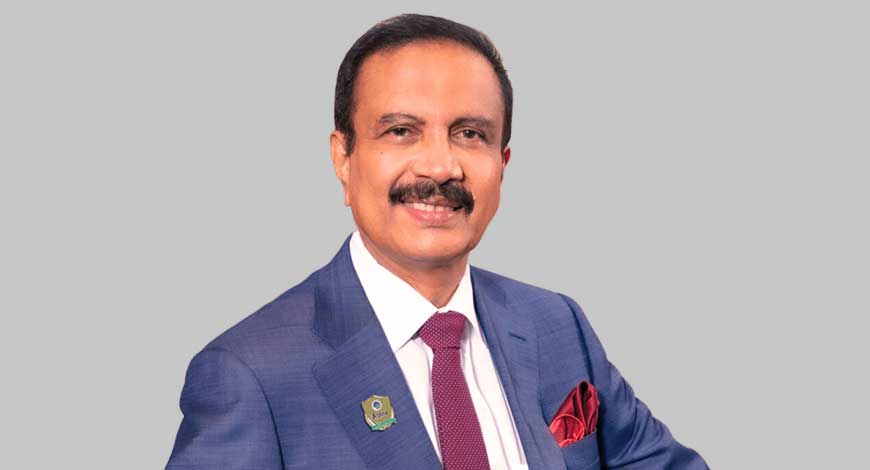
Dr Azad Moopen’s pre‑Budget articulation for FY27 is that the Union Budget 2026 must push India decisively toward a higher‑spend, prevention‑oriented, technology‑enabled healthcare system anchored in equity and resilience.

He is explicitly urging the government to move public health expenditure toward 5 percent of GDP, arguing that this is necessary to close infrastructure gaps, improve affordability and strengthen India’s healthcare workforce, especially as the population crosses 1.4 billion and the chronic disease burden accelerates. He links this higher spend to building a universal and resilient system that underpins the Viksit Bharat 2047 aspiration of becoming a developed nation, positioning healthcare investment as core economic strategy rather than social spending alone. In this frame, the FY27 Budget becomes a lever not only for adding capacity but for structurally repositioning healthcare as a foundational sector of India’s growth story.
On the fiscal and tax side, he has welcomed GST 2.0 reforms implemented in 2025, such as exemptions for individual health and life insurance and lower taxes on essential life‑saving medicines, and notes that these have already improved affordability on the margins. At the same time, he is clear that the next budget must go further by rationalising GST on advanced medical equipment and diagnostics, recalibrating customs duties on medical technologies and simplifying regulatory pathways so that adoption of sophisticated tools, from imaging to AI‑enabled diagnostics, becomes easier and cheaper. For him, this combination of tax rationalisation and regulatory clarity is central to making high‑end care more accessible without undermining domestic manufacturing and innovation incentives.
A major theme in his expectations is the pivot from illness‑care to wellness and prevention, particularly in the context of India’s massive non‑communicable disease (NCD) challenge, which has been estimated in multiple analyses at several trillion dollars of economic drag over coming decades. He argues that Budget 2026 should support preventive health coverage, expand the accessibility of wellness‑oriented insurance products and fund large‑scale screening, early diagnosis and lifestyle‑modification initiatives that can blunt the NCD curve. Within this preventive frame, he emphasises prioritising oncology services, chronic disease management and geriatric and long‑term care as India ages and the case‑mix becomes more complex.
Digital health and technology‑led care form the second pillar of his vision for the Union Budget FY27. He calls for stronger support for AI‑enabled diagnostics, telemedicine, home‑based care platforms and interoperable health‑data infrastructure, arguing that only a digitally integrated ecosystem can deliver scale, consistency and cost‑efficiency across India’s diverse geographies. This includes streamlined regulatory pathways for digital health solutions and research, as well as incentives that encourage health‑tech start‑ups and established providers to invest in innovation, particularly when it complements public schemes.
Geographical equity is another recurring element: he wants targeted incentives that draw private investment and entrepreneurial activity into tier‑2 and tier‑3 cities. In his view, measures such as dedicated schemes, viability‑gap funding and PPP frameworks for hospitals, diagnostics, oncology centres and geriatric facilities can help close the urban–rural and metro–non‑metro divide in access. He also underlines the importance of workforce skilling, medical education expansion and sustainability‑oriented infrastructure so that this expanded system has the trained clinicians and environmentally responsible facilities needed to function effectively.
He mirrors some of these expectations onto the Kerala state budget, arguing that Kerala should place healthcare at the centre of its growth strategy and deepen investment in digital health tools, modern hospital infrastructure and medical tourism to consolidate its position as a leading wellness destination. He recommends a stronger focus on preventive care, rural health technologies and advanced cancer research within the state to improve long‑term outcomes, presenting Kerala as a potential model for how a state can operationalise a wellness‑centric, technology‑rich approach to care.
MB Bureau