Headlines of The Day
Customs duty relief on display components extended to 2029 benefits MedTech
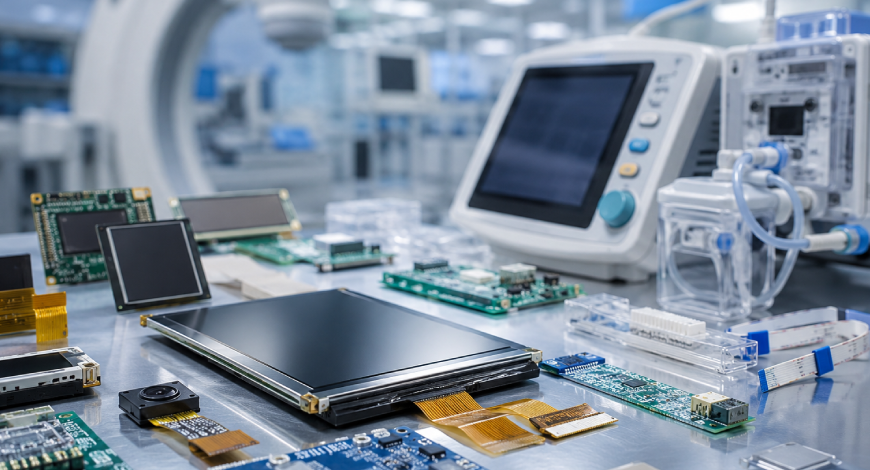
The government has extended customs duty relief on key inputs for electronics manufacturing through March 31, 2029, to improve India’s cost competitiveness in electronics and electric mobility manufacturing.

Three customs notifications issued on July 8 exempt five components used in display assemblies, display cells, flexible printed circuit assemblies (FPCAs), backlight units, frames and anisotropic conductive film (ACF), from basic customs duty for automotive, medical and industrial applications. The relief does not extend to display assemblies used in mobile phones, smartwatches, smart meters, television panels or interactive flat-panel displays.
A separate notification extends zero customs duty, also through March 2029, on six components used to manufacture inductor coil modules for wireless charging in mobile phones, including nano-crystalline assemblies, E-shields, PET liners, PC shims, stranded and NFC coils, and neodymium-iron-boron magnets. The notifications additionally expand the list of machinery eligible for concessional duty in lithium-ion cell manufacturing.
Implications for medical device manufacturing
By keeping duty relief in place on display cells, FPCAs and backlight units,inputs used in equipment such as patient monitors, imaging consoles and diagnostic analyzers, the notifications are expected to help lower input costs for domestic MedTech manufacturers that assemble display-based devices in India. Industry stakeholders have previously argued for duty concessions of this kind as a bridge measure to support local manufacturers while India’s component supply chain for medical electronics continues to develop.
Lower input costs on display and battery-related components could, over time, help manufacturers avoid passing higher costs on to hospitals and patients, particularly for portable and battery-powered devices such as infusion pumps and diagnostic equipment used outside major metro hospitals. Any resulting effect on device pricing or availability, however, would depend on how manufacturers pass through the savings and on broader supply-chain and demand factors, which are not addressed in the notifications themselves.
The government has framed the broader package primarily as an electronics and EV manufacturing measure rather than a healthcare-specific one; medical devices are one of several end-use categories, alongside automotive and industrial equipment, covered by the display-assembly exemption.
MB Bureau