Patient Monitoring Equipment
PM – Transforming care with technology and innovation
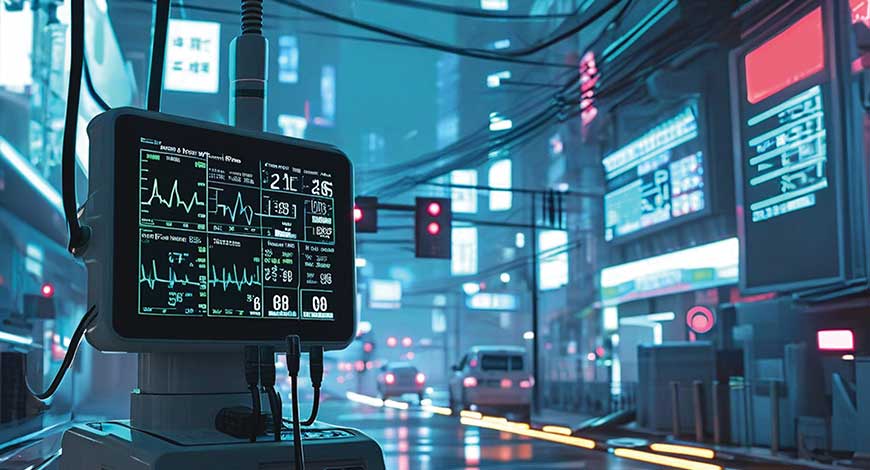
Remote patient monitoring is improving patient care and reducing costs. However, understanding and addressing challenges is key to running a successful RPM program.

Advancements in next-gen patient monitoring technologies and innovations are revolutionizing healthcare delivery, enabling real-time tracking, personalized care, and improved patient outcomes.
The landscape of patient monitoring has evolved significantly over the past few decades, driven by advancements in biomedical sensors, wearable devices, and digital health technologies. In modern healthcare, patient monitoring technologies are at the forefront of improving care delivery, enabling real-time diagnostics, continuous tracking of health parameters, and personalized treatment plans. These innovations are transforming how healthcare providers monitor and manage patient health, offering enhanced precision, early detection, and better treatment outcomes.
Patient monitoring technologies also play a critical role in enabling personalized medicine. By tracking key health indicators over time, these devices provide valuable insights into individual health patterns, enabling healthcare professionals to tailor treatments to the unique needs of each patient. The continuous feedback loop of monitoring, diagnosis, and treatment is an essential component of precision medicine, where decisions are based on a patient’s specific genetic makeup, lifestyle, and health conditions.
In addition to improving patient outcomes, such advancements also help in optimizing healthcare resources. With the growing shortage of healthcare staff, RPM is becoming increasingly essential in easing the burden on healthcare workers, enabling them to monitor multiple patients simultaneously and allocate resources more efficiently.
At the heart of this transformation are advanced biomedical sensors, enhancing diagnostics and enabling personalized treatment. From biosensors to nanotech, they monitor vital health parameters, integrating with cloud platforms for real-time, remote patient monitoring–revolutionizing chronic care management.
A key development in this field is the rise of wearable biosensors, which have had a profound impact on patient monitoring systems. Wearable biosensors are particularly valuable in tracking cardiovascular health, such as heart rate, blood pressure, pulse wave velocity, and biomarkers, enabling real-time, personalized care. This shift toward home-based and personalized monitoring systems has empowered patients to manage chronic conditions like diabetes and hypertension more effectively.
Innovations in intensive care unit (ICU) monitoring have drastically improved patient care, offering precise, real-time tracking of critically ill patients. Advanced technologies such as hemodynamic monitoring, arterial pressure waveform analysis, echocardiography, and intracranial pressure monitoring have replaced traditional invasive methods, enabling continuous, non-invasive data collection. These tools allow for quicker interventions, particularly in complex conditions like traumatic brain injury or stroke.
The integration of automation, AI, and ML has further enhanced ICU monitoring. AI-driven predictive models analyze data from multiple sensors to identify early signs of deteriorating conditions, such as sepsis or cardiac arrest, allowing for timely preventive actions. By processing historical and real-time data, AI and ML systems can identify patterns and trends, making it easier for clinicians to adjust treatments, like ventilator settings or fluid management, in real time.
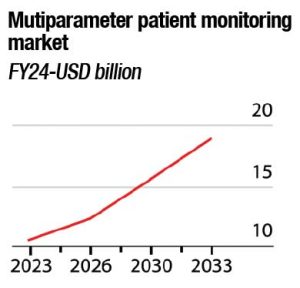
Wearable sensors have become key in ICU monitoring by providing continuous data on vital signs with minimal physical constraints.
Challenges
PME faces several challenges that can affect the accuracy and efficiency of healthcare delivery. One major issue is ensuring data accuracy, as fluctuations or inconsistencies in sensor readings can lead to misinterpretations, potentially compromising patient care. System integration is another hurdle, as various devices and platforms often fail to seamlessly communicate with one another, creating gaps in the flow of critical patient data.
Furthermore, usability remains a key challenge, especially for non-technical users, such as elderly patients or healthcare providers unfamiliar with advanced technologies. Complex interfaces or cumbersome device setups can hinder effective use and reduce patient compliance.
Transition toward RPM
The shift from traditional hospital-based monitoring to home-based remote patient monitoring (RPM) marks a significant evolution in healthcare. Earlier, continuous monitoring of vital parameters was confined to hospital settings, requiring frequent visits and extended hospital stays. However, technological advancements have enabled a seamless transition to remote monitoring, allowing real-time tracking of health metrics from the comfort of a patient’s home. Wearable sensors, cloud-based data storage, and AI-driven analytics now empower healthcare providers to make timely decisions without the need for in-person consultations. This shift not only enhances patient convenience but also reduces hospital congestions.
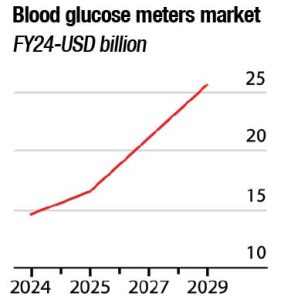
The healthcare industry is grappling with a persistent staffing crisis, with nurse shortages straining patient care. In this challenge, RPM emerges as a vital solution, easing workloads through real-time monitoring, reducing administrative burdens, and optimizing healthcare delivery.
RPM also plays a pivotal role in streamlining workflow efficiency. Automated vital sign capture and electronic health record (EHR) integration eliminate the need for manual data entry, minimizing the risk of documentation errors. This automation significantly cuts down the time nurses spend on routine tasks, enabling them to allocate more time to patient-centered care.
Concerns in RPM
Implementing RPM into healthcare workflows can seem like a big challenge. One of the primary concerns in remote patient monitoring is the security of sensitive medical data. Another critical challenge in RPM is ensuring RPM device accuracy and reliability of transmitted medical data. Faulty data can lead to incorrect diagnoses and treatment decisions, potentially harming patients.
Real-time access to patient data is a crucial feature of remote patient monitoring that enables timely intervention and decision-making by qualified healthcare professionals. However, achieving seamless real-time data access poses specific challenges. First is constant connectivity between the sensors and the monitoring platform. Second, who will review all that data? Physicians want to focus on treating patients. Overburdening medical staff can lead to burnout while hiring new employees can be expensive.
System integration poses a significant hurdle in RPM, mainly when healthcare providers utilize different systems across various networks. Technical challenges arise due to outdated software stacks and compatibility issues. Interoperability is another concern, given health data’s large and heterogeneous nature.
Implementing RPM in the healthcare industry entails various costs, including per-unit costs, licensing fees, software expenses, and the need for dedicated technical staff. Often overlooked is the price of training healthcare professionals to use the new technology effectively.
The path forward
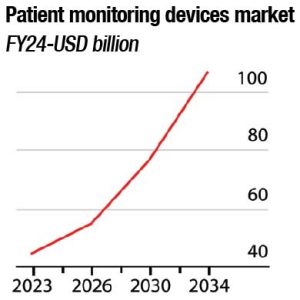
The increasing demand for patient monitoring devices, particularly for residential use, is propelling market growth and shaping a promising future for the industry. A major driver is the rising prevalence of chronic conditions such as cardiovascular diseases, diabetes, and neurological disorders, where continuous monitoring is essential. The Covid-19 pandemic further accelerated demand, leading manufacturers to ramp up production and innovate new solutions to meet healthcare needs. This surge in demand, coupled with rapid technological advancements, is expected to sustain market expansion in the coming years.
Additionally, government initiatives, regional expansions, and the presence of major industry players are contributing to market growth. The hospital sector remains the dominant end-user, accounting for a significant market share due to the need for high-quality medical services and effective disease diagnosis. However, the home care segment is also witnessing substantial demand, as more patients prefer remote monitoring solutions that offer convenience and reduced hospital stays.
With continuous innovation and increasing adoption of digital healthcare solutions, the future of patient monitoring devices is bright. Advancements in AI, remote monitoring, and wearable technology are set to revolutionize patient care, making healthcare more efficient, accessible, and proactive.