Headlines of The Day
India emerging as MVT destination for affordability, personal support systems
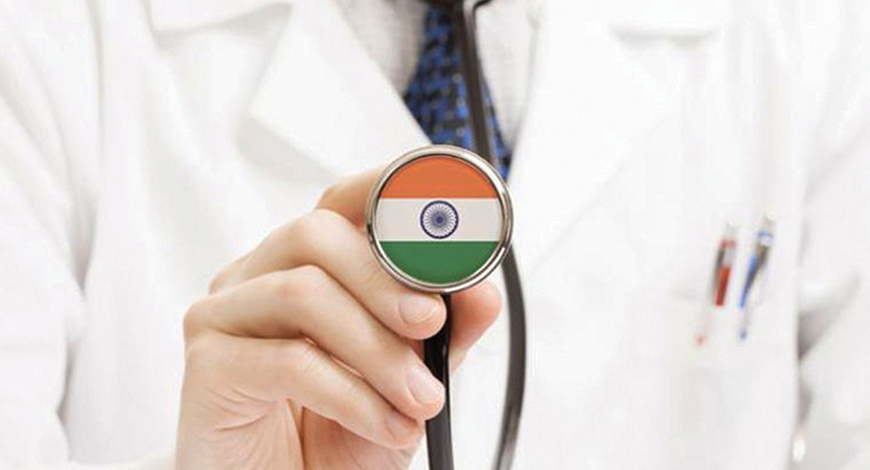
Artificial intelligence is changing healthcare at an unprecedented pace. From speeding up diagnostics to streamlining hospital operations, technology is reshaping how medicine is delivered. Yet, for many patients facing life-altering procedures, efficiency alone is not enough. Increasingly, international patients are seeking something that algorithms cannot provide: trust, empathy and the reassurance of human care.

As medical tourism continues to grow, India is emerging as a destination not only for world-class treatment and affordability, but also for the deeply personal support systems that surround the patient journey.
Beyond surgery, patients are looking for reassurance
“The decision to travel for medical care is deeply personal, and often scary,” says Ankit Mehrotra, Co-Founder, The Medical Travel Company (TMTC). While AI is transforming diagnostics and operational efficiency, he believes that patients seeking treatment abroad are looking for far more than medical expertise.
“International patients travelling for healthcare seek more than treatment—they look for a trusted partner who can help them navigate an unfamiliar healthcare system in a new country with confidence,” he says.
According to Mehrotra, a truly patient-centric approach begins long before surgery. From initial consultations in a patient’s home country to post-operative recovery, dedicated support around rehabilitation, meals, accommodation and logistics helps patients focus on healing rather than worrying about the details.
“Technology can greatly enhance healthcare, but empathy remains irreplaceable,” he adds.
Building trust across borders
For patients travelling thousands of miles from home, continuity of care is often as important as the procedure itself.
Dr Sukhdev Singh, a UK-based General Practitioner, says his team has created an integrated medical travel pathway that bridges healthcare systems across countries.
“We utilise the trusted relationship patients have with their UK or US doctors, who are seen as their strongest advocates,” he explains. “These physicians work closely with Indian consultants to ensure clinical synergies and truly patient-centred care.”
The relationship doesn’t end after surgery. Patients continue to remain under the supervision of both international and Indian doctors, creating a seamless continuum of care.
“Trust, empathy and the personal touch are human values that AI will never replicate. They contribute significantly to patient satisfaction and improved clinical outcomes,” says Dr Singh.
He also points to one of India’s biggest strengths: post-operative care.
“What is truly remarkable in India is the aftercare. Certain healthcare consultants have developed dedicated recovery programmes, which is one of the reasons international patients increasingly come here for a more holistic approach to healthcare,” he says.
Why one UK patient chose India
For UK-based patient Jean Paul, years of chronic knee pain eventually led to the need for a double knee replacement. Faced with long waiting times on the NHS, he began exploring options in Poland, Latvia and India.
Ultimately, it was not just the surgeons that convinced him.
“The quality of the doctors gave me confidence, but as an international patient, everything around the surgery can feel incredibly stressful,” he says.
What stood out, according to Jean Paul, was the support system. From consultations with a UK doctor to insurance coverage, medical supervision and rehabilitation at the aftercare centre, every aspect of the process was managed with care.
“My food, recovery and rehabilitation were all looked after. India exceeded every expectation,” he says. “Most importantly, my wife and family had complete peace of mind throughout the journey.”
The future of healthcare may be more human, not less
As AI becomes increasingly sophisticated, many experts believe its greatest value lies in augmenting healthcare rather than replacing the human relationships at its core.
Because while machines may help interpret scans and optimise systems, they cannot reassure anxious families, guide patients through uncertainty or offer comfort during recovery.
And perhaps that explains why, in an era defined by automation, many Western patients are travelling to India not simply for surgery, but for something medicine has always relied on—the human touch. News18