Headlines of The Day
Hospitals exploring partnerships with air ambulance operators to boost emergency care
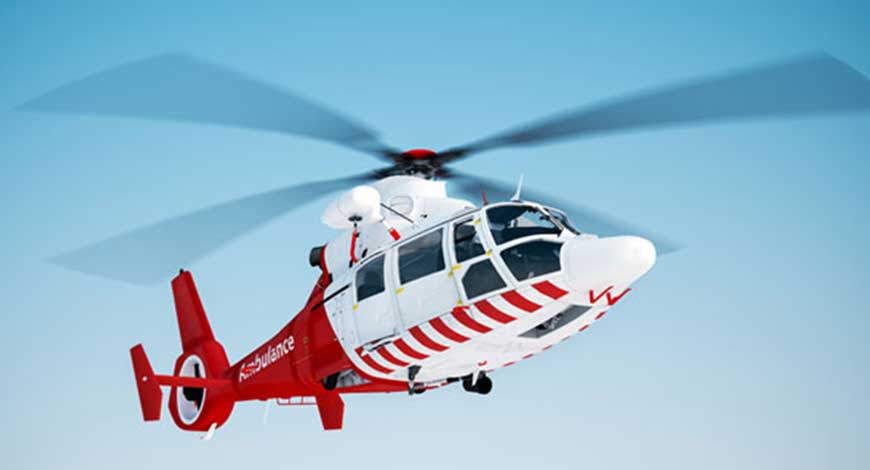
Air taxis may still be some distance away from commercial operations in India, with the Directorate General of Civil Aviation (DGCA) in the process of framing guidelines for operations, infrastructure, and manufacturing, yet the new-age mobility concept is already drawing the attention of one critical sector — health care.

Several health care companies, hospital chains, and air ambulance providers are exploring partnerships with emerging air taxi and electric vertical takeoff and landing (eVTOL) aircraft manufacturers, betting on faster medical evacuation and emergency response capabilities.
Startups such as Chennai-based The ePlane Company and Bengaluru-based Sarla Aviation have confirmed that hospital groups and air ambulance operators have either placed orders or entered into talks for future deployments.
A senior executive at Sarla Aviation said the company has already signed agreements with hospital major Aster DM Healthcare and medical evacuation providers such as Kerala-based Blue Dot Air Ambulance and Delhi-based Aeromed Air Ambulance. Meanwhile, The ePlane Company said it is in discussions with three of India’s top five health care groups. The IIT Madras-incubated startup has also entered into a strategic partnership with the International Critical-care Air Transfer Team (ICATT) to provide 788 air ambulances. Most of these aircraft are expected to become commercially operational after 2029.
Though eVTOL and health care companies did not disclose names, industry sources said major health care players including Apollo Hospitals, Manipal Hospitals, Fortis Healthcare, and Max Healthcare could be evaluating partnerships with these new-age aircraft makers. Health care sector sources said two of these companies are already in advanced discussions.
“We have actually tied up with air ambulance operators as well as international startup charter plane operators. There is advanced work going on with some marquee hospitals. We expect to make an announcement regarding that at the Farnborough International Airshow in July,” said Satya Chakravarthy, founder of The ePlane Company.
Globally, China remains the only country where commercial passenger eVTOL services are currently operational, with deployments in cities including Guangzhou, Hainan, and Shenzhen. Dubai is expected to follow, while the United States remains in the certification phase. India too is currently at the development and certification stage.
“We have already signed an MoU with Aster, and are in talks with a few other hospital chains. We are expected to get a DOA (design organisation approval) certificate within three months,” said Rakesh Gaonkar, co-founder and CTO of Sarla Aviation.
An eVTOL aircraft is an electrically powered aircraft capable of vertical takeoff and landing, designed to support future urban air mobility (UAM). Industry sources said eVTOL companies are also in discussions with infrastructure providers, including charging ecosystem players such as Jio-BP. The development comes as The ePlane Company on Wednesday announced the assembly of the e200X, its full-scale electric aircraft platform, designed to serve three emerging markets —passenger air taxis, urban cargo transport, and air ambulance services.
The e200X is supported by a board featuring Vishesh Rajaram of Speciale Invest, Eash Sundaram of JetBlue, and Aditya Ghosh of Homage, Akasa Air and also a former IndiGo executive.
Regulatory concerns
Plans by several companies to introduce air taxi services in Indian cities including Bengaluru, Mumbai, Delhi, and Chennai have already generated significant interest. However, regulatory clarity remains the key factor determining the pace of commercial rollout.
DGCA has so far issued guidance material covering vertiports (September 2024), airworthiness and type certification of VTOL-capable aircraft (September 2024), and pilot training and rating requirements for VTOL-capable aircraft (May 2025), while a broader operational framework for commercial eVTOL services remains under development.
The sector has also attracted interest from established aviation players. Rahul Bhatia-led InterGlobe Enterprises, the co-founder of IndiGo, announced plans in 2023 to introduce electric air taxi services in partnership with Archer Aviation and finance up to 200 eVTOL aircraft. While the proposal remains among the most ambitious advanced air mobility projects announced in India, commercial operations have not yet taken off.
Among states, Andhra Pradesh appears to be taking the lead, partnering with Sarla Aviation to develop ‘Sky Factory’ — a ₹1,300 crore electric air taxi manufacturing facility in Anantapur. In Chennai, The ePlane Company has announced a prototyping and testing facility at the IIT Madras Discovery Campus.
The Ministry of Civil Aviation is currently working on a dedicated regulatory framework for the urban air mobility sector, aimed at enabling the certification, scaling, and commercial operation of eVTOL aircraft. “The advantage of this is that hospitals will be able to set up a takeoff and landing space closer to them. They just need the charging infrastructure,” said an industry source. Business Standard