Defibrilators
Defibrillators – Transforming health systems
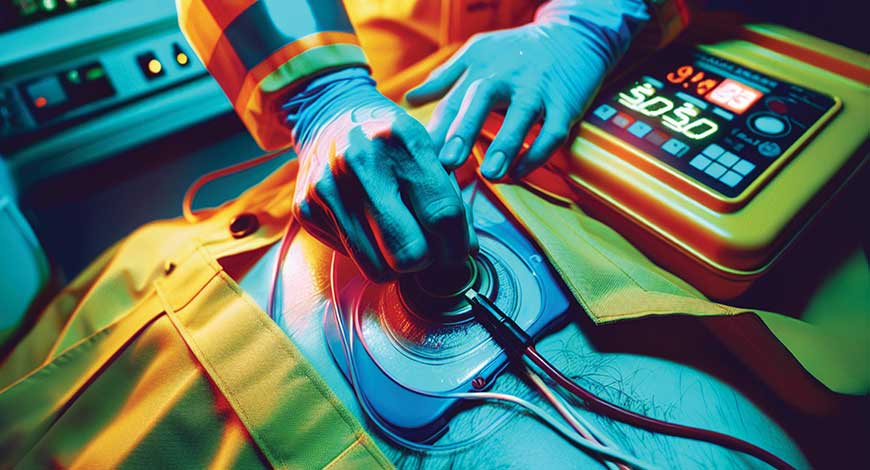
The evolution of defibrillators from early experimental devices to modern, high-precision technology underscores continuous advancements in cardiovascular medicine.

Defibrillation works by depolarizing a critical mass of cardiac cells, interrupting chaotic electrical activity, and allowing the heart’s natural pacemaker to regain control. Over time, defibrillators have evolved into various forms, catering to different medical and emergency scenarios. The manual defibrillators, used by healthcare professionals, offer precise rhythm assessment and energy selection. Their counterparts, the automated external defibrillators, designed for public and first-responder use, offer automated rhythm analysis and guided shock delivery. And the implantable cardioverter defibrillators continuously monitor heart rhythms and provide immediate intervention for high-risk patients.
Advancements in defibrillator technology are reshaping emergency response, preventive cardiology, and overall patient outcomes.
The growing role of AEDs
AEDs are revolutionizing emergency response by providing life-saving intervention outside hospital settings. With survival chances dropping by 10 percent per minute without defibrillation, widespread AED deployment in public spaces like schools, airports, and gyms is critical.
Initiatives such as using lamppost power for AED installations in the UK and advocacy efforts like Denzel Ward’s “Make Them Know Your Name” foundation are improving accessibility. However, public hesitation due to misconceptions remains a barrier. Educational campaigns and built-in voice guidance are addressing these concerns, empowering more individuals to act confidently in emergencies. As AEDs become an integral part of public health strategies, they are offering countless individuals a second chance at life.
In cardiac emergencies, every second counts. Portable defibrillators in ambulances and emergency vehicles enable paramedics to deliver immediate shocks, significantly improving survival rates. Complementary technologies, such as automated CPR devices, provide consistent and high-quality chest compressions, ensuring continuous circulation when paramedics manage multiple aspects of care.
Studies highlight the impact of these innovations. In Seattle, where advanced EMS protocols are in place, early defibrillation contributed to a cardiac arrest survival rate exceeding 60 percent. Similarly, Sweden’s drone-delivered defibrillators reduced response times, increasing survival rates in out-of-hospital cardiac arrests.
As technology evolves, AI-driven monitoring, real-time data transmission, and advanced resuscitation techniques will further enhance emergency response, ensuring faster and more effective life-saving care.
ICDs and patient outcomes
ICDs are able to detect and correct dangerous arrhythmias like ventricular tachycardia and fibrillation. Unlike external defibrillators, ICDs are implanted under the skin and continuously monitor heart rhythms, delivering shocks when necessary.
Clinical trials such as MADIT (Multicenter Automatic Defibrillator Implantation Trial) and SCD-HeFT (Sudden Cardiac Death in Heart Failure Trial) confirm ICDs’ effectiveness, especially in heart failure patients. Advances in battery life, remote monitoring, and dual-chamber pacing have further improved functionality and patient compliance. Beyond survival, ICDs reduce hospitalizations and enhance quality of life.
Despite these benefits, ICD implantation presents challenges, including infection risks, lead displacement, and inappropriate shocks, which can cause anxiety. Long-term management requires regular follow-ups, optimized device programming, and psychological support to improve patient outcomes.
Real-time monitoring
One of the most significant improvements is real-time monitoring, allowing AEDs to continuously assess a patient’s condition and automatically transmit critical data to emergency responders. These next-generation defibrillators are revolutionizing cardiac arrest management with advanced real-time monitoring, AI-driven analytics, and automated decision support.
Smart AEDs, unlike traditional AEDs that relied on manual intervention are equipped with connectivity features, AI-driven decision-making, and real-time data transmission, enhancing their ability to provide faster, more precise, and more effective life-saving interventions. These smart devices integrate ECG analysis, thoracic impedance tracking, and end-tidal CO₂ monitoring to enhance precision in shock delivery and CPR guidance.
AI is another game-changer in smart AED technology. AI-driven algorithms analyze ECG data with higher accuracy, reducing false shocks and delays. These advanced systems can determine whether defibrillation is necessary and adjust energy levels automatically for optimal effectiveness. AI also plays a crucial role in guiding users–both trained professionals and bystanders–by offering step-by-step voice and visual instructions that adapt to the patient’s condition in real time.
Additionally, seamless cloud connectivity allows real-time data sharing with emergency teams and hospitals, streamlining post-event analysis and training. With enhanced automation and intelligence, next-generation defibrillators are paving the way for more personalized and efficient life-saving interventions.
The connectivity of smart AEDs extends beyond individual devices, enabling integration with emergency medical services, hospitals, and public health networks. When an AED is deployed, real-time location tracking allows dispatch centers to direct responders to the exact site while simultaneously preparing medical teams at hospitals. This seamless communication shortens response times, improves coordination, and ultimately saves more lives.
As smart AEDs become more widespread, their role in public health and workplace safety will expand significantly. Additionally, predictive analytics in smart AED networks could help identify high-risk locations and ensure strategic AED placement in communities.
Public policy and market trends
The global defibrillator market is expanding, driven by the increasing prevalence of cardiovascular diseases, aging populations, and rising awareness of SCA management. Technological advancements such as subcutaneous implantable cardioverter-defibrillators (S-ICDs), MRI-compatible devices, and AEDs with real-time connectivity are enhancing patient outcomes and fueling market growth.
Governments worldwide are implementing policies to improve defibrillator accessibility. Many countries mandate AED installation in high-risk locations such as airports, malls, and sports arenas. Public Access Defibrillation (PAD) programs are training bystanders in AED use to increase community preparedness.
However, economic and logistical barriers remain. High costs, especially for implantable devices, limit access in low- and middle-income countries. Healthcare providers must balance budget constraints, maintenance, and training to ensure AED functionality. Other challenges include inconsistent emergency response systems, low public awareness, and cybersecurity risks in connected defibrillators. Overcoming these hurdles requires collaboration among policymakers, healthcare professionals, and industry leaders to standardize registries, improve funding, and enhance training programs.
Mathematical and computational advances
Mathematical modeling and computational simulations are optimizing shock delivery and improving device efficiency. Advanced models simulate heart activity, refining defibrillator algorithms for more precise and effective shocks. Computational techniques test various waveforms, energy levels, and electrode placements to maximize efficacy while minimizing tissue damage.
Machine learning enhances defibrillation by predicting cardiac events before they occur. By analyzing vast ECG datasets, AI algorithms detect early signs of arrhythmias, enabling timely intervention and reducing unnecessary shocks. These predictive models are increasingly integrated into implantable defibrillators, personalizing therapy based on real-time patient data.
Outlook
Defibrillators are revolutionizing emergency response, preventive cardiology, and patient care. With continuous innovation, strategic policies, and widespread awareness, survival rates will rise, transforming cardiac emergency management and saving countless lives worldwide.