Cath Labs
Cath labs at the crossroads – Navigating today’s realities and building for the future
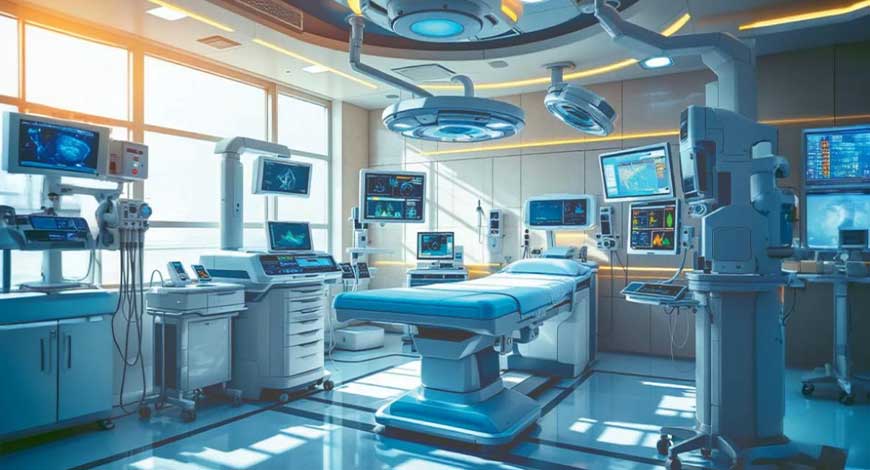
Cath labs, driven by technological innovation, remain the gold standard for precise cardiovascular diagnosis and treatment, expanding options for complex interventions.

Catheterization laboratories are transforming significantly. Once limited to diagnostic and routine interventional procedures, they are expected to support increasingly complex cardiovascular interventions with greater speed, accuracy, and safety. As cardiovascular disease rises and patient profiles become more varied and high-risk, cath labs adapt to meet modern care’s growing demands.
This evolution is driven by advancements in imaging, data integration, procedural techniques, and workflow efficiency. There is a heightened focus on reducing radiation exposure, minimizing contrast agent use, and streamlining operations to enhance patient and staff safety. Simultaneously, cath labs are moving toward more standardized and collaborative environments, reflecting a shift toward value-based, precision-driven care.
Indian market dynamics
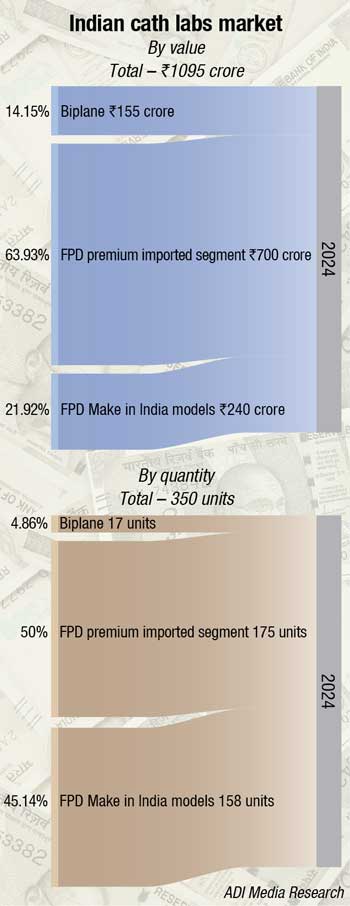
In 2024, the Indian cath lab market is estimated to be worth ₹1,095 crore, with approximately 350 units sold. The biplane segment experienced a notable increase in popularity, with its market share by value rising from 8.5 percent in 2023 to 14.15 percent in 2024. This growth came largely at the expense of the FPD indigenous models, whose market share by value declined from 27.9 percent in 2023 to 21.9 percent in 2024. Notably, the FPD indigenous segment was the only one to experience a drop in unit realizations, as average machine prices fell. Meanwhile, the FPD premium imported segment maintained a steady market share, accounting for 63 percent of the market by value.
Over the last couple of years, large-sized detectors have been preferred. They enable hospitals and imaging centers to support cardiac, vascular, neuro, oncology, and orthopedic procedures. By expanding the scope of services offered, healthcare providers attract more patients and increase patient throughput, thereby opening up multiple streams of revenue.
|
Leading players* 2024 |
|
| Tier I | Philips |
| Tier II | GE & Siemens |
| Others | IITPL & Allengers. Canon & Shimadzu |
| *Vendors are placed in different tiers on the basis of their sales contribution to the overall revenues of the Indian cath lab market.
ADI Media Research |
|
In addition to these clinical and financial advantages, large-size detectors contribute to greater operational efficiency. The ability to capture high-quality images quickly reduces the need for repeat scans, streamlining workflows and improving the overall patient experience. This efficiency optimizes resource use and allows departments to handle a higher volume of cases, which further drives revenue growth. Integrating large-scale detectors into clinical practice represents a strategic investment that delivers improved patient care and enhanced financial performance.
Today, more patients can benefit from mechanical thrombectomy thanks to updated guidelines that extend the time window for endovascular treatment. Workflows that enable comprehensive stroke diagnoses to be performed immediately in the neuro-angio suite help stroke centers reduce door-to-reperfusion times for ischemic stroke. This is achieved by optimizing workflow and protocols, drawing inspiration from established STEMI reperfusion treatment models.
India’s healthcare landscape is witnessing a pivotal shift as institutions rush to upgrade their cath lab infrastructure, driven by the dual imperatives of rising medical emergencies and the demand for affordable, high-impact care. Leading this transformation, AIIMS Delhi recently expanded its cath lab capacity.
Meanwhile, Voluntary Health Services (VHS) is redefining what modernization can achieve. With support from the Sanmar Group and in collaboration with Madras Medical Mission, VHS has launched a cutting-edge, AI-enabled cath lab–delivering services like angioplasty and stenting at 25 percent lower cost than private hospitals. This state-of-the-art facility was built using a made-in-India model that slashed setup costs by half, proving that innovation and affordability can go hand in hand.
Together, these developments underscore a larger trend: today’s cath lab upgrades are not merely infrastructure projects but strategic healthcare investments. From reducing waiting times at AIIMS to enhancing diagnostic precision at VHS, modernization is bridging the gap between demand and delivery. As hospitals integrate AI tools, optimize costs, and expand access, the result is a powerful synergy–improved patient outcomes and operational sustainability.
In essence, India’s evolving cath lab ecosystem is navigating today’s clinical realities while preparing for tomorrow’s needs–fuelling a new era where care is not just faster and smarter, but more inclusive and resource-conscious.
The expanding horizon of cath labs–From cardiac care to multi-disciplinary precision
 Ashu Goyal
Managing Director – Sales,
Allengers Medical Systems Ltd.
Cath labs began their journey as specialized spaces for diagnosing and treating cardiac conditions. Initially used primarily for coronary angiography and angioplasty, they revolutionized how doctors approached heart disease, offering real-time imaging and minimally invasive treatment options. This breakthrough soon laid the groundwork for broader applications.
As medical needs evolved, so did cath labs. Their utility expanded from cardiac procedures to vascular interventions such as peripheral angioplasty and stenting, then further into neuro treatments for stroke and aneurysm management. Electrophysiology studies, renal interventions, oncology-related procedures like chemoembolization, and structural heart disease treatments (like TAVR and mitral clip procedures) are now commonly conducted in modern cath labs. Additionally, procedures like embolization, aortic repairs, and thrombectomy are increasingly being performed, further widening the clinical reach of cath labs.
The technological evolution behind this expansion has been remarkable. High-resolution fluoroscopy, digital subtraction angiography (DSA), and rotational angiography have enhanced image clarity. Integrating 3D imaging, fusion imaging, and road mapping capabilities allows precise navigation even in the most complex anatomies. Advanced dose optimization software ensures minimal radiation exposure while maintaining diagnostic accuracy.
The essential cath lab features for diverse procedures–cardiac, neuro, peripheral vascular, or oncology–include a high frame rate imaging system, flexible C-arm design, fast image processing, extensive DICOM compatibility, and integrated hemodynamic monitoring. The addition of robotic-assisted intervention, advanced contrast injectors, and AI-powered procedural guidance marks the future of interventional radiology.
At the forefront of this technological transformation is Allengers Medical Systems Ltd. With its state-of-the-art cath labs, Allengers empowers clinicians with precision, versatility, and patient safety. Our systems offer advanced imaging with a significantly low radiation dose, ensuring minimal risk to patients and healthcare professionals. With a growing footprint across Indian hospitals and international markets, Allengers’ commitment to innovation and affordability continues to make interventional procedures safer and more accessible.
From cardiac emergencies to neurovascular miracles, the cath lab is no longer just a cardiac suite – it is a cornerstone of modern intervention, and its future is brighter, sharper, and safer than ever.
Global market dynamics
The global cath lab services market is on the rise. It is witnessing substantial growth, mainly due to an increase in patients with cardiac diseases. The global cath lab market size was valued at USD 4.14 billion in 2024 and projected to reach USD 4.37 billion in 2025 and USD 7.05 billion by 2034 at a CAGR of 5.46 percent during 2025-2034, according to Market Research Future.
The cath lab market is significantly transforming and is shaped by technological advancements, demographic shifts, and evolving healthcare demands. Today, the market is fuelled by the increasing prevalence of CVDs, which remain the leading cause of death globally. Factors such as aging populations, sedentary lifestyles, obesity, and diabetes are driving up the number of patients requiring cardiac care. As a result, there is a growing demand for minimally invasive procedures like cardiac catheterization, which allows for accurate diagnosis and treatment of heart conditions with reduced recovery times and lower risk compared to traditional surgery.
Technological innovations are at the forefront of this market evolution. The introduction of digital subtraction angiography (DSA), advanced guidewires, AI-driven diagnostics, and robotic-assisted procedures has made interventions safer, more efficient, and more precise. Hybrid cath labs–combining interventional cardiology with advanced imaging systems–are gaining popularity, enabling complex procedures within a single suite. Additionally, immersive technologies like virtual and augmented reality are being used for remote collaboration and training, enhancing the skill set of medical professionals and ensuring high standards of care.
Looking ahead, the future of the cath lab market is poised for growth, especially in emerging economies with expanding healthcare infrastructure. The rise of outpatient centers and techniques like radial access enable safer, cost-effective procedures outside hospitals, reducing stays and infection risks. This shift supports the global trend toward patient-centered care, aided by favorable reimbursement policies for minimally invasive treatments.
However, the market also faces notable restraints that could hinder its growth trajectory. Procedure-related complications like bleeding and contrast-induced nephropathy demand skilled care, increasing healthcare burdens. Limited access to advanced imaging and robotics in resource-poor areas, along with concerns about radiation exposure, further restrict adoption, posing challenges to widespread market growth despite its potential.
Major players in the cath lab market are driving industry growth through continuous innovation, strategic investments, and the development of integrated solutions tailored to evolving healthcare demands. They focus on enhancing system functionality and performance through significant R&D efforts, aiming to boost clinical outcomes and operational efficiency in busy healthcare environments.
Market leaders are incorporating advanced technologies such as AI and machine learning into diagnostic and imaging systems to stay competitive. These innovations help improve procedural accuracy, support clinical decision-making, and streamline workflows for healthcare professionals. Furthermore, the industry is witnessing a rise in strategic collaborations and partnerships, enabling organizations to expand their portfolios, strengthen their global presence, and offer more comprehensive care solutions.
The current market environment is also shaped by favourable reimbursement policies and increasing adoption of minimally invasive procedures, which are encouraging broader use of cath lab services. Industry leaders align with healthcare providers’ needs for effective, high-quality, and cost-efficient cardiac care by focusing on system integration, user-centric design, and workflow optimization.
This competitive landscape is expected to evolve as the demand for precision-driven and technologically advanced solutions rises, positioning the cath lab market for sustained growth in the years ahead.
Advanced interventions reshape cath lab boundaries
As cardiovascular emergencies grow in complexity, today’s cath labs are no longer limited to diagnostic and routine interventional roles. A striking example of this evolution is the emerging use of extracorporeal membrane oxygenation (ECMO)–traditionally confined to ICUs–now deployed within the cath lab as a life-saving bridge in hemodynamically unstable patients. Whether used as a last-resort intervention or a proactive support tool during high-risk procedures, ECMO reflects the cath lab’s expanding role in critical care.
Despite the lack of standardized guidelines, its growing adoption underscores how innovation and clinical necessity drive cath labs to adapt rapidly, reinforcing their status as frontline centers for advanced cardiac interventions.
A call for change
Radiation exposure in cardiac cath labs remains a significant hazard for staff. Despite using lead aprons, collars, and goggles, these traditional protections are increasingly insufficient for the demands of complex interventional procedures.
The growing call for change, as amplified by SCAI and other professional bodies, is advocating for a systemic overhaul in radiation protection strategies and policies. New shielding devices and zero-radiation techniques offer better safety and comfort without sacrificing efficiency. However, adoption is slowed by cost, limited administrative backing, and inconsistent use across institutions.
As evidence mounts, the advocacy for policy reforms grows stronger. Experts call on hospitals, healthcare systems, and policymakers to invest in safer work environments, improve access to advanced radiation protection equipment, and enforce comprehensive education on radiation safety. The Society plans to use these findings to push for legislative action to prioritize worker well-being and hold institutions accountable for maintaining safe occupational standards.
Sustainability in action
As the healthcare sector reckons with its role in the climate crisis–contributing approximately 4–5 percent of global greenhouse gas emissions and over 10 percent in the United States alone–cath labs are emerging as pivotal sites for environmental reform. Cardiovascular catheterization laboratories (CCLs), known for their high resource consumption and considerable waste generation, are increasingly recognized as areas ripe for sustainable transformation.
Green practices have slowly entered CCLs due to inertia, cost concerns, and unclear regulations, but this is changing as sustainability gains recognition as both an ethical duty and a smart, cost-saving strategy.
Cath labs are embracing “Reduce, Reuse, Recycle” by streamlining kits, cutting disposables, and exploring alternatives like CT angiography. Despite regulatory challenges, reuse is growing through sterilization investments and pilot programs for reusable instruments, advancing sustainability while maintaining safety and efficiency in procedures.
Meanwhile, recycling is becoming more organized as cath labs adopt material segregation and partner with manufacturers to recover and repurpose packaging and device parts, demonstrating that environmental goals can align with patient care without disrupting workflows.
Another frontier for sustainability is designing greener cath labs from the ground up. Forward-looking hospitals are incorporating green architecture and energy-efficient systems–such as advanced HVAC units and automated power-down features for imaging equipment–into their facilities.
Robotics and remote intervention
Robotic precision is steadily redefining the landscape of interventional cardiology, signalling a transformative era for catheterization laboratories. With increasing concerns over radiation exposure and occupational health among interventional cardiologists, robotics emerges as a timely and promising solution. Clinicians with years of hands-on experience are now expressing a strong preference for technologies that reduce physical strain and improve procedural consistency. A recent global survey highlights that most interventionalists recognize the potential of robotics to elevate procedural quality, ensure operator safety, and standardize outcomes. While lead aprons and thyroid shields are widely used, many centers still lack comprehensive radiation protection programs, underscoring the relevance of robotics not just as a technological leap and a safety imperative.
Robotic systems’ appeal lies in their ability to minimize human error and their potential to enhance workflow efficiency through integration with imaging systems. There is growing demand for platforms that can manage multiple devices, navigate complex lesions, and open new possibilities for treatment strategies. Importantly, nearly half of surveyed professionals envision robotic systems becoming part of their daily practice shortly, provided that robust clinical evidence and cost-effective models are in place.
Innovation in imaging and mapping technologies
In the evolving field of cardiac electrophysiology, there is growing momentum toward adopting advanced electroanatomic mapping (EAM) systems for treating supraventricular tachycardia (SVT). These 3D mapping systems provide detailed electrical and anatomical insights, significantly reducing fluoroscopy time—sometimes to near zero. Innovations like contact force-sensing catheters and intracardiac imaging further enhance accuracy and cut radiation exposure. Meanwhile, non-invasive imaging combined with computational modeling is transforming coronary artery disease assessment by evaluating plaques without invasive catheterization. This approach improves diagnostic accuracy and better guides revascularization decisions. In the evolving field of cardiac electrophysiology, there is growing momentum toward adopting advanced electroanatomic mapping (EAM) systems for treating supraventricular tachycardia (SVT).
Bridging the access gap
AI is transformative in expanding access to advanced cardiac diagnostics and interventions, particularly in underserved and remote regions. Integrating AI-driven technologies in cath labs redefines how and where critical cardiovascular care can be delivered. Traditionally, advanced cardiac services such as angioplasty, ablation, and pacemaker implantation were primarily restricted to metropolitan centres, leaving patients in rural or provincial areas with limited treatment options. Geographic and financial barriers often meant that individuals suffering from heart attacks or strokes had to endure long, costly travel to reach urban hospitals – a delay that could severely compromise outcomes.
AI-enhanced cath labs are helping overcome this inequity by enabling regional hospitals to offer high-quality cardiac care locally. These systems automate and refine complex imaging and measurement tasks, enhancing diagnostic precision and improving procedural outcomes. Features like AI-powered image enhancement, 3D image fusion, and automated vessel measurements streamline clinical workflows and reduce reliance on manual interventions. This shortens procedure times, reduces radiation exposure, and ensures more accurate and timely decision-making.
Notably, deploying AI-enabled cath labs allows hospitals in remote areas to build sustainable cardiac programs.
Technological integration and vendor partnerships
In today’s evolving healthcare landscape, industry collaborations play a pivotal role in transforming catheterization laboratories into more intelligent, sustainable, and patient-centric environments. Strategic partnerships between technology providers and healthcare institutions drive the co-development of integrated solutions that enhance imaging, data-driven decision support, and workflow efficiency while reducing environmental impact.
These collaborations promote circular economy principles by focusing on resource efficiency, modular upgrades, and refurbished equipment to extend lifespan and minimize waste. They also advance digital transformation through seamless data integration, remote monitoring, and cloud-based storage, improving care coordination and decision-making. By fostering shared accountability and continuous innovation, these alliances support better clinical outcomes, operational efficiency, and ecological stewardship. As cath labs become increasingly complex, the synergy between healthcare providers and industry collaborators will remain central to building smarter, greener, and more resilient cardiovascular care ecosystems.
Outlook
Cath labs remain the gold standard for the reliable and accurate diagnosis and treatment of vascular abnormalities. Advances like hybrid cath labs, enhanced imaging, and ECMO are turning them into specialized centers for complex cardiovascular care. These innovations improve precision, safety, and treatment options, especially for high-risk patients. Healthcare facilities adopting these technologies are set to deliver better outcomes and lead in cardiac care. Ultimately, the journey ahead promises to reshape cardiovascular intervention, blending cutting-edge technology with compassionate care to ensure a healthier future for all.
Second opinion
Future-proofing cardiac care with advanced cath labs.