Trends
Orthopedic power tools market to reach USD 2.6B
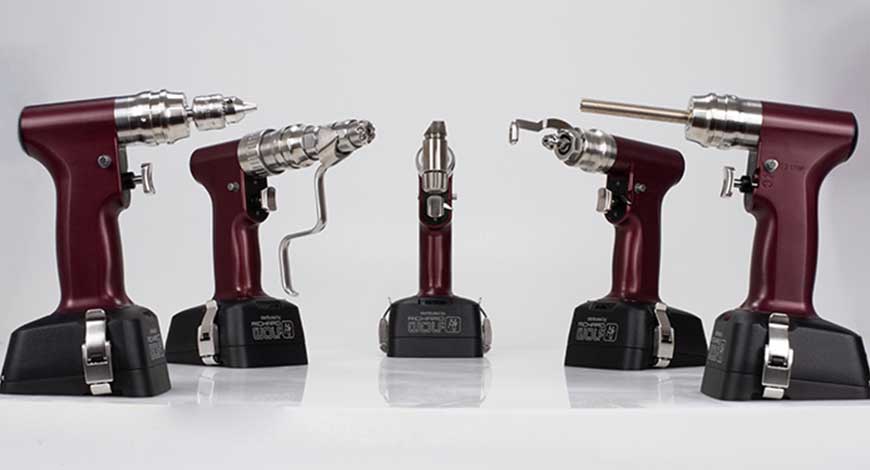
The global orthopedic power tools market is growing steadily, expected to be valued at around USD 1.9 billion in 2026 and projected to reach USD 2.6 billion by 2033, with a CAGR of 4.4% in the coming years. This expansion is supported by rising orthopedic surgery volumes, increasing geriatric population, and continuous advancements in surgical technologies. Orthopedic power tools are essential in procedures such as joint replacement, trauma fixation, and spinal surgeries. They improve surgical precision, reduce operation time, and enhance patient outcomes. Market dynamics reflect a strong shift toward minimally invasive procedures and technologically advanced devices that offer improved ergonomics, efficiency, and safety. Manufacturers are focusing on developing lightweight, battery-powered, and digitally integrated tools to meet evolving clinical requirements.

Rising burden of orthopedic disorders drives market growth
The increasing prevalence of orthopedic conditions is a primary driver of the orthopedic power tools market. Aging populations, sedentary lifestyles, and higher participation in sports and physical activities are contributing to a growing incidence of musculoskeletal disorders such as osteoarthritis, osteoporosis, and fractures. According to global health estimates, musculoskeletal conditions are among the leading causes of disability worldwide, significantly increasing the demand for surgical interventions. As life expectancy rises, the number of joint replacement and spinal procedures continues to grow. For example, knee and hip replacement surgeries have witnessed consistent growth across developed economies, with hospitals reporting higher annual procedure volumes. This trend directly fuels demand for advanced orthopedic power tools capable of delivering high precision and reliability.
Healthcare providers are also focusing on early diagnosis and timely surgical treatment, which increases procedural volumes. Hospitals and specialty orthopedic centers are upgrading their surgical infrastructure with modern tools to manage complex cases efficiently. Manufacturers are responding by introducing high-performance devices with improved torque control, reduced vibration, and enhanced durability, ensuring better clinical outcomes and long-term usability.
Technological advancements transform surgical efficiency
Rapid technological innovation is reshaping the orthopedic power tools market. The integration of robotics, computer-assisted navigation, and digital imaging systems has significantly improved surgical precision and consistency. These advancements require compatible power tools that can deliver accurate control and stable performance during procedures. Battery-powered orthopedic tools are gaining traction due to their portability, ease of use, and reduced dependency on external power sources. Improved motor efficiency and ergonomic designs are enhancing surgeon comfort, reducing fatigue during long procedures. In parallel, the incorporation of smart technologies such as sensors and real-time monitoring systems enables better control and predictive maintenance, minimizing the risk of intraoperative failures.
The shift toward minimally invasive surgeries is another key factor driving innovation. These procedures require compact, lightweight tools that can operate efficiently within confined surgical areas. As healthcare facilities modernize operating rooms, demand for technologically advanced orthopedic power tools continues to rise. Manufacturers are investing heavily in research and development to introduce next-generation devices that align with evolving surgical standards.
Segmentation insights: Large-bone tools lead while small-bone segment gains rapid momentum
The large-bone power tools segment dominates the orthopedic power tools market, accounting for approximately 62% of market share, driven by the high volume of joint replacement, trauma fixation, and spinal surgeries requiring high-torque and durable instruments. This dominance is reinforced by the growing incidence of orthopedic disorders and sports-related injuries, particularly in developed markets. Hospitals continue to prioritize investment in advanced large-bone systems to improve surgical precision and reduce procedure time. A notable development includes expanded product portfolios by Stryker Corporation, which introduced next-generation high-torque drills with enhanced battery efficiency and ergonomic control for complex procedures. Meanwhile, the small-bone power tools segment is emerging as the fastest-growing category, supported by rising demand for minimally invasive surgeries, increasing outpatient procedures, and advancements in precision-focused surgical instruments.
Regional insights: North America leads while Asia Pacific emerges as the fastest-growing market
North America holds the largest share of the orthopedic power tools market, accounting for a significant portion of global revenue. This leadership is driven by advanced healthcare infrastructure, high orthopedic surgery volumes, and strong adoption of minimally invasive surgical techniques. The United States remains the dominant contributor, supported by favorable reimbursement policies and continuous technological innovation. Asia Pacific is the fastest-growing region, driven by increasing healthcare investments, rising orthopedic disorder prevalence, and expanding hospital infrastructure. Countries such as China and India are witnessing a surge in joint replacement and trauma surgeries due to growing population and urbanization. Government initiatives to improve healthcare access and infrastructure are further supporting market expansion. Europe maintains steady growth, supported by a well-established healthcare system and increasing demand for advanced surgical technologies. Meanwhile, Latin America and the Middle East are gradually expanding due to improvements in healthcare facilities and rising awareness of orthopedic treatments. These regional trends highlight the importance of localized strategies, where manufacturers focus on cost optimization in emerging markets and technological innovation in developed regions. Persistence Market Research