MRI Equipment
MRI – Breaking barriers & shaping the future
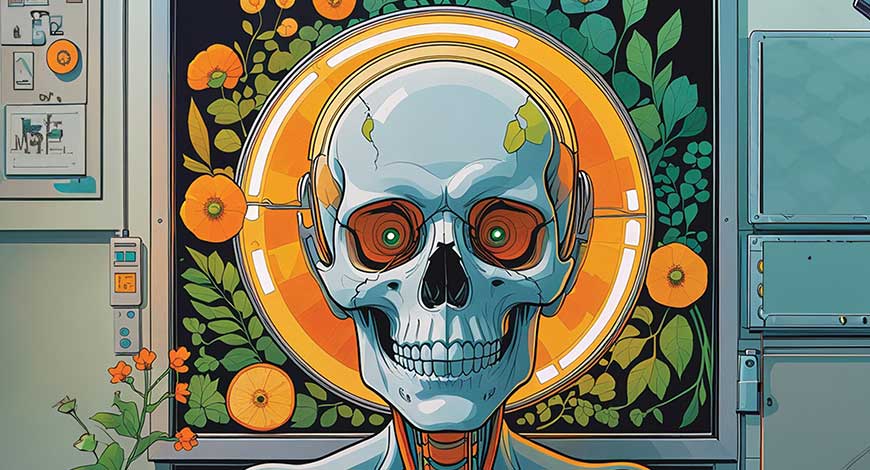
MRI is evolving to become more accessible, efficient, and inclusive. ensuring that everyone, regardless of geography or economic status, can benefit from life-saving imaging technology.

MRI has revolutionized medical imaging, offering unparalleled insights into the human body. Its development is rooted in the discovery of nuclear magnetic resonance (NMR) in the 1940s by Felix Bloch and Edward Purcell, who found that certain atomic nuclei could absorb and emit radiofrequency energy when placed in a magnetic field. This breakthrough laid the foundation for MRI technology, which emerged in the 1970s when researchers recognized NMR’s potential for medical imaging. Dr. Raymond Damadian played a key role in demonstrating that NMR could distinguish between normal and cancerous tissues, sparking further advancements.
By the early 1980s, MRI had evolved into a powerful diagnostic tool, capable of producing highly detailed images of soft tissues without the risks associated with ionizing radiation. Subsequent technological advancements, including functional MRI (fMRI) in the 1990s, further expanded its applications, particularly in studying brain activity.
Today, MRI continues to evolve, with innovations such as ultra-high-field systems and hybrid imaging techniques promising even greater diagnostic precision. As a cornerstone of modern healthcare, MRI has significantly improved the detection and treatment of various medical conditions, shaping the future of medical imaging and patient care.
Game-changing innovations in MRI
MRI continues to push the boundaries of diagnostic precision with groundbreaking advancements set to redefine medical imaging in 2025. From ultra-fast scans to AI-powered enhancements, the latest innovations are enhancing patient care, improving accessibility, and driving efficiency in radiology.
One of the most exciting developments is the 5-minute MRI scan, a technological breakthrough that dramatically reduces scan times without compromising image quality. By optimizing pulse sequences and leveraging parallel imaging techniques, this innovation ensures rapid diagnosis, making MRI more accessible in emergency settings and for patients with mobility challenges. The speed of these new scans also increases throughput in hospitals, reducing waiting times and improving overall patient experience.
AI is playing a transformative role in MRI, particularly in Alzheimer’s disease diagnosis and monitoring. AI-driven MRI is enhancing early detection by analyzing subtle brain changes that may indicate neurodegeneration. These advancements not only improve accuracy but also enhance patient safety by optimizing scan parameters to reduce the need for contrast agents, which can pose risks for elderly patients. By integrating AI into MRI workflows, radiologists can now provide faster, more reliable diagnoses, paving the way for personalized treatment strategies.
Pushing boundaries
The push for higher resolution and stronger magnetic fields is redefining MRI’s capabilities. One of the most significant breakthroughs in MRI is the development of an 11.7 Tesla scanner, currently one of the most powerful in the world. Led by Nicolas Boulant, Director of Research at the French Alternative Energies and Atomic Energy Commission (CEA), this ultra-high-field system captures brain details at an unprecedented resolution. The ambition behind this project is to study healthy and diseased brains with unmatched precision, potentially transforming the understanding of conditions like Alzheimer, Parkinsons, and schizophrenia. Additionally, it enables the detection of chemical markers such as glucose and glutamate, which are crucial in brain metabolism studies.
While ultra-high-field MRI provides extraordinary image quality, 1.5T MRI remains the standard in clinical practice due to its widespread availability. To bridge the gap between standard and high-field imaging, researchers at Massachusetts General Hospital have developed a multi-scale super-resolution model that enhances the resolution of 1.5T images to levels comparable to 7T MRI. This diffusion-based AI approach corrects distortions and refines image quality without requiring expensive hardware upgrades. By integrating progressive learning strategies, the model adapts to various resolutions, improving accessibility and efficiency in routine imaging.
Accessibility and affordability on the rise
MRI has long been a cornerstone of modern diagnostics, yet its high cost and limited availability have often placed it out of reach for many patients, particularly in developing nations. However, a breakthrough in low-cost MRI technology is set to revolutionize diagnostics in India. Researchers and MedTech innovators are developing portable, affordable MRI machines designed to operate with minimal infrastructure, making advanced imaging accessible even in remote regions.
Beyond affordability, machine learning is playing a pivotal role in making MRI scans not only cheaper but also safer. Advanced AI algorithms are optimizing image reconstruction, reducing the need for repeated scans, and enhancing the clarity of images captured with lower magnetic field strengths. This innovation significantly cuts down on the time and energy required for each scan, making MRI more efficient and sustainable. Moreover, AI-powered automation is helping streamline workflows, minimizing human error, and enabling faster, more precise interpretations, thereby improving patient outcomes.
Meanwhile, the global MRI landscape is experiencing an unprecedented boom, with millions of scans performed annually across the world. As healthcare systems expand and the demand for early disease detection rises, MRI utilization continues to soar. In high-income countries, MRI is an integral part of routine diagnostics, whereas emerging markets are witnessing rapid adoption due to technological advancements and cost reductions. With increased accessibility and affordability, MRI is poised to bridge healthcare gaps, bringing cutting-edge diagnostics to populations that have historically lacked access.
A new era in cardiac imaging
Cardiac imaging has entered a transformative phase, with MRI playing a crucial role in diagnosing and managing heart conditions. While MRI was once considered unsafe for patients with cardiac implantable electronic devices (CIEDs), advancements have changed this landscape. Modern MRI-conditional CIEDs and strict safety protocols now allow even patients with legacy devices to undergo MRI scans safely under controlled conditions.
Meanwhile, cutting-edge cardiac MRI continues to revolutionize heart health, offering precise, non-invasive assessments for congenital defects, ischemic damage, cardiomyopathies, and inflammatory diseases.
Emerging technologies, including AI-driven automation and deep phenotyping, are further enhancing accuracy and efficiency. With improved accessibility and evolving guidelines, cardiac MRI is poised to redefine diagnostics, ensuring faster, safer, and more personalized patient care.
The road ahead
The future of MRI is set to be shaped by the convergence of advanced imaging techniques, neurotechnology, and AI-driven innovations.
One of the most promising developments is the integration of MRI with neurostimulation. Research from Purdue University has demonstrated how self-learning MRI systems can capture real-time neurological data, offering deeper insights into conditions like epilepsy, Parkinson, and depression. This fusion of MRI and neurotechnology may also advance brain-computer interfaces, opening new possibilities in neuroscience and rehabilitation.
By 2030, MRI will be more portable, efficient, and accessible. Low-field scanners will transform remote diagnostics, while ultra-fast scanning and AI-powered interpretation will enable real-time analysis and predictive insights. Quantum computing and deep learning will refine early disease detection, advancing preventive diagnostics.
Emerging imaging techniques are also revolutionizing MRI diagnostics. Hyperpolarized MRI enhances signal strength for detailed metabolic imaging, while Diffusion Tensor Imaging (DTI) advances brain connectivity studies. Additionally, the integration of molecular imaging is improving cancer detection and real-time therapy tracking, accelerating the shift toward precision medicine.
MRI is not just advancing technologically—it is evolving to become more accessible, efficient, and inclusive. Whether through ultra-high-field imaging, AI-driven diagnosis, or cost-effective solutions for remote healthcare, MRI is breaking barriers and shaping the future of medical imaging. As these innovations continue to unfold, the goal remains clear, ensuring that everyone, regardless of geography or economic status, can benefit from life-saving imaging technology.