Industry
MedTech is driving transformational innovation
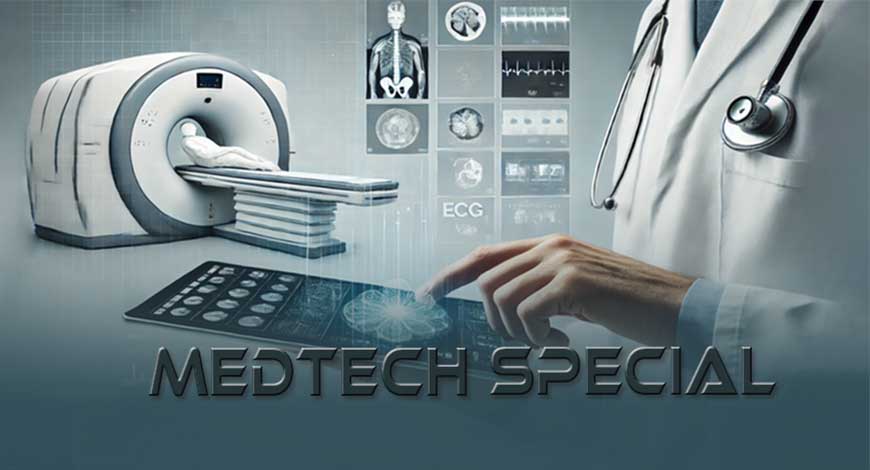
In recent years, medical technology has done more than evolve. It’s reshaped healthcare, changing the way patients and providers interact globally.

Medical technology has moved beyond evolution–reshaping healthcare, redefining patient care, and transforming global interactions between providers and patients. From AI-driven diagnostics and wearable health monitors to robotics and biomaterials, innovation is driving a new era of precision medicine, making healthcare faster, smarter, and more accessible.
The surge in chronic conditions and heightened awareness of preventive care are fuelling an urgent need for advanced diagnostics, testing, and monitoring solutions. MedTech companies, facing regulatory, economic, and environmental challenges, are not just adapting but leading a revolution. Breakthroughs in minimally invasive procedures, real-time monitoring, and next-generation biomaterials are paving the way for a patient-first healthcare model.
The MedTech sector stands at the forefront of a paradigm shift as the world emerges from a pandemic that reshaped health priorities. The fusion of cutting-edge science, AI-driven analytics, and patient-centric solutions is setting the stage for a future where healthcare is more connected, efficient, and personalized than ever before. This convergence of innovation and demand is driving some of the most defining trends in MedTech today.
SOME KEY AREAS OF ADVANCEMENTS TO CONSIDER IN 2025
AI and machine learning landscape
The rise of personalized medicine is revolutionizing healthcare, moving away from a one-size-fits-all model to treatments tailored to individual anatomy. At the heart of this transformation is AI, which has rapidly evolved from a novel concept to an indispensable tool in medical diagnostics, treatment planning, and surgical execution. With machine learning algorithms capable of analyzing complex medical data with unprecedented precision, AI is uncovering patterns and potential health risks that often elude human observation, fundamentally reshaping clinical decision-making.
AI-powered innovations are redefining surgical planning and execution, particularly in orthopaedics. By integrating advanced data analytics, AI generates highly detailed 3D models and optimized surgical plans, enabling surgeons to anticipate challenges and enhance precision. The MISSO Robotic System exemplifies this advancement, facilitating personalized pre-planning and precise cutting to ensure consistency in joint replacement surgeries. Augmented reality (AR) further amplifies these capabilities, offering real-time 3D guidance and immersive environments for training, while AI-driven imaging tools assist in intraoperative decision-making, optimizing implant placement and reducing revision rates.
Beyond surgical applications, AI is playing a crucial role in predicting disease progression and tailoring treatment protocols. Predictive algorithms analyze musculoskeletal imaging to detect disorders like osteoarthritis and fractures with remarkable accuracy, while machine learning models simulate patient-specific anatomies to optimize interventions. AI also forecasts recovery trajectories, enabling the design of personalized rehabilitation programs for improved long-term outcomes. Additionally, AI supports healthcare workflows by analyzing vast datasets to identify trends, anticipate patient needs, and recommend preemptive treatments–easing clinician burdens and improving overall efficiency.
Emerging technologies such as AI-powered surgical metaverses are pushing the boundaries of interventional healthcare, merging AI with extended reality to create virtual environments for planning and executing surgeries. These developments not only enhance surgical precision but also streamline education and training, ensuring that future clinicians are well-prepared for increasingly complex procedures.
As AI and machine learning continue to revolutionize healthcare, the challenge ahead lies in ensuring responsible deployment and oversight. Health systems and industry stakeholders must collaborate with regulators to establish robust post-market surveillance, clinician training programs, and the integration of diverse datasets to ensure AI-driven solutions remain accurate, ethical, and effective at scale. This convergence of innovation and demand is setting the stage for a new era in medicine–one defined by precision, efficiency, and personalization in patient care.
Minimally invasive technologies
Surgical interventions are undergoing a technological renaissance, marked by increased precision, reduced invasiveness, and improved patient outcomes. Advanced minimally invasive surgical tools are transforming complex, high-risk procedures into more controlled and predictable interventions, fundamentally reshaping how surgeries are performed. With the integration of real-time imaging systems, augmented reality guidance, microscale instruments, and remotely controlled robotic platforms, modern surgical technologies are minimizing trauma, accelerating recovery, and expanding the scope of treatable conditions.
Robotics-assisted surgery continues to evolve, offering unparalleled accuracy, reduced recovery times, and enhanced patient safety. In 2025, the focus is on robotic systems tailored for minimally invasive procedures, allowing surgeons to perform complex operations through smaller incisions while maintaining exceptional precision. Companies at the forefront of this transformation are integrating cutting-edge features such as haptic feedback systems, 3D visualization, and machine learning algorithms to enhance surgical outcomes.
While robotic surgery continues to refine its capabilities before achieving widespread adoption, the future is clear–surgeons are on the brink of an era where intricate, high-stakes procedures can be performed with unmatched precision and control. As technology continues to push boundaries, robotics will redefine surgical interventions, making them safer, more efficient, and more accessible than ever before.
Augmented reality in training and surgery
Augmented reality is revolutionizing medical education and surgery by enhancing anatomy training, providing real-time overlays during procedures, and enabling remote surgical assistance. Surgeons can visualize patient-specific anatomical details in the OR, improving accuracy and reducing risks. Precision OS, a leader in AR/VR simulation, offers immersive orthopaedic training, helping surgeons refine their skills in a realistic virtual environment.
Telehealth-enabled devices
Telehealth-enabled devices such as smart stethoscopes, portable ECG monitors, and at-home diagnostic kits are becoming staples in modern healthcare. These innovations empower patients to take charge of their health while ensuring that doctors have the data needed to provide accurate diagnoses and treatment plans remotely.
Regulatory changes and compliance
The orthopaedic sector faces growing regulatory scrutiny to ensure the safety, efficacy, and cybersecurity of AI-integrated devices. Manufacturers must meet stringent standards like the FDA’s Digital Health Software Precertification Program and the EU MDR, particularly for AI-driven implants and surgical tools. Ensuring robust data security and consistent performance validation is essential as AI and robotics play a greater role in joint replacements and other high-stakes procedures. To maintain patient trust and compliance, orthopaedic manufacturers are enhancing quality assurance processes, ensuring their devices remain safe, effective, and adaptable to diverse patient needs.
Focus on sustainability
Sustainability is increasingly shaping orthopaedic device manufacturing as companies tackle high-energy production and material waste. Many are adopting biodegradable materials, energy-efficient processes, and recycling programs for implants and surgical tools. 3D printing is playing a key role by enabling custom implants with minimal waste, while eco-friendly packaging is reducing the environmental footprint of distribution. These initiatives align with global efforts to create a more sustainable healthcare industry without compromising patient safety or quality of care.
Supply chain risk mitigation remain key
As MedTech companies seek growth beyond the US, many are forming partnerships or establishing local subsidiaries to navigate diverse regulatory and economic landscapes. 2025 success will depend on understanding regional nuances, from political factors to environmental considerations. Mainland China remains a key market, but its national volume-based procurement policy and economic challenges pose hurdles. Additionally, rising US-China tensions and potential regulatory restrictions, such as the Biosecurity Act, add complexity. To mitigate risks, companies are adopting a China Plus One strategy–maintaining operations in China while expanding into other markets to strengthen supply chains and customer bases.
In this evolving global landscape, India is emerging as a major player in MedTech manufacturing, with the Andhra Pradesh MedTech Zone (AMTZ) at the forefront. AMTZ has grown rapidly, with 152 companies now manufacturing various medical devices, from masks to MRI machines and pacemakers. It has also established Andhra Pradesh’s first Gamma Irradiation Centre, Cancer Radioisotope Production Facility, and Silicon Medical Detector Facility.
With major M&A deals already announced and CEOs outlining acquisition plans, 2025 is shaping to be an active year for MedTech consolidation. Declining interest rates and increased cash reserves put large companies in strong positions for acquisitions.MedTech financings surged, raising over USD 2.5 billion in January 2025 alone, with IPO activity also showing signs of revival.
The path forward
In today’s rapidly advancing healthcare sector, consumer demand and government regulations are shaping the future of medical devices. Consumers want devices that deliver alerts and maintain simplicity, while manufacturers face increasing expectations to address intellectual property concerns and adhere to device regulation protocols.
For manufacturers, aligning with FDA initiatives and prioritizing transparency is essential for building trust. As biomedical engineering or robotics fields introduce even more sophisticated AI-driven devices, understanding consumer attitudes and improving patient-centric features remain top priorities in future product launches.
In sum, the landscape of medical devices is changing, driven by consumer expectations for real-time health insights, regulatory rigor, and aesthetic design. This represents an era where high-stakes health issues can be managed with a tap or alert, ensuring patient care remains at the forefront of new medical device innovation.