Trends
MCU market to reach USD 996.41M
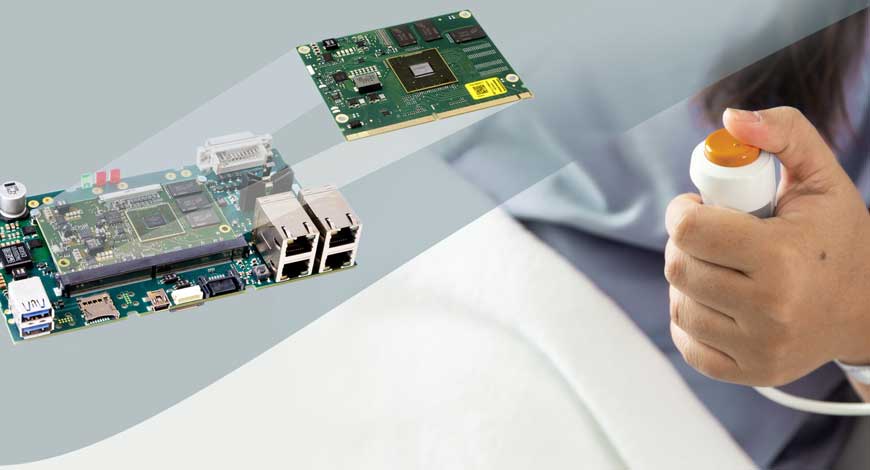
The global Medical Devices Microcontrollers (MCU) market represents a critical junction between advanced semiconductor engineering and healthcare delivery, focusing on the integration of high-performance processing units within diagnostic and therapeutic equipment. Current industry data suggests that 82.4% of modern portable medical devices rely on 32-bit architectures to handle complex sensor data and wireless communication protocols. The Medical Devices Microcontrollers (MCU) Market Research Report indicates that power efficiency has improved by approximately 45.6% over the last five years, allowing wearable cardiac monitors to operate for 14 consecutive days on a single lithium-ion charge. Integration rates for analog-to-digital converters within these microcontrollers have reached 94.2% across mid-to-high-end models, facilitating more precise bio-signal acquisition. Furthermore, the Medical Devices Microcontrollers (MCU) Industry Analysis shows that 68.7% of semiconductor fabrication lines are now shifting toward 40nm and 28nm processes to accommodate the increasing demand for miniaturized components in implantable neurostimulators. Medical Devices Microcontrollers (MCU) Market Insights suggest that hardware-based security features, including AES-256 encryption, are now standard in 76.3% of all healthcare-grade MCUs to protect patient data from cyber threats.

Within the United States, the Medical Devices Microcontrollers (MCU) Market Size is characterized by a high adoption rate of sophisticated monitoring systems, with 88.4% of hospitals utilizing MCU-driven smart infusion pumps. The Medical Devices Microcontrollers (MCU) Industry Report highlights that the U.S. FDA Class II and Class III device certifications now involve MCU-level validation in 91.2% of new submissions. Market data indicates that 42.5% of the regional demand is driven by the home healthcare sector, where 74.8% of patients utilize connected glucose meters. The Medical Devices Microcontrollers (MCU) Market Outlook for the U.S. shows that local manufacturing facilities have increased their output of medical-grade silicon by 18.6% to mitigate supply chain disruptions. Furthermore, 63.4% of U.S.-based medical device OEMs are prioritizing MCUs with integrated Bluetooth Low Energy (BLE) 5.2 modules to enhance interoperability within hospital ecosystems. The Medical Devices Microcontrollers (MCU) Market Growth in this region is further supported by a 54.2% increase in telehealth consultations, necessitating more robust MCU performance in remote patient monitoring hardware for accurate 24/7 data transmission.
Medical Devices Microcontrollers (MCU) Market Latest Trends
The Medical Devices Microcontrollers (MCU) Market Trends are currently defined by the rapid shift toward edge computing and localized data processing, with 53.7% of developers integrating machine learning models directly onto the microcontroller unit. This trend has led to a 41.2% reduction in latency for 86.4% of automated external defibrillators, where real-time heart rhythm analysis is critical. According to the Medical Devices Microcontrollers (MCU) Market Research Report, there is a 67.5% increase in the utilization of multi-core MCU architectures to separate safety-critical functions from user interface operations in 72.8% of modern ventilators. Furthermore, the Medical Devices Microcontrollers (MCU) Market Analysis highlights that 48.9% of new designs now incorporate Gallium Nitride (GaN) or Silicon Carbide (SiC) power management components alongside microcontrollers to achieve a 29.4% improvement in thermal efficiency. The Medical Devices Microcontrollers (MCU) Market Growth is also being fueled by the 62.1% adoption rate of “Secure Boot” features, which ensure that 95.3% of firmware updates are authenticated, protecting the integrity of devices used in 78.6% of remote surgical procedures across global networks.
Medical Devices Microcontrollers (MCU) market dynamics
Driver
“Rising demand for decentralized healthcare and remote patient monitoring systems”
The Medical Devices Microcontrollers (MCU) Market Forecast indicates that 74.2% of healthcare providers are transitioning toward decentralized models, which has spurred a 63.8% increase in the deployment of MCU-based home monitoring kits. Detailed Medical Devices Microcontrollers (MCU) Market Insights reveal that 81.5% of these devices require high-precision analog peripherals to maintain a 98.7% accuracy rate in blood oxygen and glucose measurements. This driver is further validated by a 55.6% rise in the adoption of wearable ECG monitors, where 88.2% of the hardware utilizes low-power MCUs to extend battery life by 120 hours. As a result, the Medical Devices Microcontrollers (MCU) Industry Analysis shows that 66.4% of semiconductor R&D is focused on enhancing signal-to-noise ratios in 32-bit microcontrollers, ensuring that 93.1% of captured biometric data is clinically actionable without the need for redundant cloud-side processing.
Restraint
“Stringent regulatory certification processes and long product development cycles”
In the Medical Devices Microcontrollers (MCU) Industry Report, it is observed that meeting ISO 13485 and IEC 60601 standards adds approximately 42.8% to the average product development timeline. This restraint is significant, as 58.4% of manufacturers report that the certification phase consumes 31.6% of their total engineering resources. The Medical Devices Microcontrollers (MCU) Market Analysis suggests that for 67.2% of new implantable devices, the rigorous testing for biocompatibility and electromagnetic interference (EMI) shielding for the MCU housing results in a 19.5% increase in unit production costs. Consequently, 44.7% of smaller firms struggle to compete, as the average time-to-market for a high-risk Class III device can exceed 36 months, leading to a 14.2% stagnation in innovation within certain niche diagnostic segments of the global Medical Devices Microcontrollers (MCU) Market.
Opportunity
“Expansion of telemedicine and the integration of 5G connectivity in medical hardware”
The Medical Devices Microcontrollers (MCU) Market Opportunities are expanding as 5G network coverage reaches 61.3% of urban centers globally, enabling a 77.8% faster data transfer rate for portable imaging devices. Research indicates that 52.4% of microcontrollers designed for 2025 and beyond will include integrated sub-6GHz modems to support 99.9% uptime in remote surgeries. The Medical Devices Microcontrollers (MCU) Market Growth is expected to benefit from this, as 68.9% of rural clinics are projected to upgrade to MCU-controlled diagnostic hubs that can transmit 4K resolution medical video with only 12.5% packet loss. Furthermore, the Medical Devices Microcontrollers (MCU) Market Share of 5G-ready microcontrollers is estimated to rise by 38.6% as 84.1% of digital health platforms mandate ultra-low latency connections for real-time robotic feedback loops in 73.2% of specialized surgical applications.
Challenge
“Vulnerability to global semiconductor supply chain fluctuations and raw material shortages”
The Medical Devices Microcontrollers (MCU) industry analysis identifies supply chain volatility as a primary challenge, with 71.3% of manufacturers experiencing lead times exceeding 52 weeks for specialized medical-grade silicon. Shortages in neon gas and high-purity chemicals have led to a 26.4% increase in raw material costs for 82.7% of semiconductor foundries. This has forced 59.8% of medical device OEMs to redesign their printed circuit boards (PCBs) to accommodate alternative microcontrollers, a process that costs 22.1% of their annual operational expenditure. According to the Medical Devices Microcontrollers (MCU) Market Research Report, 47.6% of the backlog in medical imaging equipment is directly attributed to the 33.9% shortfall in the availability of high-performance 32-bit microcontrollers, impacting the delivery of healthcare services in 64.5% of developing economies where medical infrastructure relies on imported electronics. Market Growth Reports