Mass Spectrometers
Mass spectrometry’s inflection point – Building the molecular operating system for healthcare
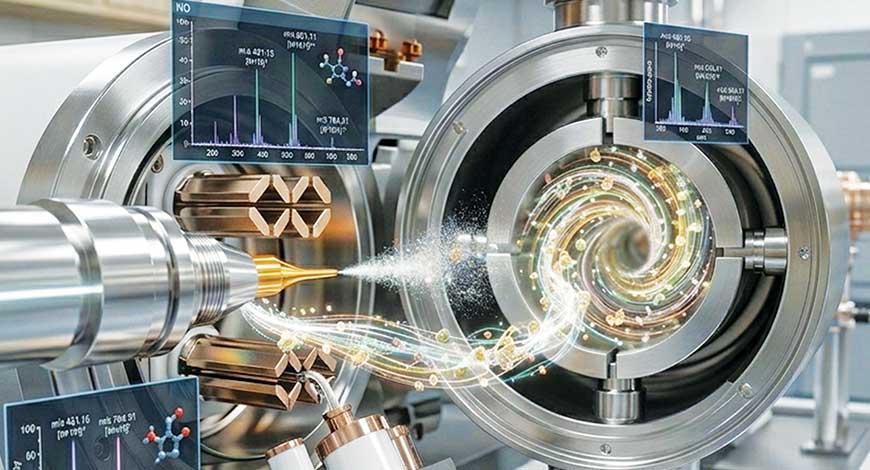
Mass spectrometry becomes healthcare’s molecular backbone, driving diagnostics, drug development, and population scale precision medicine by 2035

In 2026, mass spectrometry stands at a decisive inflection point. What was once regarded as a highly specialized research instrument has now become a foundational pillar in modern healthcare and life sciences. Advances in sensitivity, throughput, and analytical robustness have pushed the technology beyond exploratory science, enabling reliable detection of biologically critical molecules at trace levels and at scale. Today, mass spectrometry underpins complex disease biology, biomarker discovery, therapeutic monitoring, and population-level analysis–making it increasingly indispensable to precision medicine and advanced diagnostics.
This transition creates a new urgency for healthcare leaders and industry decision-makers. Mass spectrometry is no longer about generating data in isolated research environments; it is about embedding molecular intelligence into healthcare infrastructure itself. The strategic questions now center on readiness–how quickly laboratories can operationalize advanced platforms, how efficiently insights can be translated into clinical and commercial value, and how effectively institutions can scale precision approaches across diverse patient populations. As the field moves forward, the breakthroughs redefining mass spectrometry are no longer distant possibilities–they are active forces reshaping healthcare delivery and life-science innovation today.
Indian market dynamics
The Indian mass spectrometers market in 2025 is estimated at ₹945 crore. The triple quadrupole segment continues to dominate the market with a 63 percent market share by value.
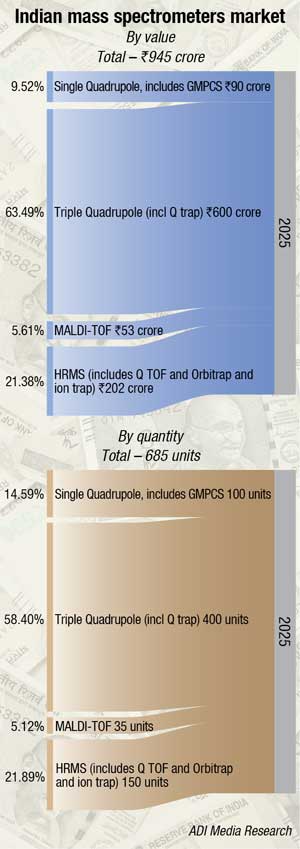
The mass spectrometer market is in a high-growth phase within analytical instruments, underpinned by strong pharma/biotech R&D, early but visible adoption of clinical diagnostics (especially MALDI-TOF), and steady demand from food and environmental testing.
|
Leading players |
|
| Segment | Brands |
| Single Quadrupole | Waters, Shimadzu, and Agilent |
| Triple Quadrupole | SCIEX, Waters, Shimadzu, Agilent and Thermo Fisher Scientific; PerkinElmer |
| MALDI-TOF & MALDI TOF-TOF |
Bruker; Biomerieux, and Shimadzu |
| HRMS (includes Q TOF and Orbitrap) |
Thermo Fisher, Agilent, Sciex, Bruker and Shimadzu |
| ADI Media Research | |
The most powerful engine is the pharmaceutical and biotechnology segment, which globally accounts for about 35 percent of MS demand and plays a similar leadership role in India, given the country’s large generics base, growing biologics and biosimilars pipeline, and export-oriented QC needs. Indian pharma R&D and QC labs rely heavily on LC-MS/MS, triple quadrupole, and high-resolution MS for impurity profiling, metabolite ID, and bioanalysis, which drives repeat capital equipment cycles, upgrades, and method development services.
Clinical diagnostics and microbiology have emerged as a distinct growth node. AIIMS Mangalagiri, AIIMS Bhopal, RIMS Imphal and other centers commissioned MALDI-TOF platforms between 2023 and 2024 for rapid bacterial and fungal identification, signalling a gradual mainstreaming of MS in tertiary-care microbiology labs.
In parallel, food safety testing (residues, contaminants, adulterants) and environmental monitoring (air, water, and soil pollutants) are adding incremental demand as FSSAI, CPCB, and state pollution boards push for tighter compliance and as private labs look to differentiate on analytical capabilities. Government and academic institutions constitute another important end-user segment, but their adoption is constrained by capital budgets; when they do invest, it is often through centrally funded projects that create multi-user MS facilities serving multiple departments.
India is emerging as a key hub for high-molecular-weight peptide drugs, with demand for GLP-1 molecules like semaglutide surging across both clinical trials and commercial biopharma pipelines. This is driving intense interest in GLP 1 peptide chemistry, manufacturing, and analytics, as pharma and CDMOs race to build capacity for these complex, long-acting molecules.
Regulation-driven demand for PFAS testing and treatment is already scaling up in the US and Europe, with Japan and South Korea also tightening standards, and India now starting to move in the same direction through proposed FSSAI bans and emerging chemicals rules. In parallel, India’s diagnostics market is deepening: newborn screening is becoming a new norm with double-digit growth in tandem-with MS-based panels, and forensic and specialty labs are expanding as states invest in crime, toxicology, and environmental testing capacity, creating a strong growth runway for high-end analytical instruments and lab solutions.
On the technology axis, India mirrors global trends, with LC-MS/MS, GC-MS, TOF/Q-TOF, hybrid high-resolution systems, and MALDI-TOF as the primary platforms deployed across pharma, proteomics, metabolomics, and clinical workflows. Time-of-flight systems (including MALDI-TOF and Q-TOF) have gained market share in proteomics and microbial ID, while triple quadrupole LC-MS remains the workhorse in quantitative pharma and food testing applications. The increasing complexity of biological samples and the rise of omics-driven projects in leading institutes are also nudging the adoption of higher-end Orbitrap and hybrid platforms, though these remain concentrated in top-tier labs.
India is effectively an oligopoly of global majors. Thermo Fisher Scientific, Agilent Technologies, Waters, Shimadzu, Bruker, and SCIEX dominate instrument sales, application support, and multi-year service contracts, with a limited but growing presence of regional distributors and niche specialists. Competition plays out more on performance-plus-ecosystem than on hardware alone: sensitivity, resolution, and throughput are bundled with workflow libraries, validated methods, software, training, and compliance documentation, all of which matter to pharma and accredited labs.
Next-gen mass spectrometry for precision medicine
 Bhaumik Trivedi
Dy Manager Business Development-Clinical & Diagnostics,
Shimadzu India Pvt. Ltd.
Precision medicine is transforming modern healthcare by shifting from generalised treatment approaches to therapies guided by individual patient biology. This evolution requires analytical technologies capable of delivering accurate, sensitive, and reproducible molecular measurements. Among these technologies, liquid chromatography–mass spectrometry (LC–MS/MS) has emerged as one of the most powerful platforms for precision diagnostics.
The development of many precision medicine assays begins with high-resolution mass spectrometry (HRMS). These discovery-focused platforms enable researchers to investigate complex biological systems and identify potential biomarkers associated with diseases, metabolic disorders, or therapeutic responses. Through large-scale metabolomic and proteomic studies, HRMS provides the depth of analysis needed to uncover clinically relevant molecular signatures.
Once potential biomarkers are validated, the focus shifts toward translating these discoveries into reliable clinical tests. Diagnostic laboratories require analytical systems that offer high throughput, robustness, and reproducibility for routine testing. In this context, triple quadrupole LC–MS/MS systems (LCMS-TQ) have become the preferred technology for targeted quantitative analysis.
Triple quadrupole instruments use multiple reaction monitoring (MRM), a selective approach enabling precise quantification of analytes in complex matrices like plasma or serum. This allows measurement of trace compounds with high specificity and sensitivity, making LCMS-TQ suitable for clinical applications including therapeutic drug monitoring, endocrinology, vitamin analysis, toxicology, and metabolic disorder detection.
A key advantage of LC–MS/MS in clinical laboratories is its multiplexing capability. Multiple biomarkers can be measured simultaneously in a single run, improving laboratory efficiency while providing molecular insights. This approach supports cost-effective testing and faster turnaround times for clinicians.
Equally important is the development of clinical-grade workflows that ensure reliability in routine diagnostics. Advances in automated sample preparation, stable chromatographic separation, isotope-labelled internal standards, and automated data processing have improved assay reproducibility and operational consistency. Integration with laboratory information systems and middleware platforms further supports streamlined sample-to-report workflows.
As precision medicine evolves, LC–MS/MS technologies will play a key role in translating molecular discoveries into diagnostic tests. By combining discovery research with targeted workflows, next-generation mass spectrometry enables accurate, scalable, and clinically actionable insights for personalised healthcare.
High upfront cost remains a structural barrier, particularly for standalone diagnostic labs, smaller food and environmental labs, and Tier-II academic centers, leading to demand for refurbished systems, reagent rental, leasing, and shared-facility models. Vendors are responding with financing plans, extended warranties, and local application labs, but the total cost of ownership and availability of trained operators still limit full utilization in many installations. Over time, as the installed base thickens and more operators are trained, service revenues (AMCs, upgrades, software, training) are expected to outpace pure box sales, gradually shifting the market mix toward a more annuity-driven profile.
India’s innovation engine for advanced analytics
India is rapidly emerging as an important innovation hub for advanced analytical technologies, including mass spectrometry. Domestic research institutions, clinical laboratories, and technology partners are adapting and extending state-of-the-art platforms to solve region-specific challenges in healthcare, agriculture, and the pharmaceutical supply chain. These efforts often combine mass spectrometry with AI, automation, and local domain expertise to deliver scalable, cost-effective solutions.
In the healthcare and life-science arena, Indian laboratories are using high-resolution mass spectrometry for biomarker discovery and validation in priority areas such as oncology, cardiovascular disease, infectious disease, and neurodegeneration. Multi-omics approaches that integrate proteomics, metabolomics, and genomics are helping to unravel disease mechanisms within Indian populations and support the development of context-appropriate diagnostics and treatment strategies. In parallel, mass spectrometry is being deployed in food authenticity testing, quality control of traditional medicines and nutraceuticals, and environmental monitoring, where it provides high-confidence detection of adulterants, contaminants, and bioactive compounds.
Automation and AI-enabled analytics are critical enablers of this ecosystem. As infrastructure expands and training programs produce a larger cohort of skilled operators and data scientists, Indian laboratories are increasingly able to run high-volume, high-complexity MS workflows with strong reproducibility and regulatory compliance. Global vendors and local companies are collaborating on application development, digital platforms, and service models tailored to Indian requirements, accelerating adoption and embedding advanced analytics into the fabric of the country’s healthcare and industrial systems.
Global vendors storm India
For global instrument and analytical-technology vendors, India has shifted from a peripheral sales market to a strategic hub for innovation, collaboration, and infrastructure development. Rapid growth in biopharmaceutical manufacturing, clinical diagnostics, food safety oversight, and environmental testing is creating sustained demand for mass spectrometry, chromatography, and integrated informatics solutions. In response, vendors are deepening their presence by establishing local application laboratories, demonstration centers, and training facilities to support method development, validation, and workforce upskilling.
A key theme in these efforts is the creation of integrated ecosystems that link hardware, software, and services. Laboratories increasingly seek end-to-end solutions in which automation, data management, compliance, and connectivity are tightly integrated, reducing operational complexity and enabling higher productivity. Vendors are responding with cloud-enabled LIMS, advanced data-analytics platforms, and networked instrument fleets that streamline workflows, ensure data integrity, and facilitate regulatory reporting. These digitally connected environments are particularly valuable in regulated sectors such as pharmaceuticals and clinical diagnostics, where traceability and auditability are non-negotiable.
Skill development is equally important. Through joint training programs, academic partnerships, and collaborative R&D initiatives, global and local stakeholders are cultivating a pool of scientists, technologists, and clinicians who are fluent in advanced analytical techniques and their applications. This collective investment in infrastructure, digital capability, and human capital is helping India to harness mass spectrometry not only as an imported technology but as a platform for indigenous innovation and global-level scientific contribution.
Global market scenario
The global mass spectrometry market is accelerating with structural, not cyclical, momentum, becoming indispensable across life sciences, pharmaceuticals, clinical diagnostics, environmental monitoring, and food safety. Mass spectrometry has effectively become the reference technology for molecular identification and quantification, with unmatched analytical specificity and dynamic range, positioning it at the core of proteomics, metabolomics, and lipidomics workflows. Drug discovery, development, and biomarker-driven research are key growth engines, as pharma-biotech organizations rely on mass spectrometry to map metabolism, characterize pharmacokinetics, and interrogate complex molecular mechanisms throughout the R&D pipeline.
According to Precedence Research, the global mass spectrometry market was valued at USD 8.17 billion in 2025 and is expected to increase from USD 8.86 billion in 2026 to approximately USD 17.75 billion by 2035, reflecting a compound annual growth rate of about 8.07 percent between 2026 and 2035. In parallel, the rise of precision medicine is accelerating adoption in hospitals and research laboratories, where demand is growing for assays that can deliver highly specific, multiplexed, and quantitatively robust measurements of proteins, metabolites, lipids, and small molecules. The integration of AI and machine learning is further amplifying the technology’s impact by enabling automated spectral analysis, faster data interpretation, and more efficient laboratory workflows.
Clinical diagnostics is emerging as one of the most dynamic growth arenas. Rising burdens of cancer, metabolic disorders, and chronic diseases are driving demand for ultra-sensitive, highly specific biomarker assays that go beyond the limits of conventional immunoassays. Hybrid platforms, high-resolution detectors, powerful embedded processors, and increasingly compact, automated instruments are dramatically expanding the reach of mass spectrometry into routine clinical laboratories. At the same time, government funding for biomedical research, environmental monitoring, and pharmaceutical development continues to support adoption of advanced analytical platforms across public and private sectors.
Yet market barriers remain non-trivial. High instrument acquisition costs, significant ongoing maintenance expenses, and specialized consumables can limit access, particularly for smaller laboratories and institutions in resource-constrained settings. Operational complexity also remains a constraint–Advanced mass spectrometry platforms require skilled operators to design methods, oversee quality control, and interpret high-dimensional data, and shortages of such specialists are evident in many regions.
Nevertheless, long-term fundamentals are favourable. High-resolution instruments, hybrid architectures, and increasingly portable platforms are extending capabilities beyond centralized core facilities, while AI-driven analytics and more standardized workflows are simplifying data processing and method deployment.
Strategic collaborations are accelerating this trajectory. Instrument vendors, academic centers, contract research organizations, and biotech and pharma partners are co-developing highly specialized workflows for biopharmaceutical characterization, precision diagnostics, and large-scale biomarker studies. These alliances are yielding tailored solutions–whether for targeted clinical panels, advanced omics pipelines, or highly automated quality-control environments–that directly align mass spectrometry capabilities with real-world clinical and regulatory requirements. As such partnerships proliferate, mass spectrometry is consolidating its role as a core enabler of next-generation scientific and clinical breakthroughs.
Redefining the limits of detection
Advances in mass spectrometry hardware ignite a performance explosion: razor-sharp gains in sensitivity, speed, and resolution. Ion optics innovations now laser-guide ions with brutal precision, slashing losses and safeguarding fragile molecular signals that once vanished in mixture mayhem. Simultaneously, next-gen detectors snag ions at warp speed across epic dynamic ranges, nailing dominant and trace species in one killer run. Invisible biology? Now it’s crystal-clear routine.
High-resolution mass analyzers amp this edge with pinpoint mass accuracy and pristine spectral splits, vaporizing compound ID fog. Equally seismic: acquisition tactics that shred the speed-is-king myth. Smart ion wrangling, adaptive grabs, and picky data hunts block high-abundance bullies from swamping the show, locking in low-level bio-critical gems. This pivot from raw speed blitz to surgical control squeezes richer insights from every scan.
These hardware power-moves obliterate mass spec’s old ceilings. Complex biosystems, ragtag samples, and ghost traces yield to deep, rock-solid probes. Sample complexity no longer cripples–it supercharges. This bedrock performance catapults mass spec into systems biology, clinical pipelines, and mega-scale translation, crowning it the indispensable analytical beast, not niche gadget.
When proteomics goes industrial
Proteomics has evolved from labor-intensive, single-protein studies into a high-throughput, systems-level discipline centered on mass spectrometry. Modern workflows can quantify thousands of proteins per sample, including post-translational modifications and condition-specific changes, across diverse biological systems. Advances in instrument sensitivity, scan speed, and chromatography now enable deep profiling of complex samples, capturing both abundant and low-level regulatory proteins in a single run.
High-throughput proteomics defines the current state of the field. Fast liquid chromatography, rapid scanning, and automation support the analysis of hundreds to thousands of samples, making large-scale clinical and epidemiological studies feasible. Data-independent acquisition (DIA) has become a key technique, offering improved reproducibility and data completeness over traditional methods. AI-driven tools like DIA-NN further enhance performance by resolving complex spectra and improving quantification accuracy.
Multiplexing strategies using isobaric or isotopic labelling further boost throughput by enabling multiple samples to be analyzed simultaneously. Combined with DIA and ion mobility, these approaches ensure consistent quantification across large datasets, supporting systems-level insights into biological pathways and disease mechanisms.
However, this scale introduces significant data analysis challenges. Proteomics datasets are highly multidimensional, requiring advanced computational, statistical, and AI-driven methods, along with strict quality control, to ensure reproducibility and clinical reliability.
AI becomes native to MS
Artificial intelligence has moved from an adjunct capability to a native layer within mass spectrometry workflows. As instruments generate increasingly complex and voluminous datasets, AI and machine learning are becoming indispensable for extracting robust, actionable insights at scale. These methods are now embedded across the continuum–from experimental design and data acquisition to signal processing, identification, quantification, and quality control.
In acquisition, AI-enabled algorithms can dynamically adjust methods in real time, prioritizing specific ions or mass windows, optimizing collision energies, and reducing redundant measurements. This adaptive control enhances sensitivity for low-abundance targets, increases information density per unit time, and improves overall throughput without significantly lengthening runs. In data interpretation, deep learning models support improved spectral prediction, peptide/protein identification, metabolite annotation, and classification of unknowns beyond the reach of conventional library-based approaches. These advances are particularly valuable in proteomics and metabolomics, where spectral complexity and incomplete libraries can otherwise limit coverage and confidence.
Quality control is another domain where AI is becoming integral. Machine-learning-driven QC systems can continuously monitor instrument performance, flag drift and anomalies, and suggest corrective actions, often outperforming traditional manual or threshold-based QC in sensitivity and timeliness. Such systems, validated across multivendor, multi-site datasets, are key to achieving the reproducibility and standardization required for clinical and regulated applications.
As these AI-enabled capabilities mature, they transform mass spectrometry from a complex instrument that experts operate into a more self-optimizing analytical platform that a broader range of laboratories can deploy with confidence.
Decoding human biology across the lifespan
Mass spectrometry is increasingly central to decoding human biology across the lifespan, moving beyond static snapshots of health and disease toward dynamic, longitudinal molecular profiles. Aging, chronic disease progression, and resilience are shaped by intricate interactions between genes, environment, behaviour, and exposures, and mass spectrometry offers a uniquely sensitive and specific window into these evolving biological states. By profiling proteins, metabolites, and lipids with high resolution, mass-spectrometry-based omics approaches can trace how key pathways–such as inflammation, energy metabolism, immune regulation, and tissue remodelling–change over time, often long before overt clinical symptoms emerge.
In longitudinal and population-scale studies, mass spectrometry enables the construction of detailed molecular roadmaps of aging and disease trajectories. These include signatures that differentiate healthy aging from early pathology, capture individual variation in risk and resilience, and help explain why some individuals maintain function despite significant chronological age or comorbidity burden. Such data support the development of biological age models and risk scores that correlate molecular features with functional outcomes, potentially enabling earlier intervention and more tailored prevention strategies.
Crucially, advances in throughput, reproducibility, and standardization are making these approaches increasingly compatible with clinical realities. Harmonized sample-handling protocols, robust QC procedures, and cross-site calibration strategies are improving comparability across cohorts and institutions. As automation and advanced analytics become more deeply integrated, mass spectrometry is evolving from a discovery-oriented tool into a platform capable of supporting longitudinal, population-scale studies that can feed directly into risk stratification, early-warning systems, and precision prevention in routine care.
From discovery to clinical proof
Mass spectrometry is also moving decisively from the realm of exploratory research into the domain of clinical-grade evidence generation. Historically, MS was used primarily for biomarker discovery and mechanistic studies, with a substantial gap between early-stage findings and clinically implemented tests. Today, improvements in instrument stability, standardized workflows, multiplexed quantification, and data analysis are narrowing this gap, enabling more direct translation from discovery to validation and eventual clinical use.
Reproducibility and standardization are central to this shift. Modern platforms, combined with carefully designed workflows and strict quality-control procedures, can deliver highly consistent results across large sample sets and extended timeframes. Advances in sample preparation, interference removal, and signal correction improve data quality, reduce variability, and increase trust in quantitative readouts. On this foundation, multi-phase validation strategies–including cross-cohort replication, multi-center studies, and head-to-head comparisons with existing standard-of-care assays–are increasingly demonstrating that MS-derived biomarkers and signatures can perform at or above the levels required for clinical decision-making.
As a result, mass spectrometry is becoming embedded in clinical trials and translational research programs, informing endpoint selection, patient stratification, pharmacodynamic monitoring, and companion diagnostic development. This evolving role positions mass spectrometry as both a discovery engine and a validation platform, capable of generating the kind of reproducible, high quality evidence that regulators, payers, and clinicians require for integrating new biomarkers and tests into practice.
Native MS accelerating drug discovery
Native and structural mass spectrometry are rapidly gaining prominence in drug discovery and development. Unlike traditional denaturing MS approaches, native MS preserves noncovalent interactions and native-like structures, enabling direct analysis of intact protein complexes, ligand binding, and conformational changes under near-physiological conditions. This is particularly important as therapeutic modalities become more complex, encompassing monoclonal antibodies, antibody–drug conjugates, nucleic acid therapies, and multi-component biologic assemblies.
By combining native MS with ion mobility, controlled collision-induced unfolding, and top-down sequencing, researchers can obtain detailed information about composition, heterogeneity, higher-order structure, and dynamics in a single integrated workflow. These capabilities are highly valuable for characterizing difficult targets such as membrane proteins, transient complexes, and highly heterogeneous biotherapeutics, which often evade complete description by classical biochemical methods alone. In early drug discovery, native MS accelerates hit validation, binding characterization, and mechanism-of-action studies, enabling more informed progression and prioritization decisions.
Instrumentation advances–particularly in high-resolution and high-mass-range analyzers–along with improved automation and data-analysis tools, are making native and structural MS approaches more accessible to mainstream pharmaceutical laboratories. When integrated with cryo-electron microscopy, x-ray crystallography, and high-throughput proteomics, these techniques provide a multi-modal structural and functional view of drug–target interactions, strengthening the evidentiary base for candidate selection and optimization. Over time, native MS is expected to become standard in many biopharmaceutical analytic pipelines, from early discovery through to late-stage comparability and quality control.
Clinical MS hits mainstream
Clinical mass spectrometry blasts from niche lab toy to diagnostic powerhouse. Automation, ironclad standards, and workflow fusion morph technically brutal platforms into routine clinical muscle–slashing manual grind while cranking reproducibility and throughput. Labs explode beyond tox screens and newborn metabolic checks into endocrinology, drug tracking, metabolic maps, and pathogen hunts.
Standard reagents, validated kits, bulletproof QC, and brainy software convert spectral chaos into patient-ready gold with institution-wide consistency.
Global clinical MS market roars into sustained boom as health systems chase precision diags and data-driven calls. Hospitals and reference labs ditch immunoassays for LC-MS/MS juggernauts–high-spec, multi-biomarker beasts nailing early detection, therapy watch, personalized strategies.
Diagnostic giants, health providers, tech vendors pour fuel: automated high-volume rigs, data analytics, AI interpretation fling MS everywhere. India leads emerging charge–expanding infra, advanced testing hunger, personalized med pivot rocket hospital-reference lab adoption.
Automation blitz, standard slams, digital glue crown clinical MS as next-gen diagnostic king–precise molecular intel powering sharper diagnoses, tighter therapy tracking, leaner healthcare delivery.
Mass spectrometry’s next evolution
Mass spectrometry is now entering a new phase characterized by miniaturization, hybridization, and deep workflow integration. Traditionally large, capital-intensive instruments are being complemented by compact LC-MS and GC-MS systems that preserve high sensitivity, mass accuracy, and quantitative robustness while occupying significantly smaller footprints and, in some cases, reducing operating costs. These systems lower the barrier to entry for smaller laboratories and point-of-need environments that previously lacked access to high-end mass spectrometry.
Hybrid architectures, in which multiple analyzer types (e.g., quadrupole, Orbitrap, ToF, ion mobility) are combined within a single platform, are becoming increasingly prevalent. Such configurations offer greater flexibility, selectivity, and sensitivity for dissecting complex molecular mixtures, enabling users to tailor acquisition strategies to specific analytical questions. These capabilities are particularly valuable in multi-omics workflows, where thousands of analytes must be resolved and quantified across broad dynamic ranges in a clinically relevant timeframe.
Equally transformative is the fusion of mass spectrometry with automated sample preparation, advanced separations, and integrated data analysis. Modern ecosystems connect robotic preparation modules, high-performance chromatography, mass spectrometers, and analytics software into unified pipelines that minimize manual intervention, reduce error rates, and deliver rapid, standardized outputs. As these integrated workflows become more pervasive, mass spectrometry transitions from a centralized, specialist capability to a distributed, adaptable analytical layer that can be deployed wherever high-quality molecular information is required.
MS–chemistry meets physics
Mass spectrometry is also evolving into a powerful convergence platform where advanced chemistry, physics, materials science, and data science intersect. In nanotechnology, catalysis, energy materials, and aerosol science, analytical systems must characterize extremely small quantities of matter with high specificity and spatial resolution. Modern MS platforms, combined with sophisticated ionization and sampling strategies, are meeting this challenge by enabling precise analysis of nanoparticles, surface chemistries, and ultrafine aerosols, often in situ or under conditions that closely mimic real-world environments.
Innovations in ionization–such as ambient and surface-based techniques–and direct sampling interfaces allow rapid interrogation of complex matrices with minimal sample preparation, improving throughput and preserving labile species. Advances in detectors, ion optics, and high-mass-range analyzers enable the detailed characterization of large, heterogeneous assemblies and the tracking of subtle isotopic or structural variations that can strongly influence material properties. In parallel, machine learning and advanced statistical approaches are being used to mine large datasets for patterns that link composition, structure, and environmental conditions to performance, thereby accelerating discovery and optimization cycles across chemical and materials domains.
2030 and beyond
By 2030, mass spectrometry is projected to move from a specialized analytical technique to a foundational element of healthcare and life-science infrastructure. Multiple forecasts anticipate that the global market will reach the mid-teens of billions of dollars, with the clinical segment contributing a steadily increasing share as hospitals and laboratories replace or augment immunoassays and culture-based methods with MS-based diagnostics. LC-MS/MS and MALDI-TOF have already transformed areas such as therapeutic drug monitoring, metabolic profiling, toxicology, and microbial identification, and next-generation AI-integrated systems are poised to support real-time pathogen detection, rapid resistance profiling, and automated interpretation of complex molecular signatures.
Hybrid platforms, high-throughput workflows, and portable or semi-portable instruments will continue to democratize access to advanced analytics, extending mass spectrometry beyond centralized reference laboratories into hospital labs, decentralized testing sites, and, in some cases, field settings. However, realizing this vision will require concerted leadership: health systems must invest in training, infrastructure, and digital integration; regulators and standards bodies must harmonize requirements; and industry and academia must collaborate on scalable, validated workflows that can withstand clinical, regulatory, and reimbursement scrutiny.
In this emerging landscape, mass spectrometry is less a standalone tool and more an embedded analytical fabric that underlies precision medicine, next-generation therapeutics, and data-driven population health. Its evolution from niche instrument to foundational technology is well underway–and the decisions made by healthcare leaders, regulators, and industry stakeholders over the next decade will determine how widely and equitably its capabilities are deployed.