Trends
Limb prosthetics market to reach USD 2.9B
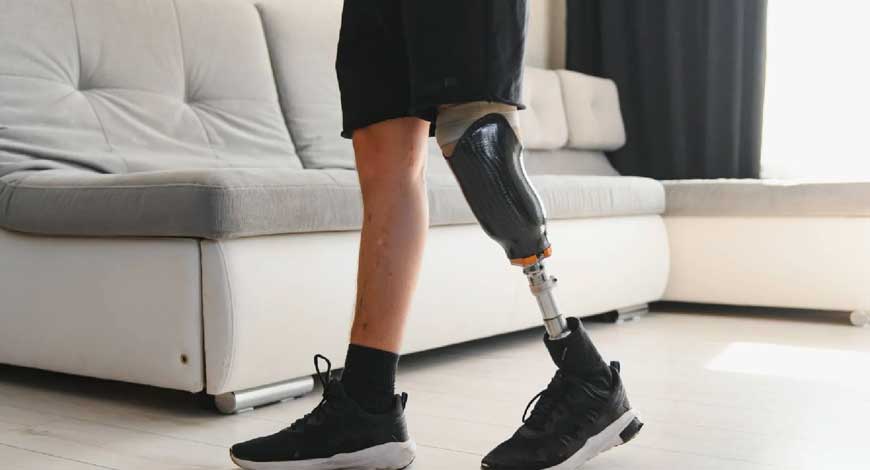
The limb prosthetics market is estimated to reach $2.9 billion by 2033, growing at a CAGR of 5.6% from 2024 to 2033.

Prime determinants of growth
The increasing prevalence of limb loss due to trauma, diabetes, and vascular disorders, rising demand for advanced and myoelectric prosthetic solutions, and growing focus on improved mobility and quality of life are the major factors driving the growth of the limb prosthetics market. In addition, technological advancements in lightweight materials, robotics, and 3D printing significantly contribute to market expansion. However, high costs of advanced prosthetic devices and limited reimbursement policies restrain market growth. Moreover, continuous innovation in AI-enabled and sensor-integrated prosthetics presents lucrative opportunities for the expansion of the global limb prosthetics market.
In clinical practice and limb prosthetics management, the role of advanced prosthetic technologies is critical for restoring functionality and improving the quality of life for individuals with limb loss. Prosthetic devices are designed to replace lost or damaged limbs, enabling patients to regain mobility and independence. Innovations in material science, robotics, and myoelectric control systems have significantly enhanced the precision and performance of modern prosthetics, allowing for more natural movements and better overall fit. In particular, advancements in electric and hybrid prosthetic devices, which integrate robotics and artificial intelligence, have become gamechangers, providing more intuitive control, faster adaptation, and improved comfort for patients. Furthermore, continuous improvements in lightweight materials, such as carbon fiber and 3D-printed components, have led to prosthetics that are not only functional but also more comfortable and durable. These innovations are transforming the patient experience, helping to restore a sense of normalcy and independence to those with limb loss.
Segment highlights
Upper limb prosthetics dominated the market in 2023
By type, upper limb prosthetics held the largest market share in 2023. This is largely due to the complex nature of upper limb functionality, where advancements in myoelectric prosthetics, bionic limbs, and intuitive control systems have enabled a broader range of motion and precision. These devices are critical for performing fine motor tasks, and the increasing demand for personalized and highly functional prostheses is driving market growth.
Electric prosthetic devices led by technology
By technology, electric prosthetic devices led the market in 2023, accounting for a significant share. These devices, powered by motors and sensors, allow for more complex movement and provide a higher level of control compared to conventional prosthetics.
Socket and appendage components dominate the market
By component, the socket and appendage segments dominated the market in 2023. The socket serves as the interface between the amputee and the prosthetic device, making it a critical component for ensuring comfort, fit, and functionality. The appendage segment includes the prosthetic limb itself, which is the most visible and functional part of the device.
Hospitals continue to lead the end-user segment
By end user, hospitals accounted for the largest share of the market in 2023. Hospitals provide the necessary infrastructure for fitting, rehabilitation, and follow-up care, and many patients receive their prosthetic devices post-surgery in these settings. Clinics are also a growing segment due to the rise in specialized centers offering customized solutions for amputees.
North America to maintain regional leadership
Regionally, North America held the largest market share in 2023, driven by high healthcare spending, advanced prosthetic technologies, and an aging population. The U.S. leads the region with strong reimbursement policies and significant research investments. Asia-Pacific is projected to witness the fastest growth, driven by rising healthcare investments, a growing elderly population, and an increasing incidence of traumatic injuries.