Industry
India’s MedTech moment – How CDSCO is recasting regulation
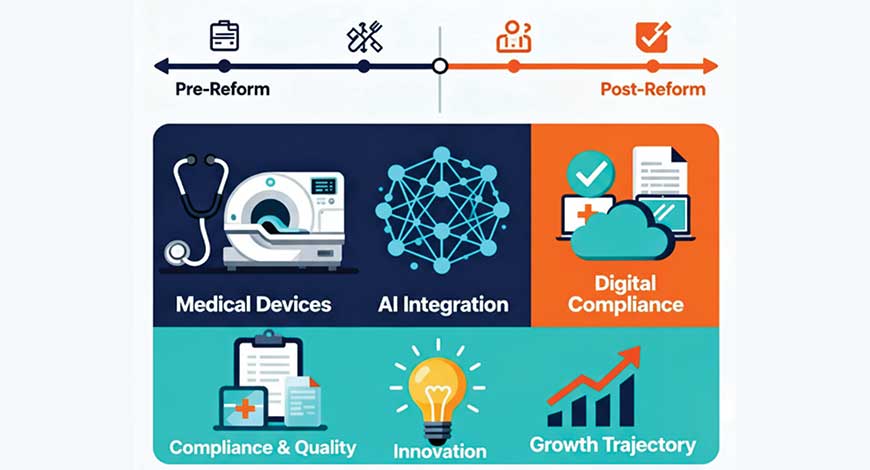
CDSCO modernizes India’s MedTech regulation through digital compliance, software oversight, and device reclassification.

The Central Drugs Standard Control Organisation has taken a bold step forward in 2025 by introducing a suite of transformative regulatory initiatives that are reshaping India’s medical devices landscape. These developments not only signal a steady maturation of India’s MedTech oversight but also reflect a shift toward harmonization with international norms.
Software takes center stage – Framework for digital medical devices
The first of these, the release of the draft guidance document for the regulation of medical device software, is arguably the most consequential development. Announced on October 21, 2025, this 76-page document lays the foundation for a structured and globally aligned framework for managing software that performs medical functions. The guidance distinguishes between Software in a Medical Device (SiMD) and Software as a Medical Device (SaMD)–two categories that together account for the majority of digital MedTech innovation today.
CDSCO’s classification mirrors definitions developed by the International Medical Device Regulators Forum (IMDRF), positioning India to align its standards with leading markets such as the United States, Japan, and the European Union.
The document clarifies essential aspects of licensing, classification, and technical documentation, emphasizing a quality management system founded on ISO 13485 and interoperability with the Medical Devices Rules (MDR) 2017. It also addresses the conduct of clinical investigations and performance evaluations. In particular, the draft offers guidance on the management of machine learning–based algorithms, a critical area for emerging technologies in radiology, pathology, and predictive health analytics.
Industry response, led by the Medical Technology Association of India (MTaI), has been largely positive. However, stakeholders have requested more clarity on AI/ML model drift, periodic algorithm validation, and real-world performance monitoring. For manufacturers, this guidance represents both a challenge and an opportunity–it requires new competencies in software documentation and continuous update validation but also provides the long-awaited regulatory clarity that global vendors have sought for years.
Risk rebalanced – 553 cardiac and neuro devices reclassified
The second major development is the draft revision of risk classification for cardiovascular and neurological devices, released by CDSCO on April 1, 2025. This draft update spans 553 devices across two sectors: 351 cardiovascular and 202 neurological. The devices have been stratified into four risk-based categories–A (low), B (moderate), C (moderate-high), and D (high)–to harmonize regulatory requirements with the product’s intended use and potential risk to patients. The agency invited stakeholder comments through April and early May, underscoring its commitment to consultative regulation.
For manufacturers, the revised classification carries far-reaching implications. It establishes differentiated documentation and testing obligations based on device category, creating clearer approval pathways and reducing interpretational inconsistencies. By adopting risk-based oversight similar to frameworks used by the European Medicines Agency (EMA), CDSCO is signaling to domestic producers that compliance with Indian regulations will also aid international market acceptance. Smaller manufacturers, however, may face increased administrative and testing costs as they align their products to revised classifications. Despite these transitional burdens, the long-term impact is beneficial: harmonization promises smoother approval continuity, fairer competition, and easier global certification under programs such as the Medical Device Single Audit Program.
Going digital – Compliance certification for device makers automated
The third significant change–the automation of compliance certification–illustrates CDSCO’s growing embrace of digital governance. In April 2025, the regulator announced that all medical device manufacturers and importers must re-apply for two key regulatory documents: the Market Standing Certificate and the Non-Conviction Certificate). Previously processed through regional CDSCO offices, these certificates are now issued through an automated online workflow on the organization’s portal. The move nullifies older manual applications and mandates resubmission through the new system.
For manufacturers, this means rethinking their compliance processes. The new automated system demands greater data accuracy, consistent digital documentation, and alignment with CDSCO’s regulatory information management framework. While the shift initially requires administrative adaptation, it holds tangible benefits: faster turnaround times, audit readiness, and cross-verification with import and export databases.
The path forward – Building India’s global MedTech hub
Together, these three initiatives form part of a larger narrative–the digital transformation of medical device regulation in India. By combining structural modernization with consultative policymaking, CDSCO is moving toward a regime that supports innovation while maintaining stringent oversight.
The organization’s decision to join the International Medical Device Regulators Forum (IMDRF) as an affiliate member in 2024 has accelerated this process, granting it access to international guidance documents and best practices. As a result, domestic policy now increasingly mirrors those of advanced regulatory authorities. This global integration ensures that Indian regulatory professionals and manufacturers participate in knowledge exchange on topics such as post-market surveillance, clinical evaluation of AI/ML technologies, and cyber-secure design principles. It also promotes smoother entry of Indian-manufactured medical devices into global markets by reducing duplication in approval processes.
The implications for the industry are profound. India’s medical device sector–estimated to exceed USD 14 billion by 2025–is evolving from low-risk consumables toward complex diagnostic and implantable products that require advanced regulatory oversight. Through clearer definitions, digitized processes, and harmonized classifications, CDSCO is laying the groundwork for a robust domestic manufacturing ecosystem capable of producing globally certified devices. However, manufacturers must now elevate their regulatory maturity. This includes investing in digital quality management systems, algorithm lifecycle management for SaMD products, and workforce training on international regulatory compliance. The ability to integrate these systems seamlessly will determine how successfully companies can capitalize on new regulatory clarity.
Over the coming years, CDSCO’s emerging framework will likely create a more predictable and transparent environment for innovators. The path ahead involves continued refinement of software-specific quality assurance metrics, alignment of classification with new device categories such as wearables and precision neuro-devices, and scaling of automated certification platforms for broader stakeholder use.
As the Indian medical devices industry expands its footprint both domestically and abroad, these reforms mark a decisive step toward establishing India as a credible hub for compliant, innovative, and globally competitive medical technology.