Industry
India’s MedTech moment – From sunrise sector to global powerhouse
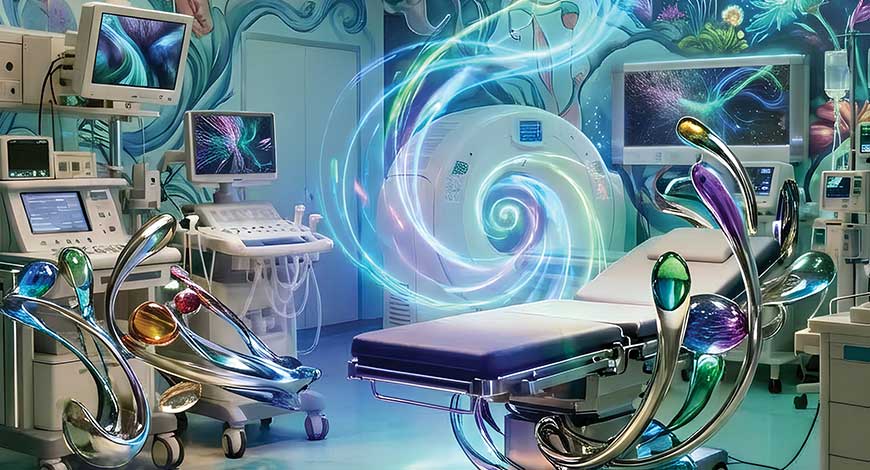
India’s MedTech boom is reshaping hospitals, exports and innovation in one decisive decade.

India’s MedTech industry has moved from being an import-dependent afterthought to a strategic pillar of healthcare and manufacturing, and over the next decade it is likely to become a global hub for affordable, digitally integrated medical technology. This transformation is tightly linked to how Indian hospitals are modernising their equipment stack, data systems and care models, especially in tier-II and tier-III cities, and is now further accelerated by favourable trade agreements and a more generous Union Budget for health and innovation.
A sunrise sector with global ambitions
The Indian MedTech and medical devices market is estimated in the mid teens of billions of dollars today, placing India among the top 20 global device markets and the 4th largest in Asia. Multiple projections suggest it could reach several tens of billions of dollars by 2030, implying sustained double-digit annual growth on the back of demographics, rising incomes, insurance expansion and hospital capacity growth. Policymakers and industry now explicitly treat MedTech as a sunrise sector, with local manufacturing, exports and design-led innovation seen as integral to India’s broader manufacturing and digital-economy strategy.
Policy support under schemes such as Production Linked Incentives (PLI) for medical devices, dedicated device parks and higher public spending on CT, MRI and oncology equipment has catalysed new investments across the value chain. In parallel, digital health initiatives like the Ayushman Bharat Digital Mission (ABDM) and national data-protection legislation are creating the regulatory and technical rails for connected devices, electronic medical records and remote monitoring tools, turning hardware-plus-software into the default MedTech paradigm rather than a niche.
From import dependence to innovation and technology evolution
Historically, India relied on imports for the bulk of its advanced medical devices, particularly high-end imaging, implants and critical-care systems, with domestic industry mainly supplying low-end consumables and basic equipment. Over the last few years, this picture has begun to shift as PLI-backed plants and new clusters come online for imaging, cancer-care and diagnostic equipment, and as indigenous design capabilities deepen. The domestic MedTech base now spans in vitro diagnostics, orthopedic and ophthalmic products, and a growing portfolio of robust, low maintenance devices tailored to Indian clinical and infrastructure realities.
Global majors have set up engineering and R&D hubs in cities like Bengaluru and Hyderabad, increasingly using India as a design and software engineering base rather than just a sales destination. Side by side, Indian start-ups and SMEs are building solutions that blend hardware with software: low-cost ventilators, portable ultrasound systems, AI-enabled ECG devices and point-of-care diagnostics that can function reliably in semi-urban and rural settings. This has fostered an ecosystem in which clinical insight, frugal engineering and digital technology come together to produce differentiated products.
Technologically, India has moved from analogue, stand alone machines to a digitally integrated, AI-enabled ecosystem spanning hospital, home and remote care. The first phase of this journey involved basic computerisation and gradual deployment of CT, MRI and endoscopy systems inside tertiary hospitals. The inflection point came with national-scale telemedicine (for example, eSanjeevani) and ABDM, which now links a large number of facilities through digital health IDs, personal health records and interoperability standards. On top of this digital backbone, AI tools now sit across imaging, ECG, pathology and ICU monitors, enabling triage, early warning of deterioration and clinical decision support rather than mere data capture.
At the device level, the shift is visible in the rise of portable, battery operated diagnostics, 3D-printed implants and locally developed robotic surgical systems designed for India’s constraints–intermittent power, limited specialised technicians and high patient loads. Indian innovators have introduced handheld ultrasound and retinal cameras, AI-linked ECG networks and contactless vital-sign monitors that can upgrade ordinary wards into monitored step-down ICUs. As more devices become cloud-connected and natively integrated with ABDM-compliant records, the next phase is likely to revolve around predictive, personalised care models: continuous data streams feeding risk scores, outcome-based payments and exportable, designed in India solutions for other low and middle income countries.
Hospitals–Today’s demand engine, tomorrow’s digital platforms
Hospitals are the main engine of MedTech demand in India, accounting for a large majority of device purchases. The growth of multi-specialty corporate chains and the rapid build-out of facilities in tier-II and tier-III cities has driven heavy investment into imaging, critical care, cath labs, oncology and minimally invasive surgery platforms. Empanelment of tens of thousands of facilities under Ayushman Bharat has further nudged hospitals to upgrade equipment to meet quality norms and manage rising patient volumes under public and private insurance schemes.
Digital transformation inside hospitals has accelerated in parallel. More institutions are deploying integrated hospital information systems, electronic medical records, patient portals and cloud-based analytics platforms aligned with ABDM standards. These systems are enabling smart outpatient departments, digital consent and discharge processes, and app-based follow-up, while generating rich datasets for operational and clinical analytics. Early adopters are already using AI for radiology triage, ICU monitoring, bed-flow management and demand forecasting, often in partnership with MedTech and health-analytics firms.
Looking ahead, future-ready Indian hospitals are likely to evolve along three axes. First, their equipment stack will tilt further toward AI-enabled diagnostic imaging, image-guided therapies, robotic and navigation systems, and portable bedside and outreach devices. Second, they will invest in interoperable data architectures that integrate devices and information systems into real-time dashboards and even digital twins of facilities and patients, enabling outcome-linked contracts with MedTech suppliers. Third, their care models will shift from episodic, inpatient-centric treatment to hybrid models that combine in-hospital interventions with home-based monitoring, teleconsultations and long-term chronic-disease management. Tier-II and tier-III hospitals will be a key battleground, demanding mid-range yet sophisticated systems, financing support and managed-services rather than pure capex purchases, while primary-care and wellness centres adopt simpler connected diagnostics that feed into higher-level hospitals.
Trade tailwinds–EU FTA and softer US barriers
India’s MedTech trajectory is now strongly shaped by external trade dynamics, especially the India–EU Free Trade Agreement and the recent softening of US tariff barriers. The India–EU FTA gives Indian pharma and MedTech firms preferential access to a very large European healthcare market, with liberalised tariffs on a wide range of Made in India devices. For many categories, EU import duties on Indian products are being eliminated or sharply reduced, improving price competitiveness and encouraging export-oriented scaling of production and quality systems.
The agreement also cuts Indian tariffs on European optical, medical and surgical equipment, pushing a high share of such imports towards zero duty over time. This should help Indian hospitals acquire advanced CT, MRI, PET-CT and other high-end platforms at lower landed cost, raising technology standards domestically while maintaining pressure on local manufacturers to move up the value chain. The full benefits of the FTA, however, will depend on deeper regulatory cooperation-mutual recognition of standards and approvals and more efficient conformity-assessment pathways-so that tariff cuts are not offset by duplicated testing and long approval delays.
In the United States, a politically driven reset has seen headline tariffs on Indian imports, including many medical device categories, reduced from punishing levels in the mid-20s to a lower but still material band. For MedTech, this change restores some of the cost advantage in low-and mid-value segments and can make the difference between walking away from tenders and staying competitive, especially in commodity consumables and basic equipment. The broader political bargain that ties tariff relief to India’s commitments on energy trade and broader market access underscores how MedTech now sits inside a larger strategic relationship rather than being treated in isolation. Over the medium term, the sector’s success in the US will hinge not just on tariff levels but on its ability to navigate regulatory requirements, reimbursement rules and quality expectations with confidence.
Budget boost and domestic policy evolution
Domestically, the recent Union Budget has reinforced the MedTech story by enhancing overall health allocations and explicitly foregrounding technology-led capacity building. The health ministry’s outlay has been raised to over ₹1 lakh crore with healthy YoY growth, with targeted increases for ABDM, critical-care blocks, district laboratories, oncology services and new AIIMS and medical colleges. Each of these line items translates into incremental demand for imaging systems, ICU equipment, diagnostics and digital infrastructure.
The Budget also pushes hard on domestic electronics and component manufacturing, with a large corpus earmarked for electronics value chains and major innovation programmes such as Biopharma-and MedTech-focused schemes. This focus on components, design and clinical validation is meant to deepen local value addition, attract global capability centres and make it easier for hospitals to adopt advanced, AI-enabled equipment at a lower lifecycle cost. At the same time, new ideas like a Research Linked Incentive (RLI) framework have entered the policy conversation, aimed at directly supporting upstream MedTech innovation–prototype development, validation and clinical studies–rather than only rewarding final manufacturing output. If implemented with clear definitions, tiered support by technology-readiness level and strong linkages to testing infrastructure and IP commercialisation, such mechanisms could gradually shift India from assembling imported designs to originating globally competitive devices.
Technology, medical tourism and the road ahead
India’s rapid technological upgrading is already reinforcing its position as a global destination for complex care. The medical tourism market, currently in the low teens of billions of dollars, is projected to grow strongly as Heal in India branding, streamlined e-medical visas and new regional medical value tourism hubs take hold. High end cardiac surgery, oncology (including proton therapy and emerging cell based treatments), organ transplants, orthopaedics, fertility and cosmetic procedures dominate inbound flows, delivered mostly by accredited private hospital chains. The same investments in advanced MedTech, digital records, infection control and clinical protocols that serve Indian patients thus also underwrite India’s attractiveness to international patients seeking high-quality care at a fraction of OECD prices.
Taken together, these forces place India’s MedTech sector at a genuine inflection point. Sustained growth, robust policy backing, expanding trade access and a fast maturing innovation ecosystem are moving the country from an import dependent buyer to a producer of smart, affordable and increasingly sophisticated devices. Hospitals, as anchor customers, are simultaneously re-platforming themselves–modernising equipment, digitising workflows and experimenting with AI-driven, hybrid care models–creating a virtuous cycle of demand for integrated, data-rich solutions. If India can close remaining gaps in regulation, quality assurance, testing infrastructure and specialised human capital while keeping its focus on value, access and digital integration, its MedTech sector will not only transform domestic healthcare but also help shape the global market for cost effective, connected medical technologies in the years ahead.
Beyond its economic significance, India’s MedTech ascendance represents a deeper shift in how innovation is perceived and pursued. The country is no longer only a consumer of imported technologies but an active contributor to global standards, clinical research collaborations and product co-development with international partners. The next phase will likely see stronger convergence between MedTech, biotech and digital health, with data-driven diagnostics, biosensors, wearables and personalised treatment platforms forming an integrated continuum of care. Investment in testing, calibration and regulatory science will be critical to sustain credibility across export markets, just as skilling and academic–industry linkages will determine whether innovation scales beyond prototypes.
Ultimately, India’s MedTech story is not just about numbers–it is about establishing trust, quality and global interoperability so that devices made, engineered and validated in India become synonymous with reliability and access in emerging healthcare systems worldwide.