Headlines of The Day
India smart wearable market to hit USD 14.91B
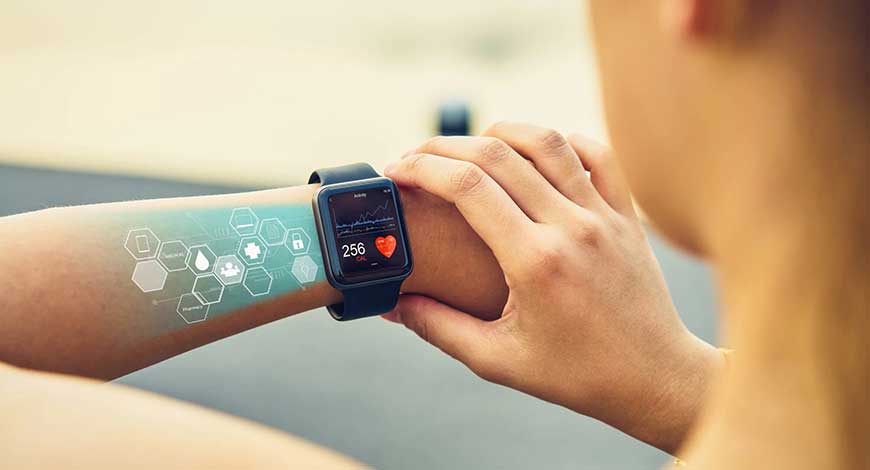
Smart wearables are electronic devices integrated into clothing or worn on the body that use sensors, connectivity, and software to collect and analyse real-time data. These devices monitor health metrics, fitness activities, location, and environmental conditions. The integration of artificial intelligence and the IoT in smart wearables is transforming user experiences and expanding their applications. AI-driven features, for example, personalized fitness recommendations, adaptive workout tracking, and predictive health alerts, are enhancing the functionality of smart devices. IoT connectivity enables seamless synchronization between wearables and smart home ecosystems, allowing users to control IoT-enabled appliances, receive real-time notifications, and even unlock vehicles through their smartwatches.

Brands are investing in AI-based algorithms that analyze sleep patterns, stress levels, and workout efficiency, offering actionable insights tailored to individual users. Noise Launches Next-Gen ColorFit Pro 6 Series, elevating its flagship smartwatches lineup with AI-powered innovation. The new series redefines the smartwatch experience with an exceptional fusion of next-gen AI-driven innovation and exquisite craftsmanship. Additionally, the government’s push for domestic electronics manufacturing through the Production Linked Incentive (PLI) scheme is encouraging local brands to integrate advanced AI and IoT capabilities, which is strengthening the market.
India’s government pushed to strengthen electronics component manufacturing by investing Rs. 22,919 crore. The government’s initiative focuses on boosting domestic production of key components such as printed circuit boards (PCBs), lithium-ion cells, sensors, and display modules, which are essential for devices like smartwatches and fitness bands. It also encourages joint ventures with foreign firms to bring advanced technology into India, while progressively increasing localization to strengthen domestic supply chains. The government expects this scheme to attract over Rs. 59,000 crore in investments, generate nearly 91,600 direct jobs, and unlock production potential worth Rs. 4.56 lakh crore over six years.
Market dynamics of the India smart wearable market:
New developments in sensor technology and artificial intelligence are making these devices better and more useful. They are also getting connected to the internet, which is making them more accessible. The internet is not that expensive, so it is easier for people to use these devices. The smart wearable market is growing because consumers have money to spend, they want to be connected all the time, and companies are starting wellness programs for their employees. This is all helping the smart wearable market to grow. Government support for digital health ecosystems and expanding e-commerce platforms also contributes significantly to smart wearable adoption across urban and semi-urban populations.
High device costs, data privacy concerns, limited battery life, accuracy issues in health tracking, and lack of awareness in rural areas restrain smart wearable adoption, particularly among price-sensitive consumers in developing markets.
The growth of a smart wearable marketplace provides new opportunities to personalize health information through machine learning. The insurance company wellness programs to provide users with premium benefits are increasing, and as a result, the demand for hybrid devices. For instance, the increasing number of remote workers means there will be more need for wearables for surveillance of their capabilities, such as stress tracking. The continuing expansion of smart home ecosystem compatibility and digital payment capabilities creates more value from wearables by providing users with multifunctional devices that perform numerous tasks beyond just fitness tracking.
Market segmentation
The India smart wearable market share is classified into type, distribution channel, and end user.
By type:
The India smart wearable market is divided by type into smartwatches, head-mounted displays, smart clothing, ear worn, fitness trackers, body-worn camera, exoskeleton, and medical devices. Among these, the smartwatch segment controlled the market share in 2024 and is expected to grow at a significant CAGR during the forecast period. The smartwatch segment dominated due to its comprehensive features, such as fitness and health tracking, notifications, calling capabilities, app connectivity, and enhanced sensor integration, making it highly preferred by individual consumers.
By type of distribution channel:
The India smart wearable market is divided by distribution channel into online retail, offline retail, direct sales, healthcare institutions, and others. Among these, the online retail segment dominated the market in 2024 and is anticipated to grow at a remarkable CAGR during the forecast period. The online retail segment dominance is driven by growing e-commerce adoption, wide product choices, competitive pricing, and convenient delivery options.
By end user:
The India smart wearable market is divided by end user into individual consumers, healthcare providers, corporate wellness programs, fitness centers, insurance companies, and others. Among these, the individual consumers segment held the largest revenue market share in 2024 and is predicted to grow at a remarkable CAGR during the forecast period. The individual consumers segment is led by the widespread adoption of smartwatches, fitness bands, and health trackers by tech-savvy users for daily wellness monitoring, step tracking, and connected lifestyle features. Spherical Insights