Headlines of The Day
India calls for accelerating health cooperation with Vietnam
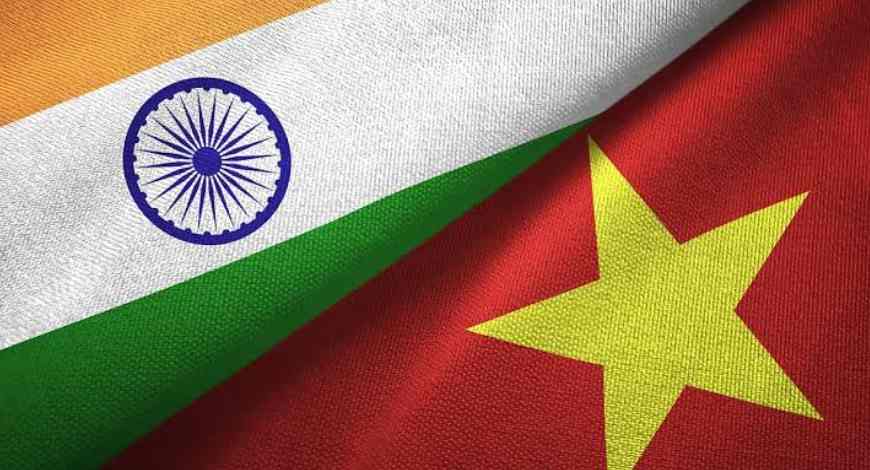
The Joint Statement on Enhanced Comprehensive Strategic Partnership between India and Vietnam was issued during the State visit to India by General Secretary and President To Lam from May 5 to 7, 2026.

The joint statement issued following the recent State visit reaffirmed the immense potential of health cooperation, as quoted above.
The pharmaceutical and healthcare sectors are crucial pillars of cooperation between India and Vietnam. Pharmaceuticals and pharmaceutical active ingredients (APIs) have consistently been key export items from India to Vietnam, providing a vital source of APIs for many domestic manufacturers. Meanwhile, Indian pharmaceutical companies in Vietnam also contribute to stabilizing the prices of imported pharmaceutical products in the market. According to the Vietnam Drug Administration (DAV), the number of companies and products registered from India is currently the highest among all countries present in Vietnam, accounting for approximately 30% of the total registrations.
In 2025, India exported pharmaceuticals and pharmaceutical raw materials worth US$374 million to Vietnam (according to Vietnamese data). Of this, pharmaceutical exports reached US$305 million, accounting for approximately 7% of Vietnam’s total imports; pharmaceutical raw material exports reached US$69 million, accounting for 14% of total imports. India is the fifth largest exporter of pharmaceuticals to Vietnam, after the US, France, Germany, and Italy. However, DAV estimates that although India’s export value to Vietnam ranks fifth, in terms of import volume, India is the largest importer.
Should India and Vietnam be satisfied with these figures? Should we be content with the current growth rate? In my opinion, the answer is no, especially since both sides still have much room to more effectively exploit the potential for cooperation in this field.
Advances in the Indian healthcare industry
India is known as the “Pharmacy of the World” and is a global leader in many areas of the pharmaceutical industry. India’s support in providing vaccines to many countries during the Covid-19 pandemic is clear evidence of the achievements of our country’s healthcare sector.
Here are some key statistics about the Indian healthcare industry:
First, India is the world’s largest supplier of generic drugs. We supply 40% of generic drugs to the US and 25% of the total to the UK. India also accounts for 20% of global generic drug production. Eight of the world’s twenty largest generic drug companies are Indian.
Secondly, India contributes 60% of the global vaccine supply and is a world leader in vaccines such as DPT, BCG, and measles. Approximately 65-70% of the vaccines for the World Health Organization are manufactured in India.
Third, India has the highest number of USFDA-approved pharmaceutical factories outside of the United States, with over 2,000 WHO-GMP-certified facilities serving more than 150 countries through approximately 10,500 manufacturing units. It also has the most pharmaceutical companies licensed by the US Food and Drug Administration (FDA) to market their products in the US market outside of the United States.
Fourth, 55% of India’s pharmaceutical exports are directed to highly regulated markets, particularly North America and Europe. In fiscal year 2025, pharmaceutical exports are projected to reach $30.4 billion, an increase of nearly 10%; the US market alone accounts for 35% of the industry’s export value.
Fifth, the Indian pharmaceutical industry is projected to grow by 7-9% in 2026 thanks to domestic demand and steady expansion in the European market.
Sixth, healthcare is one of India’s largest sectors in terms of both revenue and job creation. A well-trained workforce, quality services at reasonable costs, and its position as a research and development (R&D) hub give India’s healthcare industry a significant competitive advantage. Our healthcare market is currently worth approximately $638 billion. India is recognized globally for providing quality healthcare services and products at reasonable costs, delivering tangible benefits to its people.
We need to create more impetus for cooperation in healthcare.
Both India and Vietnam should leverage the recent state visit to create further momentum for cooperation in the health sector. The results achieved so far demonstrate the determination of both sides to promote cooperation.
Firstly, the signing of the Memorandum of Understanding between the Central Pharmaceutical Standards Control Organization under the Ministry of Health and Family Welfare of India and the Drug Administration of Vietnam, Ministry of Health, on cooperation in the field of medical product management, during the recent State visit, is a positive step towards harmonizing regulations and management procedures. We look forward to the visit of the Vietnamese Drug Administration delegation to India to work with partners to effectively implement this Memorandum of Understanding.
Secondly, in the digital age, Indian authorities have developed an online verification portal for records and documents, integrating QR codes for Certificates of Pharmaceutical Product (COPP). This system will help shorten processing times and facilitate business operations. We expect to put it into operation soon.
Third, both sides agreed to hold the next meeting of the Joint Working Group on Health in Hanoi as soon as possible. Maintaining regular exchanges between policymakers will be particularly helpful, especially given Vietnam’s ongoing major policy changes.
Fourthly, the Embassy, together with partners such as the Indian Chamber of Commerce (INCHAM) in Hanoi, the Vietnamese Ministry of Health, the Vietnam Pharmaceutical Business Association, the Vietnam Private Hospitals Association, the Vietnam Medical Equipment Association, and other relevant parties, jointly organized an event connecting Indian and Vietnamese businesses in the pharmaceutical and medical equipment sectors on March 25, 2026, in Hanoi. These activities further affirm the important role of healthcare cooperation in bilateral relations.
On Thursday, the Vietnamese government approved a partnership between Indian company Sri Avantika Contractors and AnhPhat Group to develop a pharmaceutical park in Thanh Hoa province. The project is expected not only to boost pharmaceutical cooperation between the two countries but also to contribute to improving production capacity and strengthening Vietnam’s self-reliance in this field.
The next steps
So what is the next step for cooperation in pharmaceuticals and healthcare between India and Vietnam? I would like to share some suggestions.
Firstly, we understand Vietnam’s efforts to improve its regulatory policies to ensure affordable drug supply and enhance supply security. In this process, India can be a reliable partner, as we have gone through a similar process and understand Vietnam’s requirements.
Secondly, India will continue to be a reliable partner of Vietnam. The supply of quality, affordable medicines, along with cooperation in technology, API supply chains, and capacity building, will form the foundation of future cooperation.
Thirdly, in the context of Vietnam promoting the “Make in Vietnam” policy and its increasingly完善 management system, Indian businesses can expand joint ventures, technology transfer, and contract manufacturing in Vietnam.
Fourth, strengthening cooperation and sharing experiences in management will be of great importance to both sides.
Fifth, Vietnam will continue to be a key market for India in the region, with generic drugs remaining central to bilateral cooperation.
Sixth, as agreed upon by the leaders of both countries during the recent State visit, we hope that Indian businesses can participate in supplying medicines to Vietnamese public health facilities from 2027 onwards, under a bilateral agreement. I believe this will be a win-win outcome for both Vietnam and India.
Traditional medicine
The healthcare partnership between the two countries would be incomplete without cooperation in traditional medicine. During the visit of the former Vietnamese Prime Minister to India in August 2024, the two sides signed a Memorandum of Understanding on medicinal plants between the National Medicinal Plants Commission of India and the Vietnam Traditional Medicine Administration. Currently, both sides are continuing to exchange information and promote the implementation of cooperation in this field.
India is ready to share its knowledge of Ayurveda with Vietnam to contribute to improving the health of its people. We also hope to organize a workshop in Hanoi in the coming months to discuss the potential for cooperation between Ayurveda and Vietnamese traditional medicine. With the increasing popularity of yoga in Vietnam, sharing the values of Ayurveda will contribute to improving the quality of life for the people.
The joint statement issued following the recent State visit also stated: “Based on the long history and rich heritage of traditional medicine in both countries, both sides agreed to promote knowledge exchange, strengthen research cooperation and practice sharing, and encourage linkages between relevant agencies and organizations. Both sides welcomed the progress in finalizing the Memorandum of Understanding on Traditional Medicine and the proposal for a Memorandum of Understanding on the establishment of a Head of Ayurveda (Indian Traditional Medicine) in Vietnam.”
Medical tourism
Medical tourism is a promising area for cooperation between the two countries and is rapidly developing in India. Recently, we have been delighted to see an increasing number of Vietnamese citizens choosing India for medical treatment.
There are two particular stories that left a strong impression on me.
Firstly, many Vietnamese thalassemia patients have traveled to India for treatment. In the past six months alone, we have issued approximately 36 medical visas to patients and their companions; over the past year, this number has been around 115 visas.
Secondly, ophthalmic care is emerging as a promising area of collaboration. Dr Agrawal Eye Hospital – India’s leading ophthalmic care chain – recently opened a Patient Coordination Center in Hanoi to support Vietnamese citizens in accessing advanced ophthalmic treatments in India. We are also aware that some Vietnamese patients have successfully received treatment in this field in India.
Medical treatment in India offers high-quality services at reasonable costs, thus increasingly attracting international patients, including those from Vietnam.
Pharmaceuticals and healthcare will continue to be pillars of the bilateral partnership in the future. This is also the area with the most direct and far-reaching impact on the lives of people in both countries.
With innovation being the hallmark of India’s pharmaceutical industry, coupled with a vast global export network including markets with very high standards such as Europe and the US, I believe there is no reason why India’s high-tech and innovative pharmaceutical products – recognized worldwide for their quality and reasonable prices – cannot reach the Vietnamese people.
The two countries have ample room to expand cooperation in this field. We look forward to continuing to work closely with the Vietnamese Ministry of Health and relevant parties to bring high-quality Indian medical services and pharmaceutical products to the Vietnamese people.
As Prime Minister Narendra Modi stated during his recent state visit—and I would like to conclude this article with those very words—”We will walk together, grow together, and win together.” Vietnam.vn