Trends
How microstructure makes ePTFE a versatile MedTech material
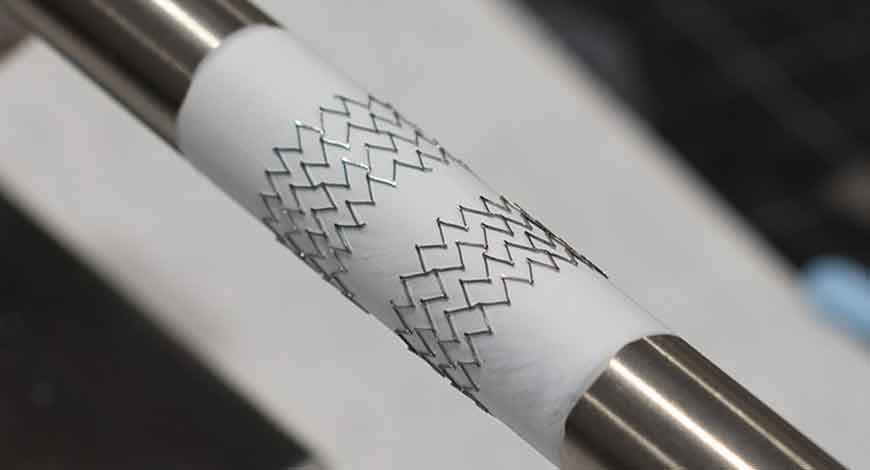
Expanded polytetrafluoroethylene (ePTFE) has become a staple in the medical device industry for applications ranging from vascular grafts to stent encapsulations and more. It’s known for chemical inertness, biocompatibility, flexibility, and durability.

What may surprise engineers is that ePTFE is not a single, uniform material. It takes several forms with varying properties, each defined by the processing from base resin to final material.
The processing of ePTFE begins with fine PTFE resin that is combined with a lubricant and turned into a billet. This billet (or preform) is then extruded as a rod, tube, or sheet. After removing the lubricant, the material is stretched under controlled conditions, creating the characteristic microstructure.
Selecting the right form of ePTFE in alignment with clinical needs early in the design process is essential for success. A graft designed for vascular access will behave differently from membrane or tape intended for stent encapsulation
Microstructure is ePTFE’s advantage
The versatility of ePTFE is a result of its unique microstructure. Unlike solid PTFE, ePTFE is expanded through a controlled stretching process that creates a porous network of nodes interconnected by fibrils, which gives ePTFE its distinctive combination of strength, flexibility, and permeability.
From a design perspective, key parameters in this microstructure include porosity, fibril orientation, and node density. These characteristics directly influence how the material behaves in a clinical setting. For example, increasing the porosity can improve permeability, but may reduce mechanical strength. Conversely, a denser structure enhances strength and durability, but may limit tissue integration.
Visualizing this structure — often through scanning electron microscopy (SEM) — is particularly impactful for engineers utilizing ePTFE for the first time. SEM images of tubes or grafts reveal elongated, highly oriented fibrils aligned longitudinally with high porosity, which gives grafts their typical accordion-like nature and sponginess.
On the other hand, membranes can be made biaxially, which allows for similar strength in both directions and shows as a mesh or lattice-like structure. Tapes and ribbons often exhibit highly oriented fibril networks, contributing to their ability to stretch preferentially in one direction.
Understanding these structural differences is essential. Engineers are often surprised to learn that two materials with the same base polymer can behave in an entirely different way based on how the microstructure is engineered.
Tubes versus membranes versus tapes
When working with ePTFE, you’ve got to recognize the invariable link between form and function. The same base material can be processed into tubes, membranes, or tapes, each serving distinct roles in medical devices.
The microstructure of tubes, typically used for vascular grafts or stent encapsulations, is usually highly oriented longitudinally which provides axial strength. Because fibrils can bend and straighten, these tubes have excellent flexibility.
Membranes are typically thin, porous sheets. They are commonly used in applications such as filtration and stent encapsulation. Engineers may initially assume that all ePTFE membranes behave similarly, but subtle differences in porosity and thickness can dramatically alter performance. Membranes are especially preferred in applications where the delivery system’s profile is a driving factor behind the design requirements, as membranes can be produced at a thickness of less than 10 microns. (For reference, human hair typically ranges from 50 to 100 microns.)
Tapes and ribbons offer yet another dimension of functionality. These forms can be used in the same application as membranes, but offer different attributes. Tapes are typically more uniaxial than membranes, meaning for applications where expansion of the material is required, a tape or ribbon might be more suited to the extreme cases. They are typically thicker than membranes, however.
Final thoughts
With ePTFE, there is no one-size-fits-all solution. Performance is customizable, but the first step to success is tailoring microstructure to the design requirements and clinical needs. The material’s node-fibril microstructure enables a wide range of characteristics, requiring careful consideration of form, structure, and application.
While ePTFE is versatile, the degree to which properties can be adjusted has made this material a hot topic in the medical device industry. When approached thoughtfully, ePTFE offers serious potential for many medical device applications. When used improperly, it can lead to costly redesigns and project delays.
Engineers who take this into consideration can unlock the potential of ePTFE and build innovative devices that make a meaningful impact on patients’ lives.
Matt Navarro is an R&D engineer at Aptyx with seven years of experience developing ePTFE-based solutions for advanced implantable systems. His work spans endovascular, peripheral vascular, structural heart, neurovascular, and gastrointestinal applications, where he has led dozens of programs from concept through development. Navarro holds bachelor’s and master’s degrees in biomedical engineering from Clemson University. Medical Design & Outsourcing