Infusion Pumps
From error to excellence – The global rise of smart infusion pumps in patient care
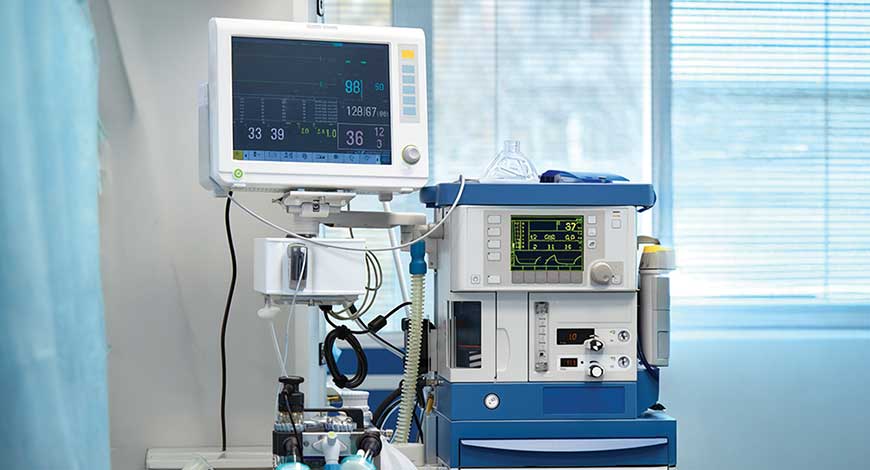
Smart infusion pumps drive safer, precision medication delivery and workflow transformation in modern healthcare.

Intravenous infusion therapy is a cornerstone of modern healthcare, enabling the precise and timely delivery of critical medications, fluids, and nutrition directly into the bloodstream. Historically, infusion therapy relied on manual calculations, vigilant monitoring, and basic gravity-based devices–conditions that could not consistently keep pace with the increasingly complex and high-stakes therapies. Nearly half of serious hospital medication errors were linked to IV infusion, revealing an urgent need for safer, smarter solutions.
As patient acuity increases and treatments become more advanced, traditional tools often limit clinical efficiency and safety. The response: smart infusion pumps equipped with dose error reduction software, real-time alerts, and drug libraries tailored to evolving protocols. These devices have rapidly evolved to integrate with barcode scanning, electronic health records (EHRs), compounding workflow systems, and remote monitoring platforms, transforming standalone pumps into networked therapy management systems.
Smart pumps now act as essential safety rails in patient care, automating consistency, minimizing silent errors, and aligning infusions with the latest evidence-based practices. Rather than replacing clinical judgment, they reinforce it–supporting clinicians with predictive algorithms, actionable alerts, and interoperability to help ensure safer and more informed decisions. This digital transformation is quantifiable: studies show smart pump interoperability can prevent dozens of medication-related adverse events annually, saving hospital systems massive amounts of money and recouping substantial lost charges. AI-driven monitoring, automated changeovers, and continuous data exchange further enhance safety and efficiency as infusion technology continues to evolve.
Ultimately, the story of infusion therapy is one of transformation–risk reduction, complexity management, and patient protection–where smart pumps are now vital to delivering the safest and most reliable care in a rapidly changing landscape.
Smart infusion pumps – Transforming patient safety and care delivery in India
 Dr Amogh B Patil
Manager – Advanced Technology and Clinical Research,
Skanray Technologies Limited
India’s healthcare landscape is undergoing a transformative shift as smart and wearable infusion pumps enhance patient safety, medication management, and personalized care. The Indian wearable injectors market is projected to grow from USD 333.1 million in 2024 to USD 1,286.5 million by 2033 at a 16.20 percent CAGR, reflecting a recognition that precision drug delivery, remote monitoring, and intelligent decision support can reshape care for acute and chronic conditions.
Medication errors remain a persistent challenge, with incidence rates ranging from 6 to 45 percent, particularly in critical care, where error margins are narrow. Smart infusion pumps with real-time monitoring, integrated drug libraries, wireless connectivity, and automated decision support reduce the risks associated with manual calculations and enable immediate clinical oversight.
These technologies directly address India’s disease burden. Non-communicable diseases like cardiovascular disease, diabetes, and stroke account for about 60 percent of deaths. India reports the highest global burden of acute coronary syndromes and 1.18 million stroke cases annually. For patients requiring continuous delivery of insulin, anticoagulants, or chemotherapeutic agents, wearable pumps enable precise, long-term therapy while preserving mobility and independence. Self-administration and continuous monitoring improve compliance and quality of life, shifting chronic care from hospital-centered to patient-centered.
Technological infrastructure has matured, with IoT, cloud analytics, AI-driven decision support, and secure connectivity enabling real-time remote monitoring and population-level predictive insights. This bridges infrastructure gaps across diverse healthcare settings and alleviates nurse staffing constraints through autonomous safety checks and alert-based intervention.
However, adoption barriers include high upfront costs, import dependency, lack of trained personnel, inadequate digital infrastructure, and regulatory delays. Implementation requires ecosystem development: standardized training, integration with hospital information systems and pharmacy workflows, and cultural acceptance of technology-enabled care.
Government initiatives, such as the National Medical Devices Policy 2023, the Production Linked Incentive scheme, and Atmanirbhar Bharat, support domestic manufacturing and the development of affordable smart infusion solutions. Combining strengths in software engineering with growing health adoption, India has a solid foundation for transformative adoption.
Smart infusion technology represents a commitment to medication safety, patient autonomy, and healthcare that aligns with the realities of chronic disease, with the potential to democratize precision medicine and strengthen healthcare equity.
Demand meets innovation
Infusion therapy has reached a pivotal moment in healthcare, where surging clinical needs and rapid technological innovation are finally converging. Hospitals and home care providers face an unprecedented rise in patient acuity, from complex cancer and critical care therapies to long-term pain management and in-home IV treatments. At the same time, clinicians are challenged by tighter staffing, higher workloads, and a shrinking margin for error–all of which have outpaced the capabilities of manual programming, disconnected pumps, and inconsistent workflows.
Smart infusion solutions are stepping up to meet these demands. Manufacturers are integrating advanced drug libraries, wireless connectivity, and automated safety checks, thereby transforming the delivery of medication. Instead of relying on memory or manual calculations, clinicians now benefit from standardized dosing, predictive AI-powered alerts, and real-time error prevention systems. As healthcare extends beyond hospitals–to ambulatory centers, remote clinics, and home settings–new pump designs are becoming increasingly compact, portable, remotely monitored, and user-friendly, enabling safe care to be delivered anywhere.
This convergence of higher patient acuity and smarter infusion technology is reshaping care delivery. The result is a new, digitally enabled therapy model defined by consistency, transparency, and safety. Global sales of smart pumps are projected to exceed 8 million units in North America alone and over 15 million units worldwide in 2025, driven by innovations in AI, wireless interoperability with electronic health records (EHRs), and robust remote monitoring. This is not just technological progress–it’s a focused response to clinical complexity and risk, directly improving patient safety, workflow efficiency, and outcomes for a more resilient healthcare system.
Indian market dynamics
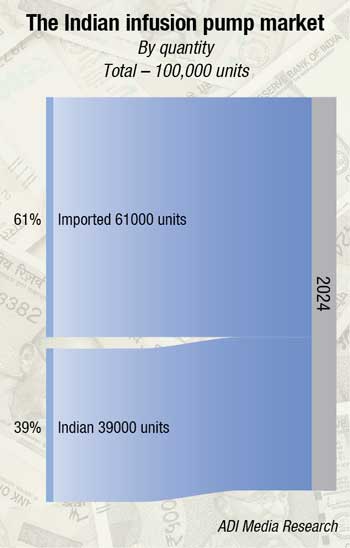
The Indian infusion pump market in 2024 is estimated at about 100,000 units, valued at around ₹240 crore. The market is split between imported and indigenous pumps, with imports accounting for roughly 60–61 percent of volumes and the balance supplied by domestic manufacturers. Leading Indian manufacturers include AKAS, Allied, Plenum, and Skanray, while Chinese brands largely dominate the imported segment.
Patient-controlled analgesia (PCA) pumps, which allow patients to manage their own pain relief by administering a predetermined dose of pain medication with the push of a button, are currently purchased only by a few discerning Indian hospitals. MRI docking stations see similarly selective adoption. In 2024, an estimated 19 MRI-compatible pumps, designed without metallic components, were also sold.
|
Leading players |
|
|
Imported infusion and volumetric pump players in the Indian market* |
|
| Tier I | Mindray & Smiths Medical |
| Tier II | Fresenius Kabi, Hawk, Beacon, Medivo, Byond, Sino, B Braun, Deepmed, Le Medical, Medcap, and KellyMed. |
| Others | Comen, Lian Ying, Contec, WIT, BD, IRadimed, Baxter, Allied, Terumo, and Yonker |
|
Indian infusion and volumetric pump players* |
|
| Tier I | AKAS |
| Tier II | Allied, Plenum & Skanray |
|
*Vendors are placed in different tiers on the basis of their sales contribution to the overall revenues of the Indian infusion and volumetric pump market. ADI Media Research |
|
Patient-controlled analgesia (PCA) pumps that allow patients to manage their own pain relief by administering a predetermined dose of pain medication with the push of a button were purchased by a few discerning hospitals, as were the MRI docking stations, that built from non magnetic materials, and designed so infusion pumps can be fixed at a safe distance from the magnet while still maintaining uninterrupted therapy for the patient. In 2024, an estimated 19 MRI-compatible pumps were also sold.
Despite the Make in India initiative, India’s infusion pump manufacturers continue to find the going tough. High licensing fees, with lower sales volume, approximately USD 2250 per license, charged by the CDSCO, lengthy approval timelines, and the limited number of accredited testing laboratories together create strong disincentives for domestic production. In contrast, many small-scale importers find it far easier to sell devices approved by China’s National Medical Products Administration (NMPA) rather than by Indian regulators, which hospitals in Tier-II and Tier-III cities readily accept.
Global market scenario
The global infusion pump market is undergoing a transformative shift, propelled by rising demand for precise, reliable, and automated drug delivery. Worldwide, the burden of chronic diseases such as diabetes, cancer, and cardiovascular disorders is increasing, intensifying pressure on healthcare systems to adopt technologies that minimize dosage errors and enable continuous therapy.
Current estimates show the market will grow from approximately USD 11.31 billion in 2025 to USD 19.89 billion by 2032, expanding at a compound annual growth rate of 8.4 percent through this period, according to Coherent Market Insights. This momentum reflects sustained demand from hospitals, home care, and ambulatory services, supported by innovations in smart pumps, data-driven clinical workflows, and integrated software platforms designed to maximize safety and efficiency.
A central driver of market expansion is the focus on treatment accuracy and patient safety. Smart infusion pumps routinely deliver medication with dosing accuracy of 95–99 percent, reducing manual administration errors for high-risk therapies, including oncology, critical care, neonatal care, and chronic disease management. Healthcare modernization initiatives, particularly in North America and the Asia Pacific, are driving broad adoption: in 2024, North America held more than 38 percent market share, while the Asia Pacific is the fastest-growing region at nearly 8 percent CAGR.
Hospitals are upgrading to digital care pathways, incorporating smart pumps featuring wireless connectivity, dose-limit libraries, and remote monitoring. The rise of home-based and remote care–especially for elderly and chronic disease patients–is also fueling demand for portable, self-administration-friendly devices. However, high upfront procurement costs, workforce training, regulatory compliance, and technical integration remain barriers, particularly in resource-limited and rural settings.
A defining trend is the move toward connected, autonomous therapy management. Predictive analytics, optimized drug libraries, and automated dose adjustment are now central to device innovation. Remote monitoring and EMR interoperability are driving infusion therapy into a data-driven era, enhancing both safety and operational efficiency. Emerging research is addressing micro-flow precision, magnetostrictive actuators, and next-generation sensors, all of which are essential for ultra-low-volume delivery in neonatal and oncology care.
Market expansion is robust in regions such as Asia-Pacific, Latin America, and the Middle East, where rapid improvements in healthcare infrastructure and access are scaling infusion therapy beyond major urban hospitals into Tier-II and Tier-III clinical networks. These developments are forging a future where infusion technology is as dynamic as the clinical environments it supports.
Smart and wearable infusion pumps – Shaping the future of patient care in India
 Aditya Kohli
CFO & Director,
Allied Medical Limited
In recent years, Indian healthcare has witnessed a remarkable transformation driven by technology, with smart and wearable infusion pumps emerging as one of the most impactful innovations. These compact, intelligent devices are redefining how medication and fluids are administered, offering greater precision, mobility, and safety for patients in both hospital and home-care environments.
Traditionally, infusion therapy has been confined to clinical settings, requiring patients to remain connected to stationary equipment under constant supervision. However, the evolution of microprocessor-based and sensor-enabled infusion pumps has shifted this paradigm. Modern pumps enable programmable, accurate drug delivery with built-in safety features that minimize risks, such as over-infusion, air embolism, or occlusion. More importantly, the advent of wearable models now enables patients–especially those undergoing long-term treatments such as chemotherapy, diabetes management, or pain therapy–to continue their routines with minimal disruption.
The Indian healthcare ecosystem, with its growing emphasis on patient-centred care and remote monitoring, is well-positioned to benefit from this shift. Smart infusion pumps, integrated with wireless connectivity and cloud-based platforms, enable clinicians to monitor infusion parameters in real-time, adjust dosages remotely, and maintain detailed treatment records. This not only enhances clinical accuracy but also supports better adherence and patient outcomes.
Moreover, the increasing adoption of home healthcare services in India–fuelled by an aging population and rising chronic disease burden–has accelerated demand for compact, portable devices that ensure hospital-grade accuracy at home. As wearable infusion technologies become more affordable and user-friendly, they hold the potential to bridge the gap between hospital-based and home-based care, especially in semi-urban and rural settings.
The road ahead lies in developing standardized protocols, robust training programs, and digital infrastructure that support safe and efficient use of these technologies. Smart and wearable infusion pumps represent more than technological progress–they embody a fundamental shift toward accessible, continuous, and patient-driven healthcare.
As India continues to adopt digital health innovations, collaborations among medical device manufacturers, hospitals, and health-tech companies will play a crucial role in expanding access to these advanced solutions. Continued investments in AI-driven automation, cybersecurity, and user-friendly interfaces will further enhance the reliability and acceptance of smart infusion systems. Ultimately, these advancements are paving the way for a future where healthcare is not only smarter but also more inclusive, efficient, and responsive to patients’ real needs.
Strengthening global capacity for advanced infusion systems
Strengthening global capacity for advanced infusion systems requires coordinated efforts from governments, industry bodies, manufacturers, suppliers, and financial stakeholders. Governments are increasingly integrating advanced infusion technologies into hospital modernization programs, providing incentives for clinical adoption, and supporting domestic manufacturing and robust supply chains that ensure timely access and reliability. Strategic investment in university–industry research partnerships and rigorous national device testing and certification programs is elevating local innovation and setting new standards for quality and interoperability on a global scale.
Industry bodies are shaping the market by establishing comprehensive frameworks for device safety, digital integration, and performance benchmarking. These frameworks support seamless connectivity with electronic medical records and patient monitoring systems, while also guiding the development of training and certification pathways for nurses, technicians, and biomedical engineers. Ongoing efforts focus on harmonizing regulatory requirements and accelerating the adoption of best practices across diverse healthcare networks.
Manufacturers and technology developers continue to advance smart, connected infusion systems by launching devices with wireless remote monitoring, predictive safety alerts, and application-specific innovations tailored for complex oncology, critical care, and home-based therapies. Their focus on usability, remote access, and modular design is enhancing the flexibility and resilience of infusion therapy worldwide, particularly in resource-limited settings where decentralized care is rapidly expanding.
Suppliers are expanding regional presence and support services to match rising demand for customized solutions and maintenance capabilities, helping healthcare providers implement and optimize advanced infusion technologies. Investors and financial resources underpin this ecosystem with funding dedicated to research, scalable automation, and AI-driven dosing systems. Strategic partnerships among device firms, digital health platforms, and providers are accelerating the transition to precision medicine and decentralized care delivery. Collectively, these stakeholders are forging a more connected, safer, and outcome-focused infusion therapy landscape aligned with the global evolution of healthcare and patient needs.
From devices to decision-support systems
Intelligent infusion pumps have transformed medication delivery in hospitals and clinics from a manual, error-prone process into a continuous, data-driven clinical workflow guided by real-time decision-support capabilities. Rather than merely pushing fluids, today’s smart pumps leverage built-in drug libraries, dose error reduction software, and sophisticated alert systems to continuously monitor infusion parameters and compare administered doses against clinical guidelines. This technology allows pumps to anticipate risks: if a programmed dose or rate deviates from safe standards, the device immediately alerts clinicians, helping prevent mistakes before they occur.
This evolution in infusion therapy is widely recognized for reducing preventable medication harm and improving therapy accuracy in hospital and outpatient care settings. For clinicians, smart pumps reduce cognitive load by automating calculations, standardizing workflow steps, and streamlining interfaces to minimize programming and keystroke errors. Nurses and doctors benefit from automated documentation and built-in compliance with clinical standards. For hospital administrators, data captured by the pumps strengthens clinical governance, enhances audit readiness, and enables robust digital traceability for regulatory compliance and ongoing quality improvement. And for patients–whether receiving chemotherapy, critical care, pain management, or home infusions–these systems deliver more reliable therapy at the right dose, rate, and duration.
With growing integration of smart pumps into electronic medical record platforms, and remote dashboards that connect caregivers and hospital systems, these devices have become more than infusion tools: they act as clinical collaborators and safety guardians. Hospitals increasingly recognize them as essential partners in supporting clinician judgment, enabling safer therapy, and improving patient outcomes in a complex, fast-paced healthcare ecosystem.
Connected care
Interoperability is fundamentally transforming infusion therapy, shifting it away from manual programming and isolated workflows toward seamlessly coordinated, intelligent patient care. In state-of-the-art connected environments, medication orders are transmitted directly from electronic medical records (EMRs) to infusion pumps, eliminating redundant manual steps and instantly matching each infusion with the hospital’s most up-to-date drug library and protocols. Before infusion even begins, the smart pump checks dose limits, concentration ranges, titration rules, and all relevant safety guardrails–empowering nurses to start therapy with confidence, supported by automated accuracy rather than calculation or memory.
Pharmacy teams gain a new level of oversight and consistency: drug library updates and formulary changes can be instantly pushed to every pump on the network, enforcing the same high standards and safety margins everywhere, from ICUs to day-care oncology suites to neonatal units. This technological unification reduces care variability, ensures alignment with national and local guidelines, and lowers the likelihood of adverse events. The result is a hospital ecosystem where every patient receives the same level of protection and evidence-based care, regardless of where their infusion is initiated.
For frontline clinicians, the impact is immediate: fewer interruptions, less double-checking, reduced keystroke and manual programming errors, and fewer nuisance alarms. Infusion status can be monitored remotely through intuitive dashboards, enabling real-time intervention and data-driven decision support, while pumps themselves transmit complete and accurate infusion records directly back into the EMR. This not only frees clinicians from documentation burdens but also ensures a rich, comprehensive patient record that supports safety audits, reimbursement, and ongoing quality improvement. For patients, these advancements mean that every medication administered is enveloped in layers of process integrity and clinical safety. For hospital leadership, the adoption of connected infusion systems translates to fewer adverse events, improved operational efficiency, and a predictable, more harmonious clinical environment promoting both workforce satisfaction and patient trust.
Care without borders
Infusion therapy is evolving far beyond hospital wards, making treatment more flexible, personal, and empowering for patients with chronic and complex conditions. Modern infusion pumps are now engineered for portability, intuitive operation, and intelligent safeguards, enabling safe and accurate medication delivery in homes and community settings. Patients managing therapies for kidney disease, nutrition, infections, or pain can now receive life-sustaining medications while maintaining their daily routines, enjoying greater comfort, and avoiding the disruption and cost of frequent hospital visits.
This shift is driven by technological advances that have reshaped the infusion pump landscape. Today’s devices feature guided dosing safety, wireless connectivity, cloud-enabled monitoring tools, and smart interfaces designed for ease of use by both patients and healthcare professionals. Clinicians can oversee infusion status remotely, intervene rapidly if parameters change, and adjust therapy in real time. This remote oversight prevents unnecessary hospital admissions and frees scarce hospital beds for those in acute need, while maintaining high standards of safety and therapeutic continuity. For patients and families, these capabilities foster greater independence, emotional well-being, and significant savings in both time and healthcare costs.
Ultimately, the transition to care without borders is about ensuring continuity, reliability, and compassion–delivering treatment that is consistent and secure wherever life takes the patient. Infusion pumps are central to this new era: they safeguard dignity, stability, and autonomy by allowing high-quality care to follow patients seamlessly across settings. As a result, healthcare becomes more humane and responsive, empowering patients with control while providing caregivers and clinicians with the confidence that therapy remains optimally managed at every step.
Designed for clinicians
Human-centered engineering design in syringe infusion pumps focuses on eliminating operational complexity and prioritizing usability, because true safety begins with how intuitively and efficiently clinicians can interact with the device. By simplifying interfaces, reducing programming steps, and making controls easy to understand–even for minimally trained staff–engineered systems reduce user error and support confident, safer fluid delivery.
This approach ensures that even in resource-limited settings, healthcare workers can reliably use the pump, contributing directly to better care outcomes. Current low-cost syringe pump research highlights this trend, as new projects and prototypes actively prioritize simple, user-friendly operation alongside affordability–making human-centered usability both a necessity and a fresh research focus in the field.
Outcomes that matter
Smart infusion pumps are fundamentally shaping dialysis and IV therapy by ensuring fluids and medications are delivered with high precision and reliability, making an enormous difference for patients who require frequent or complex care. These advanced devices automate flow rate control, removing the need for constant manual supervision and eliminating errors in drip adjustment, which translates directly into reduced dosing errors and fewer complications. For clinicians, this freedom means they can shift their attention from equipment management to deeper patient care, fostering relationships and creating a more attentive environment.
For patients and families, smart pumps offer comfort by providing steady, predictable treatment sessions. In pediatric and long-term care settings, this comfort and continuity are especially important, as devices use intelligent alarms and guided prompts to help care teams respond quickly and confidently, leading to smoother sessions and less anxiety or fear. Clinical research has shown these systems not only decrease medication dosage errors–sometimes by up to 80 percent–but also help prevent severe adverse drug events and improve overall patient safety.
At their heart, smart infusion pumps do not substitute for healthcare professionals–they reinforce expert care, creating a therapeutic environment where treatment is safer and feels much more compassionate and controlled. Their blend of technological precision and human-centered usability contributes to better health outcomes, empowers patients, and turns necessary medical treatments into experiences that are less intimidating and more supportive every day.
Operational advantage
Smart infusion pumps now play a pivotal role in enabling hospitals and diagnostic centers to manage surging patient volumes, evolving therapy complexity, and persistent staffing shortages–all while maintaining cost control. By automating medication delivery and integrating seamlessly with electronic records and clinical protocols, these devices eliminate manual programming, documentation, and redundant checks, transforming traditionally error-prone practices into streamlined, repeatable processes. The result is fewer workflow interruptions, more consistent dosing, and less need for constant clinician oversight, which directly reduces preventable errors and adverse drug events.
Clinicians benefit from this operational advantage by reclaiming valuable time otherwise spent on manual charting, troubleshooting alarm fatigue, and repetitive dose verification. This shift allows for greater focus on patient care–enabling deeper assessments, more meaningful interactions, and hands-on support–while accurate, automated infusion records ensure proper billing and virtually eliminate costly documentation errors. Institutions enjoy lower device downtime, simplified training for diverse and rotating teams, and smoother workflow transitions between units and staff groups.
For healthcare leaders, investing in smart infusion pumps is about operational resilience and strategic value. Enhanced workflow efficiency improves staff morale, supports continuity across departments, and boosts patient flow, making clinical environments calmer, more predictable, and ultimately more productive. Trusted for their precision and reliability, smart infusion pumps have become not only indispensable safety assets, but also catalysts for lasting improvements in care quality and hospital productivity.
Smart infusion pumps improve patient safety
Smart infusion pumps are now essential for patient safety in modern healthcare, significantly reducing the risk of medication errors in high-acuity settings such as ICUs, oncology, and postoperative care. Research shows interoperability between smart pumps and electronic health records can reduce total medication administration errors by up to 16 percent, with particularly notable drops in high-risk drug errors and continuous medication infusions. In paediatric settings, incident reports of infusion errors decreased by 73 percent after the introduction of smart pumps and standardized labelling, highlighting significant safety improvements.
These devices utilize drug libraries and dose error reduction systems (DERS) to guide safe concentration, rate, and limit settings, thereby minimizing manual entry errors that commonly cause incorrect dosing in traditional workflows. Real-time monitoring and automated alarms for occlusions, air bubbles, and flow changes ensure immediate detection of problems before they reach patients. By automating programming and reducing repetitive checks, smart pumps lower cognitive load for clinicians, standardize complex infusions, and improve compliance with hospital dosing protocols.
Consistent evidence from hospital evaluations confirms that smart pumps result in substantial, measurable reductions in preventable infusion-related errors. Their blend of intelligent controls and user-friendly design supports both patient safety and clinical workflow efficiency, making them indispensable for delivering safer, more reliable care at the bedside.
Next-gen infusion for modern care
Infusion pumps are rapidly evolving beyond mechanical medication dispensers to become integral, data-driven systems in modern healthcare. Advanced pumps now integrate drug libraries, dose error-reduction algorithms, and intelligent alarm systems that guide clinical teams and prevent dosing mistakes, a leap that is especially important in demanding environments like oncology, intensive care, and home-based therapy. For patients outside the hospital, compact, lightweight designs with long battery life are making continuous therapy possible without sacrificing mobility or independence.
At the heart of this next generation is digital connectivity. Infusion pumps linked to electronic health records (EHRs) automate programming and reduce manual steps, with recent studies showing that bidirectional integration with EHRs can cut infusion-related errors, programming overrides, and manual work for nurses. Built-in diagnostic logs support real-time troubleshooting and proactive maintenance, while routine software updates ensure devices remain aligned with rapidly changing safety protocols.
As these capabilities mature, infusion pumps are poised to support real-time monitoring, personalized medication dosing, and fully coordinated care across hospital, ambulatory, and home environments. These advancements deliver more reliable treatment, empower patient independence, and transform medication delivery into a safer, smarter, and adaptable foundation for modern care.
The next leap
The next leap in infusion therapy will see pumps evolve from passive fluid dispensers into intelligent, adaptive platforms capable of real-time decision-making and fully autonomous control. Powered by AI and machine learning, approaching generations of infusion pumps will predict and adjust infusion rates continuously, drawing on real-time patient data and minimizing historical sources of error–including micro-flow inaccuracies and manual programming mistakes. Closed-loop control architectures will connect patient monitoring with pump operations, allowing automated, immediate dose corrections for optimal therapy outcomes.
Advancements in internal hardware, such as magnetostrictive actuators and new micro-drive technologies, will enable ultra-stable, precisely controlled dosing–crucial for delicate treatments like pediatric infusions and advanced cancer therapies. The fusion of human-centered design and AI-driven usability will simplify bedside operation, minimizing clinician workload and making life-saving therapy accessible even in the most resource-limited settings. These systems will leverage seamless, interoperable integration with electronic health records to eliminate manual data entry. Embedded predictive analytics will enable clinicians to anticipate and rapidly respond to dosing deviations and emerging safety events.
Ultimately, safety will become a proactive aspect of every pump action–automation, connectivity, precision engineering, and intelligent software will be woven into the very fabric of therapy delivery. As a result, infusion pumps will serve not just as tools but as active, adaptive partners in personalized, data-driven patient care. This radical evolution will redefine how hospitals, home care teams, and patients worldwide deliver, monitor, and trust infusion therapy over the next decade.
Leading with vigilance
Continuous education ensures that clinicians understand safety features, recall processes, and troubleshooting techniques. Meanwhile, protocols such as dual verification of high-risk medication settings and channel labeling help reduce user error. Hospitals must also integrate device safety checks with broader quality improvement efforts, including regular evaluation of compliance with drug library standards and the prompt implementation of hazard alerts and recalls.
India stands out globally for its advancing infusion technology ecosystem, with innovation in device manufacturing, engineering design, and digital health integration driving national progress. As healthcare access expands into metro, tier-II, and tier-III regions, vigilance in governance and technology adoption will define leadership, transforming safe, cost-effective, and intelligent infusion therapy from a national aspiration to a global standard. Future-ready leaders who prioritize anticipation, training, and accountability will shape the next era of therapy delivery, ensuring every device action is governed by safety and trust.