Devices & Utilities
First decision – The floor – India’s healthcare and lab boom starts below
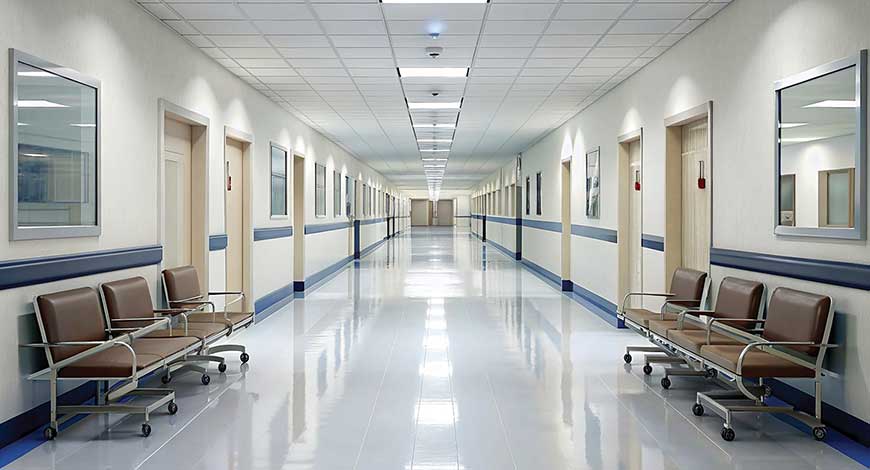
India’s healthcare and lab boom starts with flooring choices ensuring safety, hygiene, durability.

India’s healthcare and laboratory infrastructure is in the middle of a generational expansion, and the conversation around it has quietly inverted. For two decades, the elements that defined a modern hospital or diagnostic facility were the visible ones: imaging machines, robotic surgical platforms, automated analysers, IT systems, and the architectural flourishes that signaled clinical sophistication. The substrate on which all of these sit, the floor itself, was treated as the most basic of construction inputs. That assumption no longer holds up under the operating realities of a contemporary Indian hospital or an NABL-accredited laboratory. In a sterile environment, the floor is not the last design decision. It is the first one, and the one that quietly determines whether every other technology installed above it can deliver on its promise.
A category that is finally being taken seriously
Floor coverings in healthcare and laboratory environments occupy a strange place in the value chain. They are simultaneously the most heavily abused surface in any facility, the most directly implicated in infection-control outcomes, and historically the most under-specified line item in project budgets. A typical Indian multi-specialty hospital floor experiences tens of thousands of trolley movements a year, repeated cycles of chemical disinfection, point loads from heavy diagnostic equipment, accidental spillage of blood, body fluids, oncology drugs, and lab reagents, and continuous foot traffic. A diagnostic laboratory floor faces an even more punishing set of demands, including sustained exposure to solvents, acids, alkalis, fixatives, and sterilants whose cumulative chemical aggression few generic surfaces can withstand over the facility’s design life.
The recognition that this category deserves engineering attention rather than commodity treatment is now decisively underway in India. New hospital projects in Mumbai, Bengaluru, Hyderabad, and Chennai, along with the wave of diagnostic chain expansions across Tier-II and Tier-III India, are increasingly specifying flooring at the design development stage rather than as a finishing decision. Architects and infection-control consultants are being brought into the conversation early. That is a meaningful shift.
360° surface solutions for healthcare and pharma infrastructure
 Arvind Goenka
Managing Director,
RMG Polyvinyl India Limited
In the healthcare and pharmaceutical industry, surfaces are no longer viewed as simple finishing materials. They play a vital role in hygiene management, infection control, operational efficiency, safety, and the long-term performance of a facility.
From hospitals and clean rooms to laboratories and pharmaceutical manufacturing units, modern infrastructure demands materials that withstand continuous stress without compromising cleanliness, durability, or aesthetics.
Today’s healthcare spaces operate under demanding conditions, where heavy footfall, trolley movement, chemical exposure, sterilization procedures, and strict maintenance protocols are part of everyday operations. In such environments, flooring and wall systems must deliver far beyond appearance.
Specialized flooring and wall cladding solutions are engineered specifically to meet these challenges across hospitals, operation theatres, ICUs, MRI and CT scan centers, x-ray rooms, pharmaceutical facilities, laboratories, food processing units, data centers, and electronic manufacturing spaces. From back offices and libraries to medical institute classrooms, cafeterias, and lounge areas, wall coverings create spaces that are aesthetically refined yet highly practical.
Manufactured using advanced homogeneous vinyl technology, these flooring systems offer superior wear resistance, long service life, modern mosaic and marbling patterns, and easy maintenance. PUR surface treatment further enhances resistance against scratches, stains, scuff marks, and dirt accumulation, enabling faster cleaning cycles and reduced maintenance effort.
For sensitive environments where electrostatic discharge can interfere with equipment, conductive flooring systems provide reliable static control while maintaining durability and aesthetic appeal. These solutions are particularly suited for operation theatres, server rooms, clean rooms, and electronic manufacturing facilities.
Complementing the flooring range are antibacterial and antifungal wall cladding systems developed specifically for healthcare and pharmaceutical applications. Unlike wall paints that chip, crack, peel, and deteriorate over time, wall coverings provide a durable, washable, and long-lasting surface solution compliant with clean room requirements. Flexible and impact-resistant, they help create seamless hygienic interiors that support modern infection control standards.
By integrating flooring and wall cladding through a unified approach, these solutions help create cleaner, safer, and more efficient healthcare environments designed for the evolving demands of the future.
What a high-performance healthcare floor actually has to do
Inside a contemporary hospital or accredited laboratory, the floor is asked to deliver an unusual combination of properties simultaneously. It must be hygienic enough to support seamless installation with coved skirting that eliminates the joint between floor and wall, the single most common harbor for microbial growth in older facilities. It must resist a wide spectrum of healthcare chemicals without discoloration, embrittlement, or surface degradation. It must offer controlled slip resistance, since wet-floor falls remain a significant source of hospital-acquired injury for both patients and staff. It must absorb impact and footfall noise, which is especially important in ICUs, neonatal units, and overnight wards, where acoustic disturbance directly affects recovery. It must be dimensionally stable across the wide temperature and humidity swings of India’s climates, particularly in facilities that lack uniform HVAC coverage. It must be repairable in place, because shutting down an operating theatre or a high-throughput lab for floor replacement is a commercial event no operator wants to absorb. And it must do all of this while remaining visually consistent across thousands of square metres, year after year.
The materials science behind floor coverings that meet this brief has evolved rapidly. Multilayer vinyl systems, homogeneous and heterogeneous PVC sheets engineered for healthcare, anti-bacterial wear layers, conductive and dissipative variants for OTs and electronics-sensitive labs, and decorative finishes that no longer force operators to choose between clinical performance and a warm patient experience, are all part of the modern healthcare flooring vocabulary.
The Indian operator’s hierarchy of needs
For an Indian hospital or laboratory operator weighing flooring decisions today, three considerations matter more than the marketing categories typically presented. The first is the total cost of ownership. Cheaper floor coverings that fail within three to five years generate hidden costs that dwarf the initial savings: lost operating days, repeated patching, infection-control compromises during repair windows, and the cascading frustration of staff who lose confidence in the facility’s basic infrastructure. A floor engineered for a 15-year life under genuine healthcare loading is almost always the better economic decision once the maintenance calculus is honestly done.
The second is supplier credibility over the asset’s life. Healthcare and laboratory floors are not one-time transactions. They require predictable replacement of damaged sections, color matching after expansion, technical support during changes to cleaning protocols, and rapid response when an audit finding requires remediation. The credibility of the partner standing behind the product matters as much as the product specification on the day of installation. Operators are learning, sometimes painfully, that the cheapest tender often delivers the most expensive long-term relationship.
The third is design integration. Modern healthcare design has moved beyond clinical austerity. Pediatric wards, oncology day-care centers, IVF clinics, cosmetic dermatology chains, and high-end diagnostic facilities are now consciously designed to feel humane, calming, and aspirational. Flooring that combines clinical performance with genuine design quality, including curated colour palettes, wood-look and stone-look finishes, and the ability to use floor graphics for wayfinding, has become a meaningful contributor to the patient experience economy that is increasingly defining how Indian healthcare brands compete.
The vinyl flooring case in Indian healthcare specifically
Among the available material options, engineered vinyl floor coverings are particularly well-suited to Indian healthcare and laboratory conditions. They install quickly, which matters in retrofit projects where a facility cannot afford a long shutdown. They tolerate the cleaning chemistries used in Indian hospitals, including the chlorine-based disinfectants that have become near-universal post-pandemic. They handle the temperature and humidity range of the Indian climate without the curling, gapping, or moisture failure that has plagued some imported rigid systems. They are economical to repair in place. They offer the design flexibility that patient-experience-conscious operators now demand. And critically for the long tail of Indian healthcare facilities that cannot justify the capex of fully poured resin systems, they deliver a clinically credible performance envelope at a price point the mid-tier market can actually absorb.
The Indian flooring industry has matured to the point where domestically engineered vinyl systems now compete credibly with imports on technical specification while offering supply chain proximity, faster lead times, and tailored response to the specific operational rhythms of Indian healthcare projects. That maturity is what is making the wider integrated-infrastructure conversation commercially viable in this country.
Trust and fair play as competitive differentiators
The unglamorous but durable truth about the healthcare flooring business in India is that it is built on relationships sustained over decades. A hospital that chose a supplier in 2005 is likely to return in 2026—if the partnership has held through service calls, technical support, and project challenges. Trust and fair play are not abstract ideals here; they are the currency of repeat business, consistently rewarding patient suppliers over opportunistic ones.
The opportunity ahead
India will build more hospital beds, more diagnostic facilities, more pharma cleanrooms and more research laboratories in the next ten years than it has in the previous thirty. Floor coverings will sit silently underneath every one of those facilities, taking the daily abuse that defines whether the building delivers on its design intent. The operators, architects, and infrastructure planners who recognize the floor as the first strategic decision rather than the last cosmetic one will end up with healthcare environments that perform, last, and quietly inspire the lifestyles they are built to serve. That recognition, more than any single technology shift, is the change worth tracking.