Endoscopy Equipment
Endoscopic imaging – Bridging technology and surgical excellence
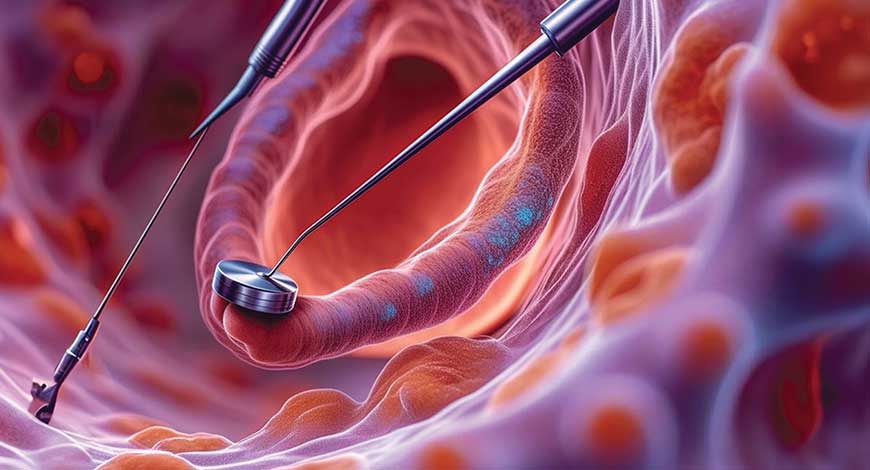
The rise of advanced endoscopy technologies signals a new era of surgical precision, reduced invasiveness, and improved patient outcomes in modern healthcare.

The medical landscape is experiencing a remarkable transformation, with endoscopy at the heart of this revolution. What was once limited to basic imaging and rigid instrumentation has now evolved into a sophisticated field that redefines precision, safety, and efficiency in the operating room. Cutting-edge endoscopic technologies–ranging from high-definition visualization to AI-powered diagnostics and robotic-assisted procedures–are reshaping surgical practices. These advancements are not only enhancing surgical dexterity but are setting new standards for accuracy, reducing complications, and speeding up recovery times.
Emerging technologies are revolutionizing surgical procedures by enhancing precision, minimizing invasiveness, and improving patient outcomes. Thanks to advancements in high-definition imaging and computer-aided detection (CAD), surgeons can now visualize and identify anomalies with unmatched clarity. This technological evolution allows for more successful interventions while reducing the need for invasive procedures, ultimately leading to fewer post-operative complications and faster recovery times. The integration of these innovative tools into pre-operative planning and intraoperative execution is paving the way for safer and more efficient surgeries, bridging the gap between technology and surgical excellence.
Breaking down traditional endoscopy barriers
While endoscopy has come a long way, traditional methods are not without their challenges. Some of the key limitations that have prompted the development of new, more advanced technologies.
Risk of cross-contamination. Reusable endoscopes present a risk of cross-contamination and infections due to improper cleaning, storage, and even after high-level disinfection, compromising patient safety.
Surface microstructure identification issues. Conventional white light imaging in endoscopy makes it challenging to detect surface microstructures, delaying early identification of conditions like gastrointestinal malignancies and increasing morbidity and mortality risks.
Uncontrolled capsule movements. Ingestible video capsule endoscopes, relying on gravity or natural body movements for navigation, lack physician control, limiting their effectiveness in diagnosing and identifying specific areas of concern.
Cutting-edge solutions – The promise of emerging endoscopy technologies
Emerging endoscopy technologies address many of the challenges posed by traditional methods, offering enhanced precision, safety, and diagnostic capabilities.
Eliminating cross-contamination. Single-use endoscopes eliminate cross-contamination risks by being disposed of after one use, preventing infection transmission, reducing reprocessing needs, and enhancing safety for healthcare staff.
Precision in capsule movements. Robotic-equipped advanced capsule endoscopes enable precise control and seamless navigation through complex anatomical pathways, allowing for highly accurate detection of gastrointestinal lesions, bleeding, and abnormalities.
Distinguishing structural changes early. Innovative image-enhanced endoscopy techniques use advanced wavelengths and image processing to identify mucosal surfaces and vascular patterns, enabling early detection of gastrointestinal malignancies for timely interventions and improved survival rates.
Innovations
Innovations in endoscopic imaging are significantly advancing surgical precision and diagnostic capabilities. One notable breakthrough is the use of Low-contrast-enhanced Contrastive Learning (LCC), a semi-supervised framework that enhances the segmentation of endoscopic images, particularly in distinguishing low-contrast pixels. This technique utilizes advanced strategies like inter-class contrast enhancement (ICE) and boundary contrast enhancement (BCE) to improve segmentation accuracy, especially for identifying malignant tumors, benign tumors, and normal tissues.
Additionally, AI and ML advancements are revolutionizing endoscopy by enabling real-time image processing, automatic lesion detection, and personalized diagnostic recommendations. These technologies are transforming the accuracy and speed of endoscopic procedures, paving the way for safer and more efficient surgical interventions.
Robotics and automation in endoscopic procedures
Robotics and automation have significantly advanced endoscopic procedures, enhancing surgical precision and improving patient outcomes. Robotic systems, by offering greater dexterity and fine control, allow surgeons to perform complex maneuvers with unparalleled accuracy. This is particularly crucial in minimally invasive surgeries, where precision is essential to avoid damage to surrounding tissues. The integration of robotics, such as robotic arms with advanced 3D visualization, ensures better access to hard-to-reach areas, improves the surgeon’s vision, and reduces trauma by enabling smaller incisions. This results in less blood loss, reduced pain, and faster recovery times for patients.
Automation in endoscopy further elevates these capabilities, improving both accuracy and efficiency. Automated systems can assist with image analysis and navigation, reducing the likelihood of human error and ensuring more precise procedures. The use of real-time data processing and remote capabilities enables surgeons to consult specialists remotely, enhancing collaboration and optimizing outcomes, especially in underserved areas.
Disposable and single-use endoscopes–A paradigm shift
Disposable and single-use endoscopes are revolutionizing modern healthcare by offering a paradigm shift in infection control and cost-effectiveness. As the healthcare industry continues to prioritize patient safety, the rise of disposable endoscopes addresses the persistent risk of cross-contamination associated with reusable models. By ensuring a sterile device for each procedure, disposable endoscopes significantly reduce the likelihood of infections, enhancing patient safety and confidence.
Additionally, their cost-effectiveness lies in the elimination of the time and expense associated with sterilization, maintenance, and repair of reusable equipment. Single-use endoscopes are particularly valuable in improving operational efficiency, allowing healthcare facilities to reallocate resources to other critical areas. As the adoption of these devices grows, they are becoming essential in both emerging and developed healthcare systems, ensuring high standards of care while optimizing costs and resources.
AI and computational advances
AI and computational advancements are revolutionizing endoscopic imaging by significantly improving image analysis and disease detection. AI-driven tools, particularly deep learning algorithms, have enhanced the accuracy of polyp detection and classification, enabling more precise identification of potential malignancies. These advancements, through real-time analysis, allow for better differentiation between benign and malignant tissues, leading to improved diagnostic outcomes.
Deep learning has shown great promise in enhancing the sensitivity and specificity of endoscopic imaging, particularly in detecting early-stage colorectal cancer and other GI conditions. By automating image interpretation, AI reduces operator variability, ensuring consistent, and high-quality results. As these technologies evolve, their integration into clinical practice is expected to further elevate the accuracy of endoscopic procedures, minimizing errors and improving patient outcomes.
Path forward
Endoscopic imaging is set to revolutionize clinical practice, with emerging applications spanning gastrointestinal, respiratory, and oncological imaging. Advanced technologies are enabling greater precision, improved visualization, and enhanced diagnostic capabilities, particularly through AI-powered tools. In gastrointestinal imaging, AI integration promises real-time diagnostic assistance, enhancing the detection of abnormalities and guiding therapeutic interventions. Respiratory imaging is expected to benefit from improved diagnostic accuracy, enabling the detection of early-stage diseases like lung cancer. In oncology, endoscopic imaging is poised to play a pivotal role in detecting and monitoring tumours with greater sensitivity and specificity.
As we look to the future, the focus will shift towards developing even more advanced, minimally invasive, AI-driven endoscopic procedures. These innovations promise to further enhance diagnostic and therapeutic capabilities, reduce patient risk, speed recovery times, and streamline workflows, ultimately reshaping patient care and setting new standards for clinical excellence.