Trends
Mass spectrometry market to hit USD 10.78B
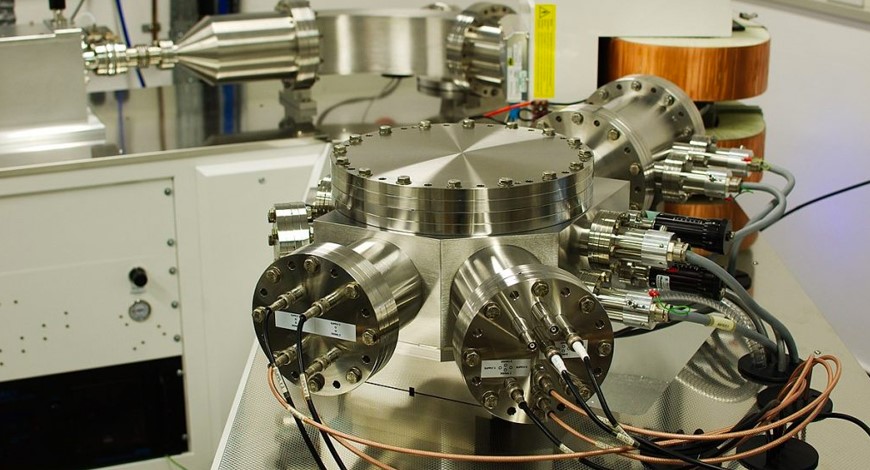
The mass spectrometry market is projected to grow from about USD 7.07 billion in 2026 to USD 10.78 billion by 2031, at a CAGR of 6.4%, according to MarketsandMarkets.

The global mass spectrometry market is experiencing significant growth due to rising pharmaceutical investments, expanding clinical research activities, and the increasing need for high-precision quality control across the food, beverage, and life sciences industries. Pharmaceutical and biopharmaceutical manufacturers are increasingly adopting advanced mass spectrometry techniques to enhance product quality assurance, impurity profiling, and regulatory compliance during drug manufacturing and development processes. In the food & beverage sector, growing concerns regarding food safety, contamination detection, and trace-level analysis are further accelerating the adoption of mass spectrometry systems for scalable and highly accurate quality control applications.
Another major trend shaping the market is the rapid expansion of clinical development outsourcing and bioanalytical testing services. Contract research organizations (CROs) and bioanalytical laboratories across North America and other major pharmaceutical hubs are making substantial investments in advanced LC-MS/MS and high-resolution mass spectrometry platforms to support outsourced drug development programs. As pharmaceutical companies continue shifting toward outsourced clinical research, demand for recurring bioanalytical testing, pharmacokinetic analysis, biomarker validation, and therapeutic drug monitoring is increasing significantly. Additionally, recent trends such as automation-enabled mass spectrometry workflows, AI-assisted data analysis, multi-omics research integration, and growing adoption of high-throughput analytical platforms are further contributing to the expansion of the mass spectrometry market.
The instruments segment dominated the overall market in 2025
Based on product, the mass spectrometry market is segmented into instruments, software, and services. The instruments segment accounts for the largest share of the mass spectrometry market. Hospitals and large diagnostic networks are increasingly deploying automated benchtop hybrid MS systems for decentralized high-volume clinical testing, including endocrinology, therapeutic drug monitoring, toxicology, steroid profiling, and newborn screening. Unlike earlier adoption cycles focused mainly on research laboratories, current purchasing decisions are being driven by long-term assay menu expansion strategies and laboratory consolidation initiatives. Vendors are therefore launching compact, walkaway automation-enabled hybrid MS systems with pre-validated clinical workflows, integrated middleware, AI-assisted spectral interpretation, and simplified operation layers designed specifically for routine clinical laboratory environments. This is significantly expanding adoption among mid-sized hospitals and regional diagnostic laboratories that previously depended on immunoassays or outsourced testing services.
Another high-impact trend reshaping the market is the emergence of lifecycle-driven replacement economics and “clinical insourcing” strategies across healthcare systems. Large hospitals, reference laboratories, and integrated delivery networks are increasingly internalizing high-value mass spectrometry testing to reduce turnaround time, improve reimbursement capture, and strengthen data ownership for precision medicine programs. This shift is accelerating demand for next-generation hybrid MS platforms with higher multiplexing capability, ultra-fast polarity switching, and cloud-connected remote diagnostics that support continuous assay upgrades without replacing the full instrument stack.
The LC-MS segment dominated the overall mass spectrometry market in 2025
By inlet type, the mass spectrometry market is categorized into LC-MS, GC-MS, ICP-MS, and other techniques. The advent of new applications of LC-MS for testing emerging contaminants from third-party testing service providers and labs has increased in the last three years. All these conditions have helped LC-MS to acquire a major share in the mass spectrometry market. The use of LC-MS has expanded over the years as it offers both selectivity and specificity in analysis. With advances in mass spectrometry, the sensitivity and accuracy of this technique have further increased, allowing for the detection and identification of low-level analytes in complex sample matrices. Liquid chromatography (LC) is a technique widely used to separate compounds from a sample before analysis and is frequently coupled to mass spectrometry. MarketsandMarkets